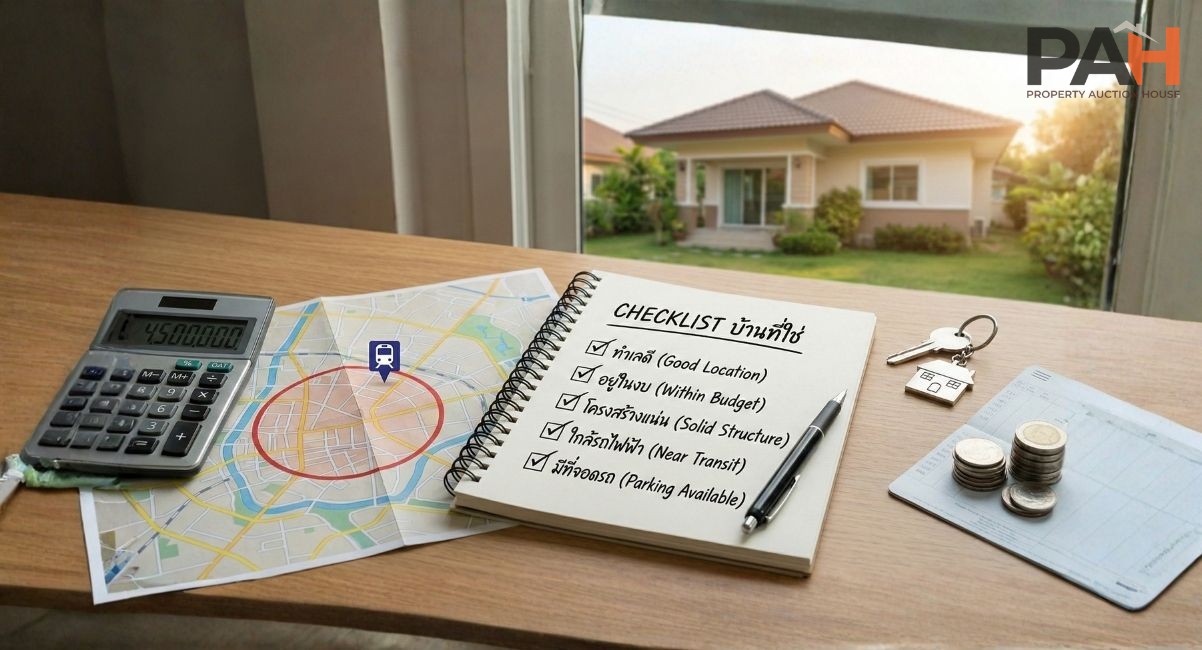
Build a Smart Home Selection Checklist
Choose Wisely for Long-Term Value and Livability
A “dream home” is not defined by size or appearance alone, but by value, practicality, and future potential. After assessing affordability, the next step is creating a clear home selection checklist.
Key Factors to Consider
Location comes first
Close to work, schools, and daily amenities
Easy transportation
Strong potential for future value appreciation
Define your needs clearly
Size and layout
Number of bedrooms, bathrooms, parking spaces
Living environment and facilities
A valuable home should be livable and investable
Potential for rental income
Resale demand in the future
New Homes vs Second-Hand Homes
New Homes
Modern design, new materials
Higher prices, often farther from city centers
Second-Hand Homes
Prime locations, established infrastructure
Lower prices but may require renovation
Inspect Second-Hand Homes in 3 Key Areas
Exterior condition
Internal systems
Structural integrity
True property cost = purchase price + renovation cost
FAQ
Q1: What should be the first factor when choosing a home?
A: Location should come first, as it cannot be changed and directly affects livability, long-term value, and resale potential.
Q2: Which is more cost-effective, a new home or a second-hand home?
A: There is no single answer. New homes offer convenience and modern materials, while second-hand homes often provide better locations and pricing. The right choice depends on budget and objectives.
Q3: Should a valuable home be rentable or resalable?
A: Yes. Rental and resale potential reduce financial risk and provide future flexibility.
Q4: What must be inspected before buying a second-hand home?
A: Three key areas: exterior condition, internal systems, and structural integrity.
Q5: Why must renovation costs be included in the home price evaluation?
A: Because the true cost of a property is the purchase price plus renovation costs. Ignoring this leads to inaccurate budgeting.