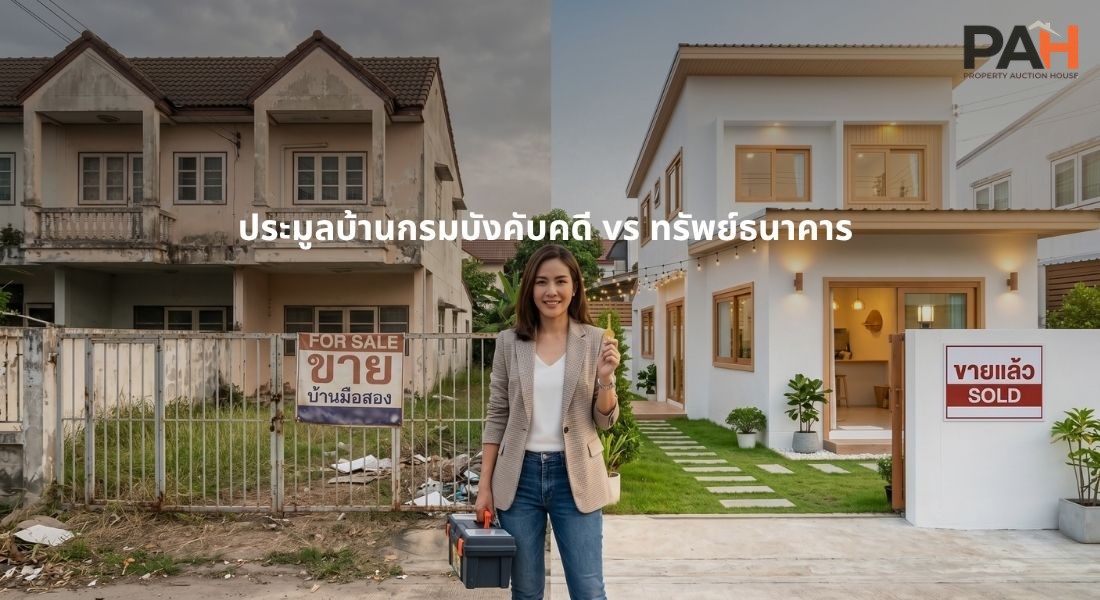
Are used homes really that scary? Every essential inspection before you buy
The complete guide for first-time buyers — A 10-category checklist used by real estate professionals
Introduction: Is a used home "scary" or just "in need of caution"?
When it comes to buying a used home, many people think of burst pipes, leaky roofs, old wiring, or even endless document issues. The truth is, a used home isn't scary — what's scary is buying one without inspecting it.
In the Thai real estate market, used homes offer clear advantages, including prices 15–40% lower than new homes in the same area, locations in developed neighborhoods near public transit, and a tangible environment that you can see for yourself rather than just through a mock-up image.
Problems always arise when buyers skip the inspection process or don't know what to look for.
This article will guide you through a 10-category checklist used by professional real estate appraisers and property lawyers, covering everything from your first viewing to the day of transfer.
Why are used homes attractive in 2024–2025?
Before diving into the checklist, let’s look at why the used home market is making a comeback:
1. Better value per square meter: Used homes in established locations are usually 20–40% cheaper than new ones due to accumulated depreciation. Buyers get more space for the same budget.
2. Locations that can no longer be replicated: Inner-city areas, proximity to older mass transit lines, and established communities with top-rated schools — land in these zones is practically unavailable for new developments.
3. No need to wait for construction: New project homes can take 1–3 years to build, while a used home can be transferred immediately once an agreement is reached.
4. You see the real condition, not just a showroom: You can see how the house holds up against rain, wind, and sun, what the neighbors are like, and how vibrant the community is.
10-Category Checklist: Everything you must inspect before buying a used home
📌 Category 1: Foundation & Structure
The structure is the heart of the home. If problems are found here, repair costs can reach millions of baht.
What to inspect:
Cracks — Distinguish between surface cracks (easy to fix ≈ a few thousand baht) and structural cracks (cracks that penetrate the wall, wider than 3 mm, or diagonal/patterned cracks), which must be assessed by an engineer.
Floor subsidence — Walk through every room. The floor should not feel bowed, raised, or have an abnormal "bounce."
Columns and beams — Look for cracks, crumbling concrete, or exposed rebar.
Load-bearing walls — These should not have vertical cracks.
Roof exterior — Look for missing tiles, broken sheets, or rusted gutters.
Roof structure (interior) — Go into the ceiling crawlspace (if possible) to check for water leaks, mold, or rotting wood.
🔴 Red Flags: Diagonal cracks at the corners of windows or doors, noticeable uneven flooring, or doors and windows that won't close properly without reason — these indicate structural subsidence.
📌 Category 2: Roof & Ceiling
A leaky roof is the most common problem in Thai used homes and is often hidden by a fresh coat of paint.
What to inspect:
Water stains on the ceiling — Yellow, brown, or circular marks indicate past or present leaks.
Bulging or sagging ceilings — Potentially caused by trapped water.
Roof age — Cement tiles last ~30 years, stone tiles 20–50 years, and metal sheets should be replaced every 15–20 years.
Eaves and soffits — Check that the wood isn't rotting and there are no wasp or hornet nests.
Gutter system — Must not be clogged or leaking, and should drain away from the house to prevent flooding.
💡 Tip: If the owner has repainted the entire ceiling, ask directly, "Why was it painted?" or ask to see photos from before the paint job.
📌 Category 3: Electrical System
An outdated electrical system is a frequent cause of house fires, and a full system overhaul can cost between 80,000–300,000 baht.
What to inspect:
Control panel (Breakers) — Must be a standard Circuit Breaker, not old-fashioned fuses.
Wiring — Should be IEC 60227 or TISI standard, with no frayed insulation or messy exposed wires.
Number of outlets — Must be sufficient for real-world use to avoid over-reliance on extension cords.
Grounding — Essential for all electrical appliances; old houses often lack this.
Exterior wiring — Should not be exposed to direct sun or rain.
Electrical meter size — Must be sufficient for your usage (standard homes are usually 15A–30A).
🔴 Red Flags: Burning smell near the breaker box, light switches that feel abnormally hot, or flickering lights without cause — never overlook these.
📌 Category 4: Plumbing & Water Supply
Plumbing issues in old houses are often hidden inside walls and floors, making them invisible from the outside.
What to inspect:
Water pressure — Open all faucets simultaneously. Pressure should be consistent, with no dripping or excessive spraying.
Water color — Water should not be cloudy, orange, or have a strange odor.
Water meter — Turn off all faucets and observe the meter. If the numbers are still turning, there is a leak.
Main pipes — Old iron pipes (30+ years old) should be replaced with UPVC or PPR.
Water tank and pump — Check condition, age, and cleanliness.
Dampness on walls or floors — Especially in bathrooms, kitchens, and laundry rooms.
💡 Tip: Ask the owner, "What material are the pipes made of?" If they are lead pipes (found in homes built before 1987), they must be replaced entirely as they pose a direct health risk.
📌 Category 5: Drainage & Sewage
A home that doesn't drain well is a breeding ground for moisture, mold, and odors.
What to inspect:
Drainpipes — Should not be clogged; water should drain quickly with no backflow odors.
Septic tank/sewage treatment system — Ask about the age and when it was last serviced. A full septic tank may need pumping, costing 1,500–3,000 baht per time.
Garden drainage — After a heavy rain, water should not remain pooled for longer than 30 minutes.
Rainwater drains — Must be clear and capable of draining away from the property.
📌 Category 6: Moisture, Mold & Termites
The most difficult problems to detect but the most destructive to the structure.
What to inspect:
Musty smell — Sniff out bathrooms, storage rooms, and built-in closets.
Mold stains — Black or green spots on walls, ceilings, or silicone seals.
Bulging or peeling walls — Signs of moisture trapped inside.
Termites — Tap on wooden floors, built-in furniture, and door frames. Listen for a "hollow" sound. Look for mud tubes along foundations and walls.
Ants — Some ant species nest in rotting wood, which can be a sign of structural damage.
🔴 Red Flags: If you find black mold (Stachybotrys), you must hire a professional to remove it before moving in, as it is hazardous to the respiratory system.
📌 Category 7: Windows, Doors & Insulation
These components affect safety, electricity bills, and living comfort.
What to inspect:
All doors and windows — Open and close smoothly, lock properly, and have no excessive gaps.
Frames and hinges — No rot, no rust, and hinges should function well.
Glass — No cracks, no water trapped between panes (for Double-Pane glass).
Silicone seals — Not cracked or peeling; must prevent water leakage.
Heat insulation — Homes in Thailand with good roof insulation can reduce air conditioning costs by 20–35%.
📌 Category 8: Mechanical Systems
What to inspect:
Air conditioning — Age of the unit (should not exceed 10–12 years), cooling efficiency, and condensate drains.
Heating systems (if applicable) — Water heaters should be safe and free of rust.
Rooftop water tank — Clean, no algae, and tightly sealed.
Water pump — Test its operation; no abnormal noises.
Security system (if applicable) — Is it still operational?
Elevators or stairs (multi-story homes) — Sturdy railings, non-slip steps.
📌 Category 9: Environment & Location
External factors that affect quality of life and long-term property value.
What to inspect and ask:
Flooding — Ask neighbors how often it floods. Check Google Maps photos from the rainy season.
Noise pollution — Visit the house at different times of the day and night, especially on weekdays.
Odors — Any nearby factories, markets, or sources of unpleasant smells.
Surrounding structures — High-rise buildings blocking light or construction projects that might impact future value.
Zoning — Check the zoning color code to see what can be built in the surrounding area in the future.
Proximity to essentials — Hospitals, schools, supermarkets, public transport.
Community and neighbors — Try to talk directly to the neighbors.
📌 Category 10: Documents & Legal
This is the category buyers ignore most, yet it is the most legally critical.
Documents to request and verify:
A. Title Deed
Request the Nor Sor 4 (Chanote) or Nor Sor 3 Gor (avoid Sor Kor 1, Nor Sor 2, or standard Nor Sor 3, as these titles are incomplete).
Verify that the owner’s name matches the seller.
Take the title deed to the Land Office to check for any encumbrances, mortgages, or liens.
Verify that the land boundaries match the deed (surveying).
B. Building Permits
Ask for the Building Permit (Or.1) and Certificate of Completion (Or.6) to confirm the house was built legally.
Houses without permits can be subject to demolition orders.
C. Taxes and Outstanding Expenses
Check for any outstanding land and property taxes.
Outstanding common area fees (if in a housing development).
Outstanding utility bills (these debts transfer with the property).
D. Additional Agreements
Check for any lease agreements or usage rights that might affect the buyer.
If buying in a gated community, ask to see the juristic person's regulations and financial statements.
💡 Advice: Hire a real estate lawyer to review documents before signing a contract. The cost of 5,000–15,000 baht is well worth it compared to the potential risks.
🧾 Quick Summary Checklist
Category | Importance Level | Repair Cost if Issues Found |
|---|---|---|
1. Structure/Foundation | 🔴 Very High | 100,000–1,000,000+ THB |
2. Roof/Ceiling | 🔴 Very High | 30,000–200,000 THB |
3. Electrical System | 🔴 Very High | 50,000–300,000 THB |
4. Plumbing System | 🟠 High | 20,000–150,000 THB |
5. Drainage System | 🟠 High | 10,000–80,000 THB |
6. Moisture/Termites | 🟠 High | 15,000–100,000 THB |
7. Windows/Doors | 🟡 Medium | 5,000–50,000 THB |
8. Mechanical Systems | 🟡 Medium | 10,000–80,000 THB |
9. Environment | 🟡 Medium | Not fixable |
10. Documents/Legal | 🔴 Very High | Potential loss of entire property |
Important questions to ask the owner before deciding
These questions don't just provide information; they also help you observe the owner's reaction:
"Have there been any major repairs to this house in the past 5 years?"
"Have there ever been issues with water leaks, flooding, or dampness?"
"When were the electrical and plumbing systems last updated?"
"Why are you selling? And how long has it been on the market?"
"What are the neighbors like? Have there been any disputes?"
"What is the average monthly utility bill?"
"Is there a mortgage on the title deed? If so, will it be redeemed before transfer?"
Should you hire a professional home inspector?
Answer: Yes — for any house priced over 2 million baht.
In Thailand, there are certified Home Inspector services available. The cost ranges from 3,000–8,000 baht depending on the size of the house.
A professional inspector will:
Use special equipment like thermal cameras to find moisture that the naked eye cannot see.
Provide a written report that can be used to negotiate the price or withdraw from the purchase.
Identify repairs needed before moving in and estimate the costs.
Negotiation strategy based on inspection results
When you find problems, use the information as a clever negotiation tool:
Method 1: Ask for a price reduction. Present the repair list and quotes from contractors, then ask for a discount equal to or 20–30% higher to account for uncertainties.
Method 2: Request the owner to repair before transfer. Write clear conditions into the sale and purchase agreement that the transfer will only occur once repairs are completed and verified.
Method 3: Conditional deposit. Specify in the contract that "if an inspection reveals serious defects, the buyer has the right to cancel and receive a full refund of the deposit."
Frequently Asked Questions (FAQ)
Q: What age of used home is most concerning? A: Homes 20–30 years or older require the most caution, as electrical, plumbing, and structural elements are nearing the end of their lifespan. However, this doesn't mean they shouldn't be bought if they have been well-maintained.
Q: How long does it take to inspect a house? A: A thorough self-inspection takes 2–4 hours. A professional inspection can take 3–6 hours. Do not just spend 30 minutes and make a decision.
Q: What should I do if the owner refuses to let me inspect? A: Consider it a red flag. Refusing an inspection usually means something is being hidden. Reiterate your right to inspect; if they continue to refuse, consider calling off the purchase.
Q: Can I get a bank loan for a used home? A: Yes. Most banks provide loans for used homes, typically offering 70–90% of the appraised value. The bank will send an appraiser, which acts as one layer of filtering, but you should not rely solely on the bank’s appraisal.
Q: Should I buy a used home in a gated community or a stand-alone house? A: It depends on your preference. Gated communities have management to look after common areas but come with monthly fees and strict rules. Stand-alone homes offer more freedom but require you to handle all maintenance yourself.
Q: What can I do if I find problems after the transfer? A: Thai law allows buyers the right to "sue to rescind the contract or reduce the price" within 1 year from the date of discovering the defect (Civil and Commercial Code, Sections 472–474). However, proving this in court can be difficult, which is why pre-transfer inspection is the most important step.
Conclusion: Used homes aren't scary if you know what to check
A good used home isn't hard to find, but it requires time, knowledge, and dedication to inspect thoroughly.
A smart buyer won't judge a house by its surface beauty but will look deep into the structure, systems, and documentation — the three pillars that determine the true value of the property.
Use the 10-category checklist in this article as a guide, bring in a professional to help inspect, have a lawyer review the documents, and you will find that a well-chosen used home is one of the best investments of your life.
This article is provided for general information purposes only and is not legal or financial advice. Always consult with a professional before making any purchasing decisions.