How to Negotiate a Home Price and Actually Win
Negotiating a home price successfully isn’t about being loud or trying to “lowball.” It’s about logic + evidence + a clear numbers plan—because sellers (or banks/developers) will adjust the price when they can see your offer is well-supported and helps the deal close faster.
This article helps you do three things before you make an offer:
Know the true market price from comparable properties (Comparable / CMA)
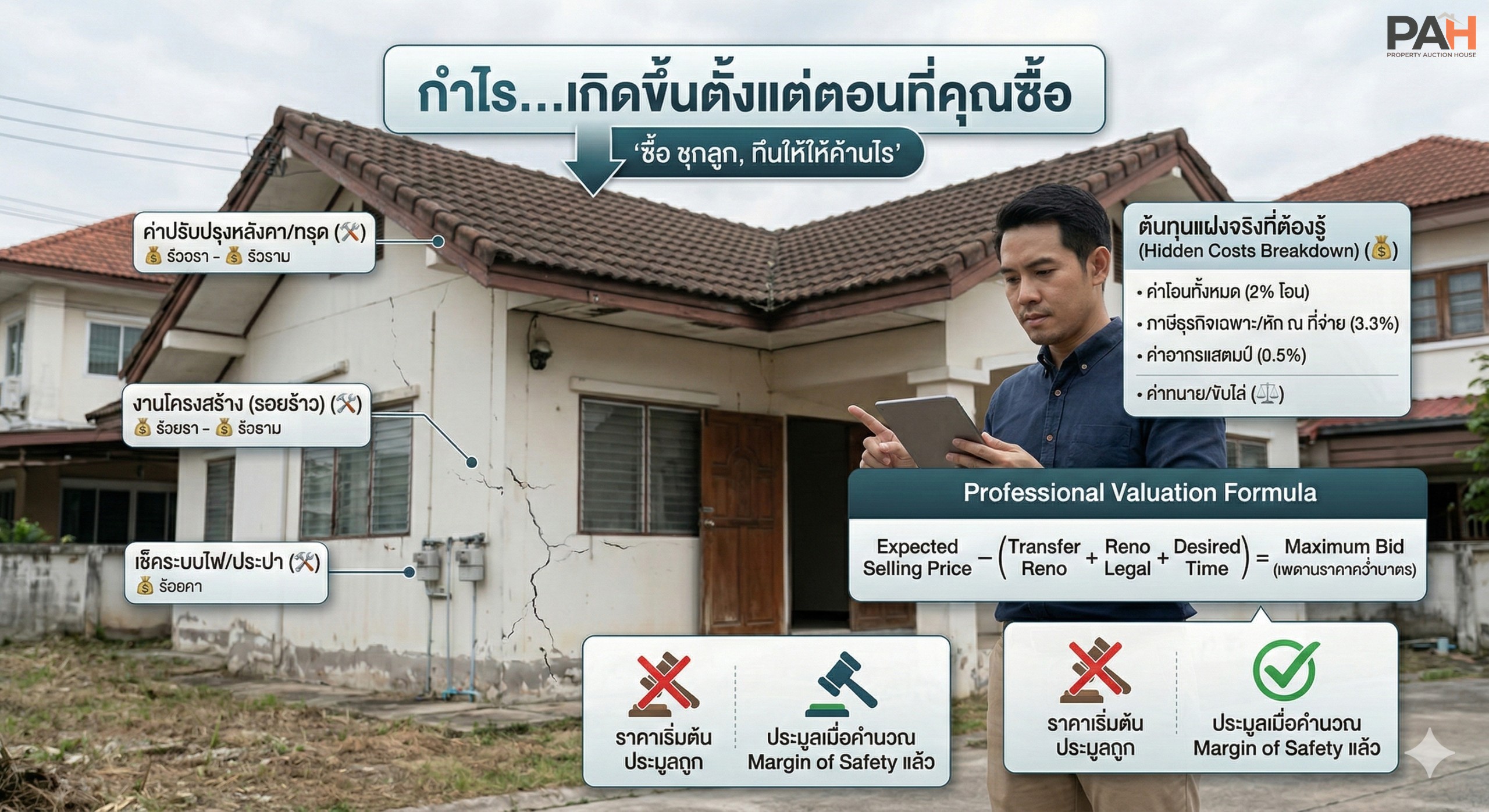
Know your real total costs (repairs + transfer fees + taxes + hidden costs)
Present a professional offer with ready-to-use scripts and negotiation formats
The Core Mindset: Don’t Ask “Can You Discount?”
Replace it with stronger questions like:
“If we can close within X days, based on market data, what would be a fair price?”
“If I accept the property as-is and transfer quickly, can we adjust the price based on the repair list?”
Sellers often dislike “Please discount,” but they open up when you propose a deal that is clear, fast, and easy to finish.
Step 1: Build a “Buyer’s CMA” in 30 Minutes
CMA (Comparative Market Analysis) means comparing your target home with similar homes/condos nearby to estimate the real market price.
How to find useful comparables
Pick at least 3–5 listings that are as similar as possible:
Same area (same zone/neighborhood or within a close radius)
Same property type (single house / townhouse / condo)
Similar size (sq.m. / sq.wah)
Similar condition (renovated vs original)
Similar listing period (avoid listings that are a year old)
Quick “price comparison” formula (for negotiation talk)
Houses: compare price per sq.wah + adjust for condition / position / frontage
Condos: compare price per sq.m. + adjust for floor / direction / view / unit condition
Your goal isn’t 100% perfect accuracy—it’s having a confident price range backed by data.
Step 2: Use the Property’s Condition as Your Price-Leverage
Sellers discount more easily when you present a clear repair list—not just “I feel it’s expensive.”
Common repair points that support negotiation
Cracks / leaks / mold
Roof / ceiling stains / dripping water
Electrical system (outlets, main panel, old wiring)
Plumbing (water pressure, leaks, pump issues)
Doors/windows (poor sealing, worn rubber, drafts/leaks)
Kitchen/bathroom (seepage, drain odor, old fixtures)
Paint / flooring / swelling / warping
Tip: If you have a rough repair estimate (or a note from a contractor/home inspector), your negotiation power increases significantly.
Step 3: Calculate “Transfer-Day Costs” as Real Numbers (Then Negotiate With Them)
Many buyers fail because they speak in feelings. If you speak in real costs, sellers listen more.
Examples of costs that raise your true net price
Transfer fees / taxes / stamp duty (depending on who pays)
Outstanding common fees / juristic person charges (condo/village)
Repair/renovation before moving in
Furniture/appliances you must add
A strong negotiation angle:
“If I’m taking on cost X and repairs Y, I’d like to adjust the price down by that actual amount.”
Step 4: Choose the Right Timing
Good timing = better price.
When negotiation is easier
Listing has been on the market for a long time (seller wants to finish)
Seller must relocate / needs cash / has a deadline
The property has obvious downsides (noisy road, hot direction, repair needed)
Slow market / many similar competitors nearby
When negotiation is harder
Great property with many interested buyers
Asking price is already below market
Seller isn’t in a hurry
Step 5: Offer in a Way That Works (and Stays Polite)
Instead of saying “Can you discount?”, use this structure:
Offer message framework (Copy/Paste)
(1) Compliment + confirm readiness
“I really like the home. The location fits my needs, and I’m ready to place a deposit and proceed immediately.”
(2) Reference market data
“I compared similar properties in the same area/size range, and the typical price range is around …”
(3) Point out repairs / real costs
“There are a few items I’d need to handle, such as … with an estimated budget of …”
(4) Make the offer + give a seller-friendly condition
“I’d like to offer … THB. I can transfer within … days and place the deposit immediately.”
5 Data-Driven Negotiation Techniques That Really Work
1) Negotiate with a price “range,” not a random number
Use comparables + condition evidence so your number feels justified.
2) Separate: price reduction vs seller repairs vs freebies
If the seller won’t cut the price, they may agree to:
Repair key issues before transfer
Include furniture / A/C / curtains
Cover part of transfer fees
3) Make an offer that helps the seller “close fast”
Many sellers accept less in exchange for certainty:
Deposit today
Transfer within X days
Loan documents ready / already approved (if applicable)
4) Give the seller a “face-saving exit”
Don’t make them feel attacked. Say “based on data” and “based on actual costs,” not “your price is too high.”
5) Have a backup plan (BATNA)
Know your maximum price—and know what you’ll view next if it doesn’t work out. Buyers with alternatives negotiate best.
Short Negotiation Examples
Case A: House listed at 3.50M THB, needs 150,000 THB repairs
Comparable range: 3.35–3.45M
Offer: 3.30–3.35M with repair list + fast transfer readiness
If no discount: ask for major repairs or split transfer fees
Case B: Resale condo at 2.10M THB with unpaid common fees + repaint needed
Require common fees cleared before transfer
Negotiate a reduction equal to repaint/repair cost, or request free furniture
FAQ
What percentage discount is considered “normal”?
There’s no fixed number. It depends on location, condition, and seller urgency. Use comparable data + real costs, not percentage alone.
Should I negotiate aggressively in the first round?
If your offer is far below the data, the seller may stop responding. Start with a price you can explain, then improve terms with conditions (fast transfer, deposit today).
Can you negotiate with a new-build developer?
Yes—often through promotions/freebies/transfer-day discounts/fee waivers rather than cutting the headline price (depends on campaign timing).
Summary
Successful home price negotiation = market data + repair list + total cost plan + a seller-friendly offer that closes fast.
If you follow these 5 steps, you’ll negotiate more professionally—and reach a price that’s reasonable and defensible, not just “randomly discounted.”