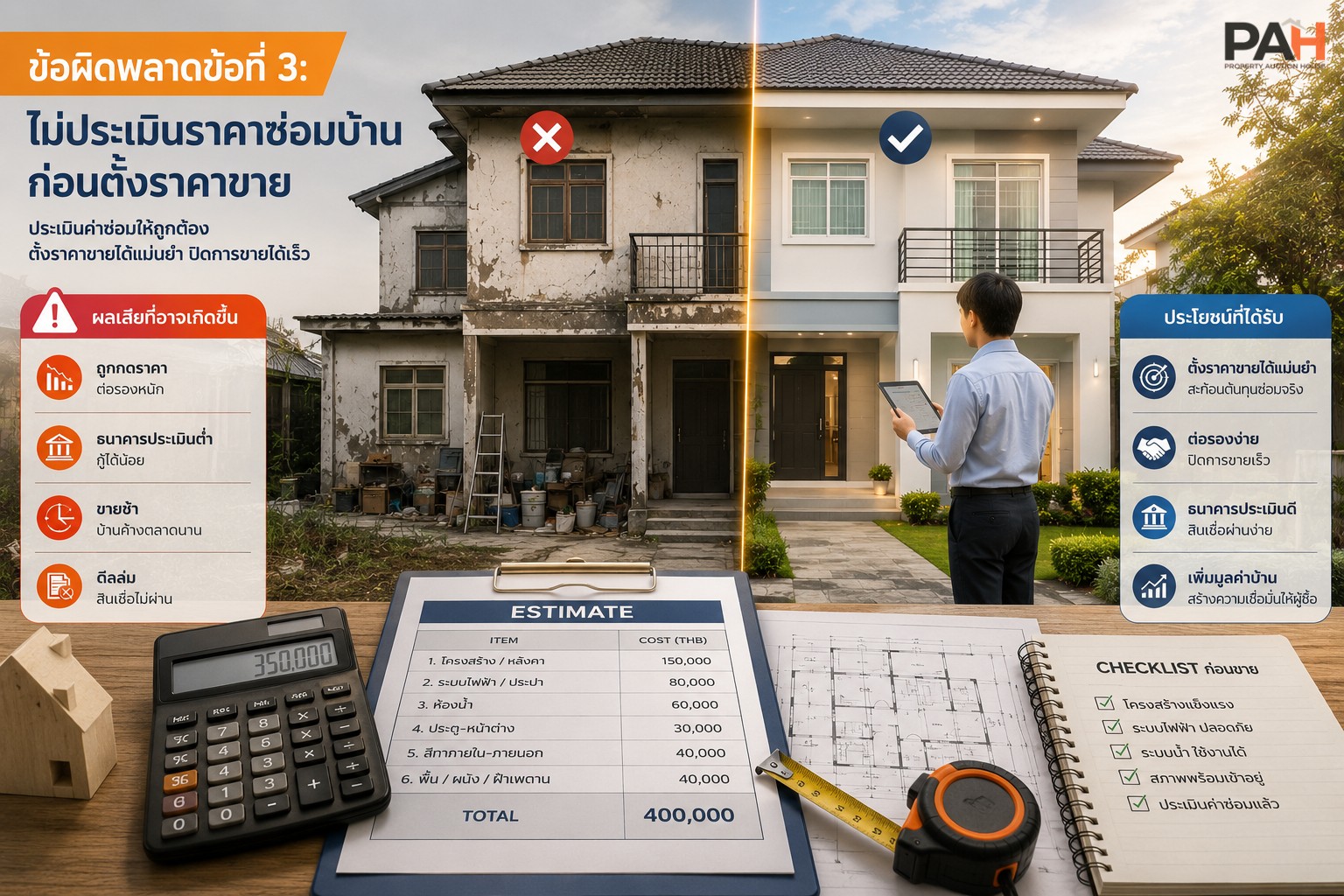
Mistake #3: Not Estimating Home Repair Costs Before Setting the Asking Price
Many homeowners set their asking price based on gut feeling, the prices of neighboring homes, or a "desired" figure, forgetting that one factor directly impacts the selling price and is most often overlooked: the cost of home repairs. Failing to estimate repair costs before setting an asking price is one of the most common mistakes and is a major reason why homeowners face aggressive price negotiations from buyers.
In reality, both buyers and mortgage lenders calculate the "cost of repairs" almost as soon as they see the property's condition and deduct this figure from the purchase offer or the loan appraisal value. If a seller sets a price without accounting for these costs in advance, they are highly likely to be at a disadvantage during negotiations or end up selling the house much slower than expected.
Why repair costs directly affect the selling price
When a buyer walks into a house, they almost immediately begin calculating the "additional costs" beyond the purchase price—such as roof repairs, repainting, or electrical system upgrades. The more areas in the house that need fixing, the more ammunition the buyer has to offer a price lower than what the seller requested.
On the lender's side, the loan approval process also includes a property condition assessment. If the house has clear structural or safety issues, the bank may appraise the property below market value, resulting in the buyer being unable to secure a full loan, which can lead to a deal falling through.
Types of repair costs to assess before setting an asking price
Repair assessments should be categorized into three main groups to gain a clear picture of the actual costs before deciding on an asking price.
1. Structural and major system repairs
This group impacts the price the most because it directly affects the safety and longevity of the house. This includes:
Leaking roofs or deteriorated roof structures
Wall cracks, especially those indicating structural problems
Subsiding floors or uneven flooring
Old or non-standard electrical and plumbing systems
Problems in this group are usually what buyers and surveyors prioritize first because they affect living safety and involve relatively high repair costs.
2. Repairs for move-in readiness
These are expenses that make a house "immediately livable" without needing major renovations. This includes:
Damaged or old bathrooms and sanitary ware
Doors and windows that don't close properly or have broken hinges
Peeling or faded interior and exterior paint
Condition of floors, walls, and ceilings
While these may not directly affect safety, these costs significantly impact the buyer's "first impression," which strongly influences their decision-making and negotiation power.
3. Repairs for bank appraisal approval
This is a group homeowners often overlook, but it is critical if the buyer is applying for a loan. It includes:
Overall structural safety
Integrity of the electrical and plumbing systems
A home condition that must not pose a danger to inhabitants
If the house has issues in this group, the bank may appraise the loan amount lower than what the buyer expects, which may force the buyer to ask for a lower price or withdraw from the purchase entirely.
The negative consequences of not estimating repair costs in advance
When sellers fail to assess repair costs from the beginning, it often leads to a chain of problems:
Overpricing the property, as the repair costs the buyer will have to shoulder were not factored in.
Buyers using repair costs as leverage during negotiations, putting the seller at a disadvantage.
The bank appraising the value lower than the seller anticipated.
Loan rejection or approval at an amount lower than the buyer requires.
Forced price reductions later, which not only costs money but also loses negotiation leverage and makes the house seem like it has hidden issues.
These consequences often trigger a chain reaction that prolongs the selling process more than it should.
How to properly estimate repair costs
To avoid finding yourself in a situation where you have to drop your price suddenly, homeowners should plan to estimate repair costs as follows:
1. Differentiate between "essential repairs" and "cosmetic improvements." Repairs necessary for safety and functionality, such as structural or electrical systems, will impact the price more than aesthetic decorations. Prioritize these clearly.
2. Get a written quote from contractors or technicians. This provides a figure that can actually be referenced, rather than an estimate based on feelings or guessing. A professional quote also adds credibility when negotiating with buyers.
3. Think from the buyer's perspective. Sellers should ask themselves, "If I were the buyer, which points would I see as problems, and how much would I deduct from the price?" Viewing things from the buyer's side helps improve the accuracy of your asking price.
4. Adjust the asking price to reflect actual repair costs. If you decide not to perform the repairs yourself before selling, you should build a discount corresponding to the repair costs into the asking price from the start to minimize unnecessary haggling later on.
Why do repair costs directly affect the selling price?
In summary, repair costs are a factor that concretely impacts the home's selling price because:
Buyers calculate profit and costs the moment they see the condition of the house.
The higher the repair costs, the lower the price the buyer will offer.
Homes with clear repair cost assessments from the start usually close deals more easily and quickly.
Knowing the costs in advance helps reduce redundant haggling during the negotiation phase.
Conclusion
Setting an asking price without estimating repair costs opens the door for buyers to use them as an excuse to drive the price down, which may unnecessarily prolong the selling process. Homeowners who know their repair costs in advance can set a more accurate price, maintain more negotiation leverage, and close the sale faster than those who set their prices based on feelings alone.
Frequently Asked Questions (FAQ)
Q1: Is it necessary to assess repair costs in every case? A: Yes, if the house is not in move-in ready condition, because buyers will calculate these repair costs and use them to negotiate the price.
Q2: Can I refuse to repair it myself but still set a high asking price? A: That is difficult, as buyers typically deduct the expected repair costs from their offer price anyway.
Q3: Does the bank care about home repair costs? A: Yes, because the bank evaluates the property's condition and repair costs as part of the buyer's loan approval process.
Q4: Who should assess the home repair costs? A: You should hire a contractor, professional technician, or real estate appraiser to get credible figures.
Q5: Does knowing the repair costs really help sell a home faster? A: Yes, because it helps reduce arguments during negotiations and makes the asking price look reasonable in the eyes of the buyer.