Introduction
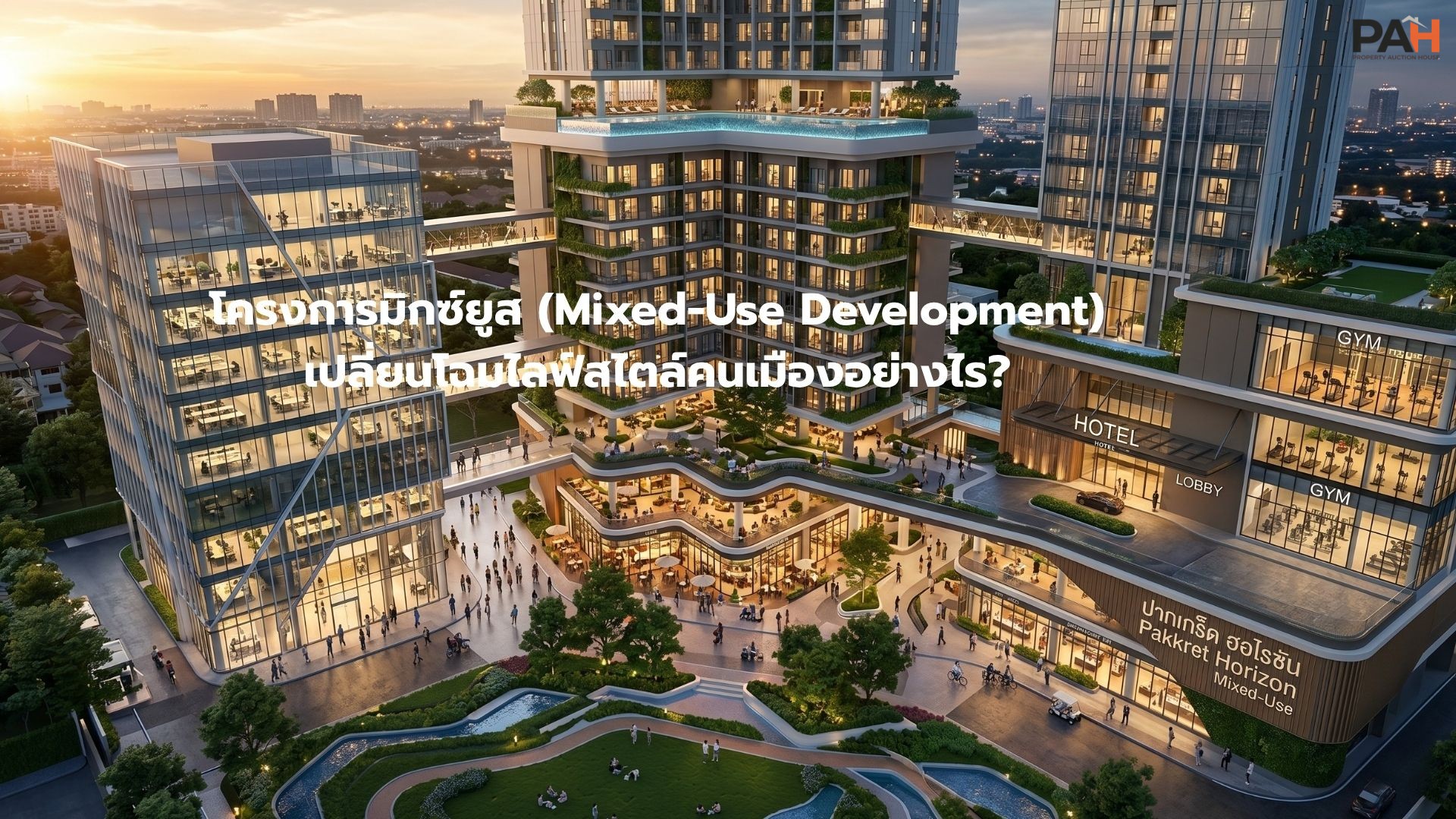
Imagine waking up in a 20th-floor condo, taking the elevator down to grab a coffee at your favorite cafe, walking into your office in the same building, having lunch at a restaurant downstairs, and closing the day with a workout at the on-site fitness center—all without taking a single step in a car.
This is not a scene from a futuristic movie; it is the daily life that Mixed-Use Development projects around the world are making a reality today.
What is Mixed-Use Development?
Mixed-Use Development is a real estate strategy that combines multiple types of usage within a single space or building, such as:
🏠 Residential — Condominiums, apartments, serviced apartments
🏢 Office Space — Rental offices, co-working spaces
🛍️ Retail Space — Shopping malls, shops, restaurants
🏨 Hospitality — Hotels, spas, gyms
🌳 Public Space — Parks, activity plazas, public walkways
This concept differs from traditional real estate development, which clearly separates residential, commercial, and office zones.
Why is the world turning to mixed-use?
1. Urban expansion and land scarcity
Major cities worldwide, including Bangkok, Tokyo, Singapore, and New York, are facing scarce land and skyrocketing prices. Utilizing vertical space and increasing the diversity of usage in one location is the most logical answer in terms of both economics and urban planning.
2. Changing urban lifestyles
New generations—especially Millennials and Gen Z—value convenience, flexibility, and experiences more than owning cars or houses in the suburbs. They want to "live fully" within walking distance.
3. "Work from Anywhere" accelerates demand
In the post-COVID-19 era, work patterns have changed forever. Many people desire spaces where their home and office are close together or even in the same project. Mixed-use developments directly address this need.
How is mixed-use changing urban lifestyles?
✅ 1. Reducing travel time, improving quality of life
The main problem for city dwellers is "time lost in transit." Statistics in Bangkok show that residents lose an average of 60–90 minutes per day on the road. Mixed-use projects break this cycle by putting everything within reach, leaving more time for family, hobbies, or relaxation.
✅ 2. Creating a vibrant "urban community"
Unlike condos or housing estates where residents barely know each other, mixed-use spaces are designed to encourage interaction and connection. Central plazas, cafes, markets, and public areas help foster a natural sense of "belonging to a community."
✅ 3. Meeting the needs of every generation at once
Working professionals — Work, shop, and exercise without driving.
Families with children — Schools, playgrounds, and shops are within walking distance.
The elderly — Easy access to healthcare, restaurants, and leisure areas.
✅ 4. Elevating the retail experience
Retailers in mixed-use projects have a constant customer base "living right on top of them," allowing entrepreneurs to invest in creating more profound and creative shopping experiences rather than just competing on price.
✅ 5. Promoting sustainability and the environment
Mixed-use projects are designed to reduce dependence on private cars, aligning with the Smart City direction and the 15-Minute City concept, where all basic needs are within a 15-minute radius from home. Furthermore, these projects reduce carbon emissions from travel and often incorporate solar panels, green building systems, and green spaces.
Examples of interesting mixed-use projects in Thailand and the world
Project | Location | Highlights |
|---|---|---|
One Bangkok | Bangkok | The largest mixed-use project in Thailand, combining offices, hotels, residences, and retail over 104 rai. |
ICONSIAM | Bangkok | Riverside retail and lifestyle hub blending art and culture. |
The Forestias | Samut Prakan | Nature-focused mixed-use with urban forests for all generations. |
Marina Bay Sands | Singapore | Hotel, casino, retail, and Sky Park in one destination. |
Hudson Yards | New York, USA | The largest private real estate development in U.S. history. |
Challenges of mixed-use to consider
Despite numerous benefits, mixed-use projects are not without drawbacks:
Management complexity — Managing diverse types of spaces requires highly specialized teams and systems.
Market risk — If one segment fails, it can impact the overall project.
Higher prices — Development costs and sales prices are typically higher than traditional real estate, making them less accessible to middle-income groups.
Gentrification — Large-scale mixed-use projects may drive up surrounding property prices, potentially displacing original residents.
Future trends in mixed-use
Modern mixed-use projects are evolving into deeper dimensions:
🤖 Tech-Integrated Spaces — Smart home systems, AI building management, and all-in-one project apps.
🌿 Biophilic Design — Integrating nature into architecture for the well-being of residents.
🏥 Wellness-Focused Development — Making health areas, clinics, spas, and wellness centers a core part of the project.
🚆 Transit-Oriented Mixed-Use — Developing projects around transit hubs to reduce car dependency to near zero.
Conclusion
Mixed-use is not just a fleeting real estate trend; it is a structural answer to modern urban problems—congestion, traffic, fragmented lives, and the desire to "live fully in one place."
For urbanites today, mixed-use gives back the most valuable resource: time and quality of life.
And that is arguably the best reason why these projects have become the future of 21st-century cities.