How to Start a Rock Garden Beside Your House?
From an empty space beside your house to a natural-style rock garden that is easy to maintain and beautiful all year round.
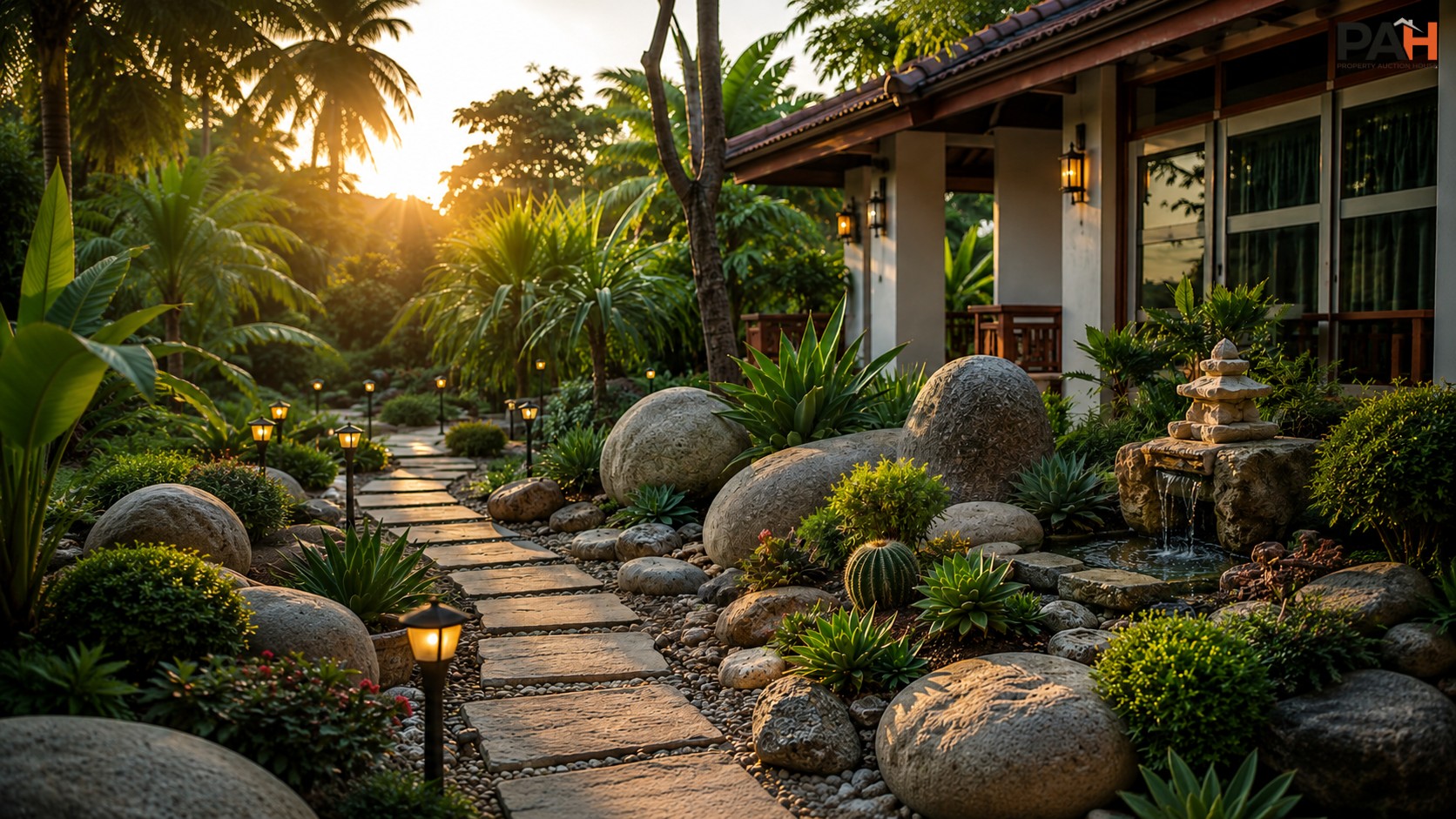
A rock garden is not just about piling stones in a garden; it is about designing a space that perfectly blends stones, plants, and nature. This article will guide you from ground zero, starting with planning and material selection, all the way to effortless maintenance—perfect for anyone who wants a beautiful rock garden corner beside their house.
1. Why Choose a Rock Garden?
Many people have started showing interest in rock gardens in the last few years, and for very good reason. A rock garden is one of the best landscaping styles for modern lifestyles, whether it's due to limited time, small spaces, or a need to control the budget.
How many styles of rock gardens are there?
Before you start, it is helpful to know that there are several styles to choose from, depending on your taste and the desired atmosphere.
Japanese Zen Garden — Emphasizes simplicity and tranquility. It often uses gray stones, sand, and few plant varieties. Suitable for those who love serenity.
Alpine Rock Garden — Simulates a high-altitude hillside. It uses rough, layered stones and often features low-growing plants tucked between the rocks.
Desert Rock Garden — Focuses on cacti and succulents with warm-toned stones. It is very suitable for Thailand's hot and humid climate.
Thai Natural Style — Uses river stones or local stones, mixed with native plants and a tropical forest atmosphere.
Advantages of a Rock Garden That Other Gardens Can't Beat
Much easier to maintain than a grass or flower garden; no frequent mowing or watering required.
Water-saving, as rocks help retain moisture in the soil.
Beautiful throughout every season; there is no wilting period.
Suitable for Thailand’s hot climate, especially if you choose drought-tolerant plants.
Surprisingly adds value to the home.
Who is a rock garden for? Busy professionals, those with limited space beside the house, nature lovers who aren't experts at gardening, or anyone who simply wants a quiet, relaxing corner at home.
2. Before Starting: Planning and Assessing the Area
The number one mistake beginners make is buying stones before planning, only to wonder how to arrange them later. Therefore, the planning stage is very important and takes less time than you might think.
Measure the Area and Estimate the Budget
Start by measuring the size of the space you want to use for the rock garden and calculate the rough budget. For beginners, the following budget range is recommended:
Area Size | Estimated Budget |
|---|---|
Small (1–3 sq.m.) | 2,000–5,000 Baht |
Medium (3–8 sq.m.) | 5,000–15,000 Baht |
Large (8 sq.m. and up) | 15,000 Baht and up |
Check for Sunlight
A rock garden area should receive at least 4–6 hours of sunlight per day, especially if you intend to plant cacti or succulents. If the area gets little sunlight, it is still possible to create one, but you must choose shade-loving plants instead, such as moss, ferns, or semi-shade plants.
Drainage System: The Thing to Fix First
This is the most important issue, yet it is often overlooked. If water collects in a rock garden, the stones will get dirty, plants will rot, and the garden structure will deteriorate quickly. An easy way to check is to pour a bucket of water and see if it drains away within 30 minutes. If water pools for longer, you should grade the area or add coarse sand as a base first.
Sketch a Rough Plan Before Starting
It doesn't have to be a masterpiece. Simply use an A4 sheet of paper to roughly draw where you want to place large stones, where the plants should go, whether there will be a walkway, or if there will be a small waterfall. Having a rough plan saves a lot of money and time.
3. Selecting Stones: Types, Sizes, and Arrangement
Stones are the stars of this garden, so choosing the right ones directly affects the garden's beauty.
Popular Types of Stones
River Stones — Round and smooth, easy to find, and affordable. Suitable for natural or Zen-style gardens.
Mountain/Rough Stones — Textured with dimensions, making them look more realistic and natural. Suitable for Alpine style.
Sandstone — Warm-toned, giving a dry, arid feeling; works very well with cacti.
Slate — Flat sheets, suitable for walkways or stacking in layers.
Volcanic Rock — Porous and lightweight, helps with drainage; very popular for cactus gardens.
The "Odd Number Grouping" Rule Used by Landscapers
This rule comes from the design principle that odd-numbered groups look more natural than even ones. Try arranging stones in groups of 3, 5, or 7 rather than in rows or placing them one by one.
Mix Stone Sizes
A beautiful rock garden will have a mix of different stone sizes. A simple formula is to use 1–3 large stones as "feature stones" to serve as a focal point, then surround them with medium and small stones to fill in the gaps. Don't use all the same size stones, as it will look stiff and unnatural.
Where to buy stones?
Local construction material stores often have many types of stones, priced at 10–80 Baht per kilogram.
Plant and landscaping markets, such as the Chatuchak Plant Market.
Online shops like Shopee / Lazada have many types of river and decorative stones.
You can collect them from nature in some areas, but be careful of the law—do not collect from protected areas.
4. Selecting Plants: Plants That Go Well with Rock Gardens
Plants add life and color to a rock garden, but you must choose ones that fit the environment and the desired style.
Cacti and Succulents: Number One Choice for Thailand
Drought-resistant, very easy to maintain, require little water, and have a variety of beautiful shapes. They are the best fit for rock gardens in Thailand. Popular examples include Haworthia, Echeveria, round cacti, and pointed Agave.
Grass and Groundcover Plants
Small grasses or groundcover plants, such as Sedum, help fill the empty space between rocks, creating interesting textures and reducing weed growth.
Small Shrubs
Shrubs create dimensions for the garden, keeping it from looking flat. Popular species in Thai rock gardens include Ixora, Weeping Fig (Ficus), Dwarf Hibiscus, and Caladium.
Moss and Algae
If you want a Zen or Japanese style, lush green moss growing on rocks provides an ancient, peaceful feeling. They love moisture and shade and must be watered regularly.
Seasonal Flowering Plants
Add color to the rock garden with seasonal flowers, such as Kalanchoe, Cosmos, or flowering cacti, placed in small pots tucked between the rocks, which can be changed as desired.
5. Step-by-Step Guide to Creating a Rock Garden
It's time to start building. Following these steps will help ensure a great result and save time.
Step 1 — Level the area and clear weeds
Remove all weeds from the area, including the roots underground, because if left, they will grow up between the rocks. Level the ground, or if you want to create mounds or slopes, shape it according to your plan.
Step 2 — Lay landscape fabric or coarse sand
Lay landscape fabric over the entire area to prevent long-term weed growth, or if the area has water drainage issues, put down a 5–10 cm base of coarse sand or small rocks first.
Step 3 — Place main stones and organize the structure
Start by placing the large stones first, which will serve as the garden's focal points. Place them according to your plan, but don't get too attached to the design; sometimes when you place them, you might see that you need to adjust their position. Bury the stones into the soil about 1/3 of their size to make them look more natural than just sitting on the surface.
Step 4 — Add soil and plant
Add appropriate potting soil in the gaps between stones. For cacti and succulents, you should use soil mixed with coarse sand in a 1:1 ratio. Then, arrange the plants as planned, keeping large plants in the back and small ones in the front.
Step 5 — Spread small stones and add finishing touches
Bring in small stones, gravel, or coarse sand to cover the empty areas between the large stones. This helps prevent weeds and makes the garden look clean. You can mix colors of gravel or sand to create interesting effects.
Step 6 — Add lighting and other elements
This is the final step that adds vitality to the garden. Install solar LED lights in various spots, place any desired decorative elements, and water the garden thoroughly for the first time.
6. Adding Special Elements to Bring Your Rock Garden to Life
A good rock garden has more than just rocks and plants. Adding special elements will elevate your garden from simply beautiful to truly impressive.
Small Stone Waterfall or Pond
The sound of flowing water has a psychological effect that helps reduce stress. A small stone waterfall with a pump costs about 1,500–5,000 Baht and can be found at general landscaping shops. If space is limited, a small pond using a decorative stone bowl is just as beautiful.
Solar LED Lights
They don't waste electricity, are easy to install, and create a great atmosphere at night. Place them along walking paths, between rocks, or shine them on plants to create light and shadow effects.
Decorative Elements
Stone statues, lions, or small Buddha images to add a sacred touch.
Stone lanterns or a Japanese-style water basin (Tsukubai).
Stone tablets with inscriptions or painted decorative rocks.
Terracotta or stone pots for special plants.
Stone Walkway
A walkway is not only practical but also adds dimension and depth to the garden. Use flat slate, round stones, or natural stone tiles spaced at comfortable intervals for walking.
7. Rock Garden Maintenance
One of the best advantages of a rock garden is that it requires less maintenance than other gardens, but "less" doesn't mean "do nothing at all."
Watering
For general rock gardens, watering 1–2 times a week is sufficient. If you plant cacti or succulents, it may be even less. You should water in the morning or evening; do not water during the day, as heat makes the water evaporate quickly and may burn the leaves.
Cleaning Stones
Every 2–3 months, you should clean the stones with a mixture of water and dish soap, gently scrubbing with a brush to get rid of moss, grime, and leftover leaves. Clean stones look much more beautiful.
Pruning Plants
Periodically prune dry or dead leaves. Maintain the plant's shape so it doesn't obscure the rocks or spread beyond the desired area.
Common Problems and Solutions
Problem | Cause | Solution |
|---|---|---|
Water logging | Poor drainage | Add coarse sand under the stones, adjust ground slope |
Weeds growing | Landscape fabric torn or not laid | Pull by hand, then sprinkle Himalayan salt in affected areas |
Stones shifting | Stones not buried | Bury the stone 1/3 of its height |
Algae on stones | High humidity | Wash with diluted vinegar or diluted bleach |
Plant rot | Overwatering | Reduce watering frequency, cut out rotten parts |
8. Ideas for a Budget Rock Garden + Mistakes to Avoid
Potted Rock Garden for Limited Space
If you have very little space or live in a condo, you can still make a mini rock garden in a large pot. Use a cement or terracotta pot 40–60 cm in size, place 3–5 river stones, plant 2–3 succulents, and cover with fine gravel. That's it—you have a beautiful "Balcony Rock Garden."
Use Existing Materials
Stones from an old garden, unused pots, or even old wood—all these can be used in a rock garden. Creativity is always more important than the budget.
5 Mistakes Beginners Often Make
Placing stones too close together — Makes it look cluttered with no space for plants to grow. You should leave gaps between stones.
Not checking drainage — Results in water pooling, dirty stones, and eventually, plant rot.
Using the wrong type of soil — General potting soil holds too much water for a rock garden; it should be mixed with coarse sand.
Buying only one size of stone — Makes the garden look stiff and unnatural. You should mix many sizes.
Ignoring sunlight planning — Choosing plants that don't fit the light levels in the area leads to plant death.
9. Frequently Asked Questions (FAQ)
Q: How much maintenance does a rock garden require? A: Very little compared to other gardens. Generally, it takes only 30–60 minutes per month for watering, weeding, and occasional stone cleaning.
Q: Is a rock garden suitable for the Thai climate? A: Very suitable, especially if you choose drought-tolerant plants like cacti and succulents, which love hot weather and strong sunlight—perfectly matching Thailand's climate.
Q: What kind of stones are good for a Thai-style rock garden? A: River stones are the best choice. They are easy to find, affordable, and provide a natural Thai feeling, mixed with some mountain stones to add dimension.
Q: How much budget is needed to start? A: A small rock garden of about 2 square meters costs around 2,000–4,000 Baht, including stones, plants, and base materials. If you want to add a waterfall or garden lights, add another 1,500–3,000 Baht.
Q: Can a rock garden be placed in a shady area? A: Yes, but you must choose shade-loving plants instead, such as moss, ferns, or semi-shade plants, rather than cacti or succulents that require strong sunlight.
Conclusion: Start Now, Don't Wait for Perfection
A rock garden beside your house is not as difficult or complicated as you might think. Just start by surveying the area, making a rough plan, and building it step-by-step; your rock garden will gradually take shape into something you can be proud of.
The most important thing is don't overthink it. Try arranging the stones first; if you don't like it, you can move them. There are no hard and fast rules for a rock garden; there are only principles that help achieve a good result. The rest is up to your own feelings and taste.
Start today, even if it's just a small rock garden in a pot, and gradually expand as you become more confident. I guarantee that once it's finished, you will look at it every morning with great pride.