Why do "Secondary Cities" Outperform Bangkok in Rental Yield?
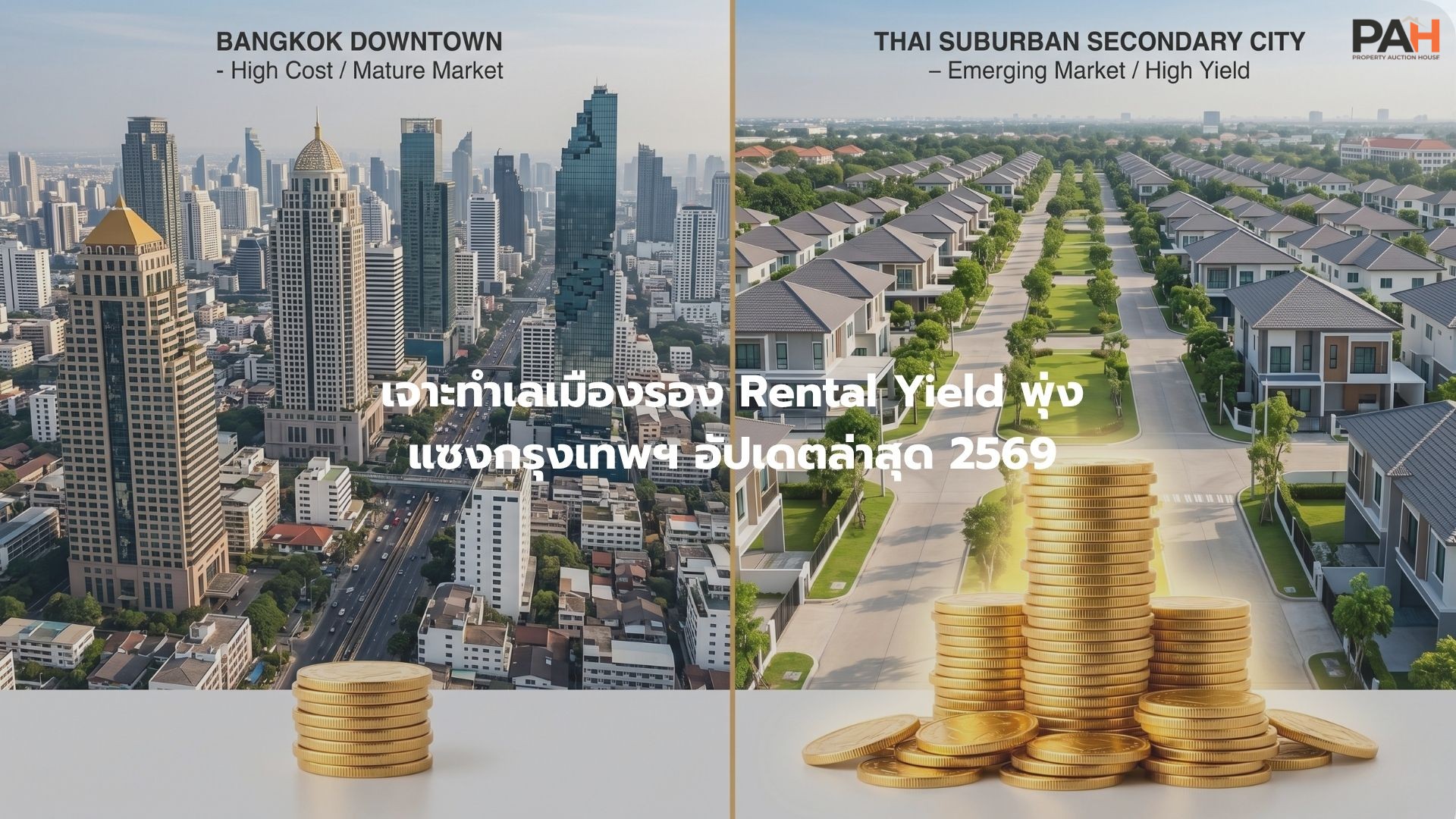
The equation for calculating Rental Yield is very simple: (Annual Rent ÷ Property Price) x 100. The problem with inner Bangkok is that the "divisor," or property price, has skyrocketed. A 1-bedroom condo might cost 4-5 million THB, but it can only be rented out for 15,000 - 18,000 THB/month, bringing the average yield down to just 3-4%.
Conversely, in secondary cities or suburban industrial zones, the entry price is much lower. If you find a second-hand property or an NPA (Non-Performing Asset) and renovate it, your cost might be in the high hundreds of thousands to low millions, yet you can charge 5,000 - 8,000 THB/month in rent, easily pushing the yield to 6-8%, or even 10% in some locations!
📍 3 Golden Locations Outside the Capital with Soaring Rental Yields
1. Northern Suburbs Connecting to Ayutthaya (Rangsit - Pathum Thani - Nava Nakorn - Rojana) This is a "sweet spot" for workers and students. Even though Rangsit-Pathum Thani is becoming an urban expansion area, once you connect to industrial zones like Nava Nakorn or move toward Ayutthaya (Rojana Industrial Estate), property prices drop to a highly attractive investment level.
Target Tenants: Engineers, factory managers, students, and medical personnel.
Investment Highlights: Second-hand townhomes or low-rise condos in this area, if renovated with a minimalist style, can command excellent rents. Working professionals tend to stay long-term, providing stable cash flow without the need to find new tenants frequently.
2. Eastern Economic Corridor (EEC) - Chonburi & Rayong Although talked about for a long time, the EEC remains the champion of rental yields in the country, especially in areas like Si Racha, Laem Chabang, and Pluak Daeng.
Target Tenants: Japanese and Chinese expats, and high-level executives in industrial estates.
Investment Highlights: This zone has very high corporate housing allowances. Condos in Si Racha that cater to the Japanese lifestyle (e.g., having a bathtub, Japanese-speaking property management) can push yields as high as 7-9% per year.
3. Regional Hub Cities (Khon Kaen & Chiang Mai) Khon Kaen is the Medical & Educational Hub of the Northeast, while Chiang Mai is the world capital for Digital Nomads.
Target Tenants: Medical students, residents, and foreigners working online (Digital Nomads).
Investment Highlights: Demand is clear and rotates annually (following academic years or tourist seasons). Investing in serviced apartments or condos near Khon Kaen University or the Nimman area in Chiang Mai provides consistent returns and potential for long-term capital gain.
💡 3-Point Checklist Before Investing in Secondary Cities
Investing outside familiar territory has its challenges. To avoid pitfalls, check these points:
Deeply Understand the "Micro Location": Growth in secondary cities is often clustered. The left side of the road might be fully occupied, while the right side might have zero demand. You must visit the site to observe traffic patterns and local amenities.
Evaluate "Liquidity" for Exit Strategy: High-yield properties can sometimes be harder to flip than BTS-adjacent condos in Bangkok. You must account for this and estimate long-term capital gains.
Focus Primarily on NPA or Second-Hand Properties: Buying brand-new projects in secondary cities might result in costs that are too high for the yield to be worthwhile. Scanning for auction properties or renovating second-hand homes is the key to beating the market.
Conclusion
Rental yield figures never lie. If your goal is substantial monthly cash flow, opening your mind to investment strategies in secondary cities, suburbs, or industrial zones might be the shortcut to achieving financial freedom faster than competing for a small piece of the pie in the capital.