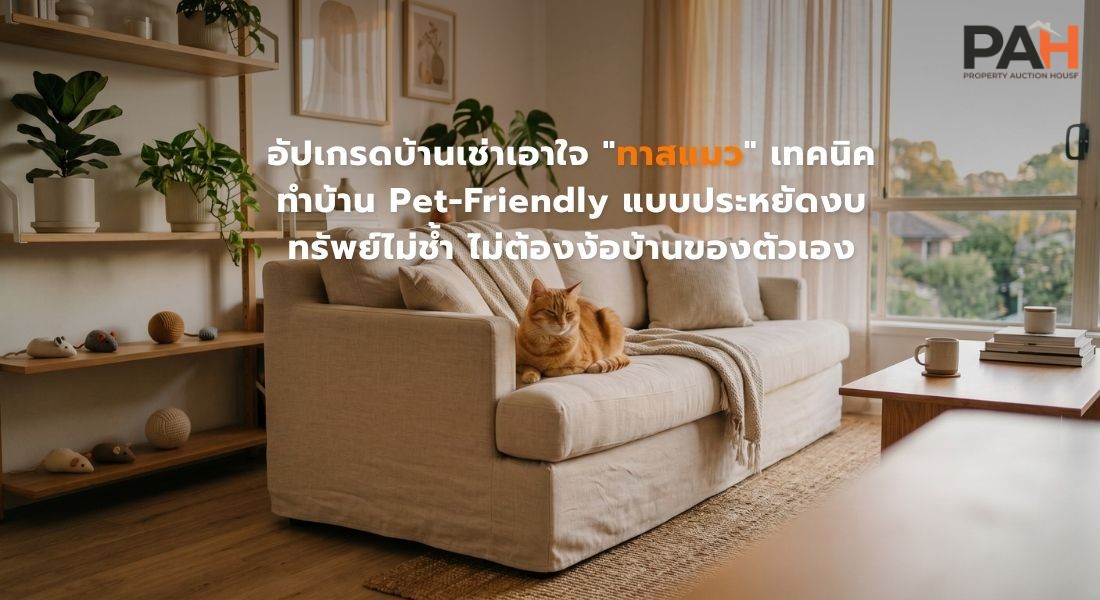
If you are a cat owner living in a rental home, you’ve probably felt this way before... afraid the landlord will find out you have a cat, worried about scratches on the walls, or even anxious about losing your security deposit when it's time to move out.
The good news is, you no longer have to choose between "having a cat" and "keeping the property damage-free." Today, we are sharing all the techniques every cat owner in a rental needs to know—from how to talk to your landlord to setting up a Cat-Friendly home that can be cleanly removed when it's time to move out.
🔍 Know the real enemies of a rental home first
Before upgrading anything, we must know what kind of damage cats can cause in order to prevent it effectively and avoid unnecessary expenses.
🧱
Scratch marks on walls, doors, and wallpaper
💧
Urine odors lingering on floors, carpets, or in hidden corners
🌀
Cat hair clogging air conditioners and ventilation systems
🪑
Rental furniture being scratched or chewed
Once you identify the "enemies," you can plan your defense systematically. But the most important first step is always to communicate with your landlord.
💬 Talk to your landlord first — Scripts that actually work
Many people skip this step out of fear, but being open from the beginning protects you more than hiding it. If the landlord finds out later, the outcome is almost always worse.
💡 What to prepare before talking
Prepare a cute photo of your cat / have their health record (Vaccine Book) ready / offer to increase the security deposit slightly to show responsibility / mention that your cat is an indoor-only cat.
"
🗣️ Sample script you can use
"Hello, I would like to discuss keeping a cat in my unit. My cat is an indoor cat; they stay inside the room and are fully vaccinated with health records. I am fully prepared to take responsibility for any damages that may occur, and I am willing to add an extra 1,000 THB to the security deposit for your peace of mind."
If the landlord is still hesitant, try suggesting additional terms, such as signing an addendum stating that you will be responsible for all repair costs, or taking photos of the room's condition before the cat arrives to serve as evidence, which will be beneficial for both parties.
🛠️ 7 techniques for a "removable, mark-free" cat-friendly upgrade
The key to living comfortably in a rental is: "Everything must be removable." Here are 7 techniques every cat owner in a rental should know, ranked from easiest to most challenging.
# | Technique | Budget | Level |
|---|---|---|---|
1 | Use Command Strips / Removable double-sided tape instead of any nails. Use them for scratching posts, shelves, or anti-scratch pads. | Under 200 THB | ⭐ Easy |
2 | Install Wall Protectors / Clear acrylic sheets to prevent scratching on wall corners, door frames, and spots your cat loves to scratch. Can be removed without leaving marks. | 300–800 THB | ⭐⭐ Medium |
3 | Lay down Click-Lock Vinyl Flooring over the existing floor. No glue needed; it prevents stains and odors and is easy to pack up. | 500–2,000 THB | ⭐⭐ Medium |
4 | Use a Sofa Slipcover to cover the landlord's furniture. It protects against fur and scratches and is machine washable. | 200–600 THB | ⭐ Easy |
5 | Install Cat Wall Shelves using over-the-door mounting brackets or models designed specifically for rentals that require no drilling. | 800–2,500 THB | ⭐⭐⭐ Challenging |
6 | Use an Enzyme Cleaner to clean areas where your cat urinates or sheds heavily. Enzyme formulas break down odors at the molecular level rather than just masking them. | 150–400 THB | ⭐ Easy |
7 | Create a hidden, removable Litter Box Zone using a fabric box or a modified IKEA cabinet to keep it clearly separated from living areas. | 500–1,500 THB | ⭐⭐ Medium |
🏠 Organize your home so both cat and human are happy
A good home for a cat doesn't need to be huge; it just needs clear zones for every activity. This makes your cat feel secure and prevents them from damaging other areas.
🛏️
Sleeping Zone
Portable Cat Bed
Mid-sized Cat Tree
Hair-resistant blanket
🎾
Play Zone
Door-hanging toys
Hanging scratcher
Collapsible tunnel
🍚
Feeding Zone
Elevated bowl to reduce acid reflux
Non-slip mat
Cat water fountain
🚽
Bathroom Zone
Litter box hidden inside a cabinet
Litter mat in front of the box
Small deodorizing system
A crucial tip: Do not put the feeding zone near the bathroom zone. Cats have natural instincts for cleanliness. If these two zones are too close, the cat may start doing their business outside the litter box, which creates a big problem for your rental.
🛒 Recommended "Worth Every Penny" products for renters
All of these can be easily found on Lazada or Shopee. They are budget-friendly and well worth the investment compared to the deposit you might lose upon moving out.
📋
3M Command Strips (Heavy Duty)
Double-sided tape that removes without a trace. Can be used instead of nails for almost anything; holds up to 3–5 kg per piece.
150–250 THB
🛡️
Clear Acrylic Anti-Scratch Sheets
Attached with removable tape, they are nearly invisible. They protect wall corners, door frames, and your cat’s favorite spots.
350–600 THB
🧹
Enzyme Cleaner for Odor Elimination
Breaks down cat urine odors at the molecular level, not just masking them. Safe for wood floors, tiles, and carpets. A must-have.
180–400 THB
🛋️
Sofa Slipcover
Covers the rental's provided furniture, protecting against both cat hair and scratches. Machine washable and comes in various sizes.
250–600 THB
🪜
No-Drill Over-Door Cat Shelf
A shelf that hangs over the door—no drilling required. Installs and removes in 5 minutes and supports up to 10 kg.
800–2,000 THB
🏠
Click-Lock Vinyl Flooring
Lays over existing floors without glue. Prevents stains and odor seepage. Can be removed and taken with you when moving.
500–2,000 THB
✅ Before you Move-out — Checklist to get your deposit back
When it’s time to move, be sure to complete this checklist before returning the keys to ensure you get your full deposit back.
✔
Remove and store all equipment — Command strips, wall protectors, vinyl flooring, and cat shelves must all be removed and packed away properly.
✔
Clean odors with Enzyme Cleaner — Spray areas where the cat used to do their business, corners where they slept, and the litter box zone.
✔
Check for marks on walls and floors — If there are minor scratch marks, use wall putty or wood filler before returning the property.
✔
Wash all sofa slipcovers — and remove them before the landlord arrives to inspect the furniture, so it looks just like when you moved in.
✔
Vacuum and clean the AC system — Cat hair in the air filter is a common reason landlords charge extra cleaning fees.
✔
Take photos of the room after clean-up — Keep these as evidence to compare with your move-in photos to prevent future disputes.
💡 Pro Tip
Take photos of the room's condition on the very first day you move in, being as detailed as possible, including existing scratches or damages. Send these to your landlord for the record. This is an effective way to prevent being blamed for old damage.
🐾 · · · 🐾
Renting is not an obstacle for cat owners 🐱
If you plan well from the start, your cat will be happy, the home will remain undamaged, and the landlord will be happy too.
Do you have any additional Pet-Friendly techniques for rental homes? Share them in the comments! 🐾
Don't forget to share this with your fellow cat-owning friends! 🙌