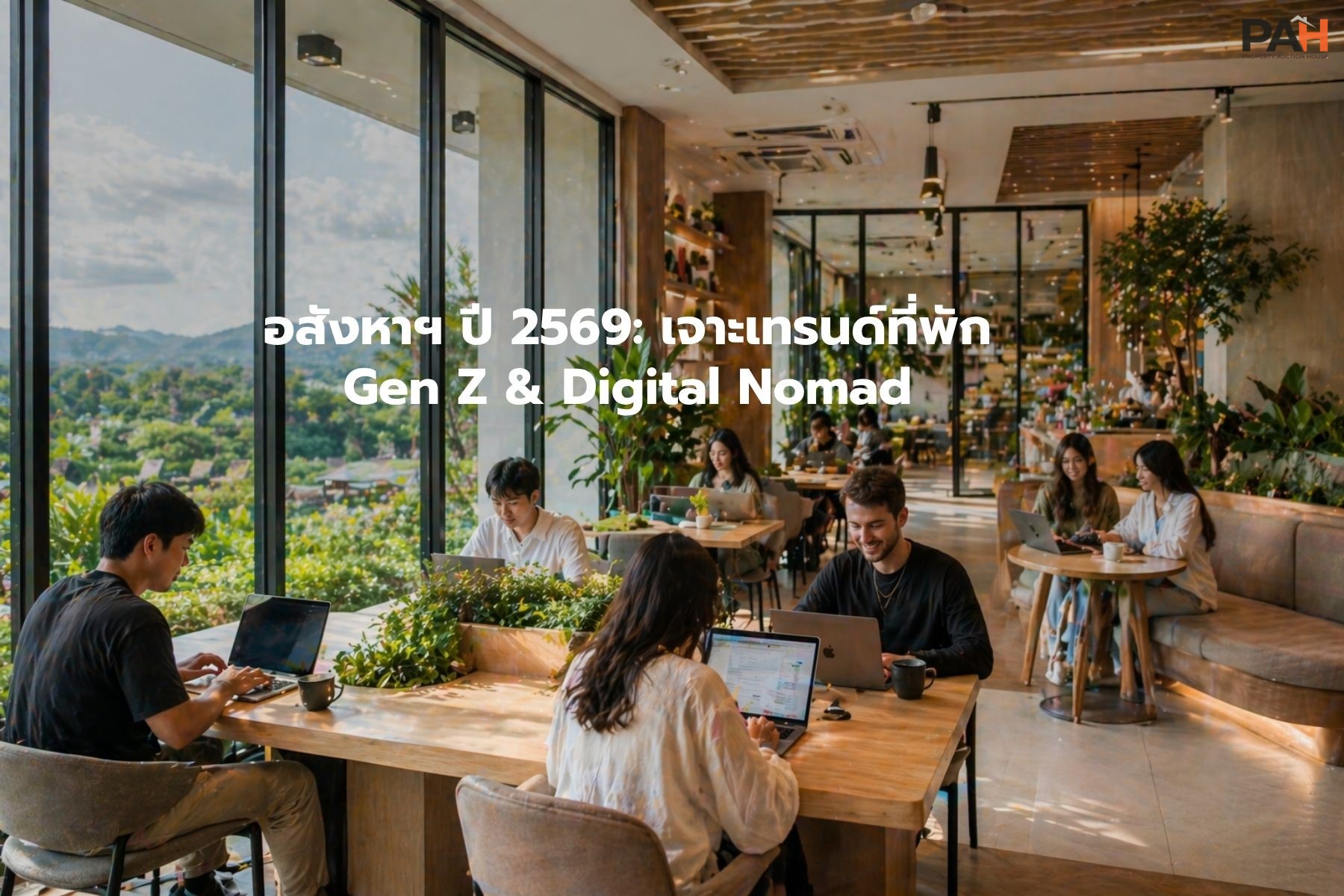
In an era where "Work from Anywhere" has become the standard in 2026, the trajectory of the real estate market has been completely transformed. The primary target group with purchasing power currently driving the market is Gen Z, who have fully entered the workforce, alongside Digital Nomads from around the world who have chosen Thailand as their base.
An interesting question for real estate investors is, "What kind of accommodation are these two groups looking for?" Because simply building square rooms near public transport is no longer enough. Here are the 5 housing trends for 2026 that you must know to adapt and generate sustainable returns.
1. Shedding Attachments, Emphasizing Flexibility (Flexible Living & Co-Living)
Gen Z and Digital Nomads generally avoid long-term 30-40 year mortgage commitments. They value freedom and are always ready to relocate.
What they are looking for: Flexible lease contracts (short-term from 1-6 months up to 1 year), fully furnished units ready for immediate move-in, and large communal Co-Living Spaces to build connections and meet new people in the community.
Investment Opportunity: Converting condos or apartments into monthly Service Apartments or investing in Co-Living Spaces will be highly attractive to this group of tenants.
2. Workcation & Creator-Ready Functions
When the home is the primary office, a small desk in a corner is no longer sufficient. In 2026, living spaces must support hybrid work and content creators.
What they are looking for: Soundproof rooms for Zoom meetings or recording clips, stable high-speed Wi-Fi 7, excellent natural lighting, and practical 24/7 co-working spaces.
3. The New Standard: Smart Home & Eco-Friendly
The younger generation is conscious of environmental issues and accustomed to the convenience of technology (IoT). Thus, the 2026 housing trend must be both smart and eco-friendly.
What they are looking for: Smart Home systems to control lights and air conditioning via applications, Smart Lock entry, coupled with energy-saving designs such as communal solar panels to reduce electricity costs and sufficient EV charging points.
4. The Golden Age of Pet-Friendly Residences
"Pet Humanization" is not just a passing trend but a lifestyle. Condos and housing estates that do not allow pets are losing a large segment of customers.
What they are looking for: 100% Pet-Friendly projects—not just those that tolerate pets, but ones with scratch-resistant flooring, odor-eliminating ventilation systems, and a communal Pet Park for pets to run around.
Investment Opportunity: Pet-friendly properties can command premium rental rates, and tenants tend to stay longer because finding new accommodation that suits their pets is difficult.
5. "Secondary Cities and Suburbs" as the New CBD
When you no longer have to fight traffic to get to the office every day, the busy and expensive Central Business District (CBD) loses its importance.
What they are looking for: Suburban locations with green space or tourist hubs like Chiang Mai, Phuket, and Pattaya (for Digital Nomads) that offer tranquility, connection to nature, and reasonable living costs, while still providing easy access to amenities, hospitals, and chic cafes.
💡 Conclusion for Real Estate Investors in 2026: The housing trends for Gen Z and Digital Nomads focus on "Experience, Utility, and Freedom." Investors who can renovate their units or choose properties with Smart Living functions, pet-friendly policies, and spaces that facilitate work will be able to outperform competitors and generate consistent cash flow in this digital age.