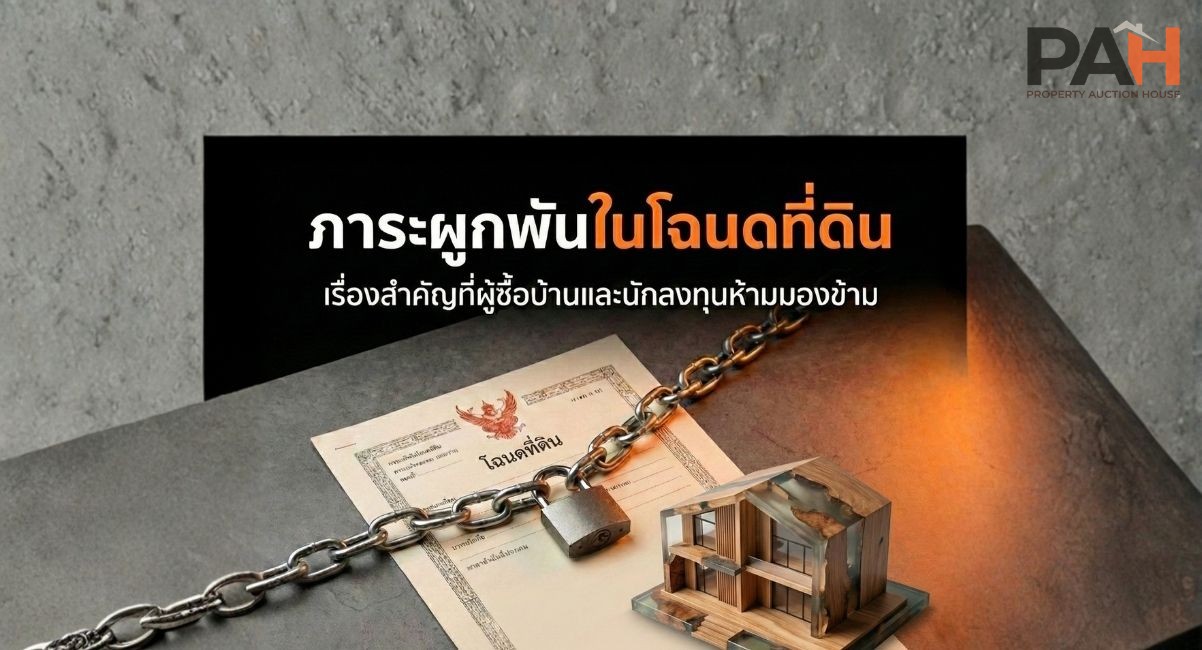
What Are Encumbrances on a Land Title Deed
A Critical Issue Buyers and Investors Must Understand
In property transactions, price and condition alone are not enough. Encumbrances registered on a land title deed can significantly affect ownership rights, transferability, and future use of the property.
What Is an Encumbrance on a Land Title
An encumbrance is a legal restriction or registered right attached to a land title deed that limits the owner’s rights. These encumbrances remain with the land even after ownership changes unless legally removed.
Common Types of Encumbrances
1) Mortgage
A registered security for a loan. Ownership cannot be transferred unless the mortgage is released.
2) Servitude (Easement)
Rights allowing others to use part of the land, such as access roads or drainage.
3) Right of Residence
Grants a person the right to live on the property, limiting the buyer’s use.
4) Court Seizure or Legal Order
Prevents transfer until the court order is lifted.
Why Buyers Must Check Encumbrances
Failure to check may result in:
Inability to transfer ownership
Unexpected legal obligations
Limited property use
Future legal disputes
How to Verify Encumbrances
Review the back of the title deed
Obtain a certified copy from the Land Office
Verify status before transfer day
Seek professional advice if unsure
Conclusion
A safe property transaction depends on understanding encumbrances. A clear or well-understood title deed protects buyers from long-term legal risk.
FAQ
Q1: What is an encumbrance on a land title deed?
A: A legal restriction or registered right attached to the land.
Q2: Can a mortgaged property be purchased?
A: Yes, but the mortgage must be released before or on transfer day.
Q3: Does an easement disappear after ownership transfer?
A: No, it remains attached to the land.
Q4: Can ownership be transferred if the land is seized?
A: No, until the court order is removed.
Q5: How should buyers check encumbrances?
A: Review the title deed and verify with the Land Office.