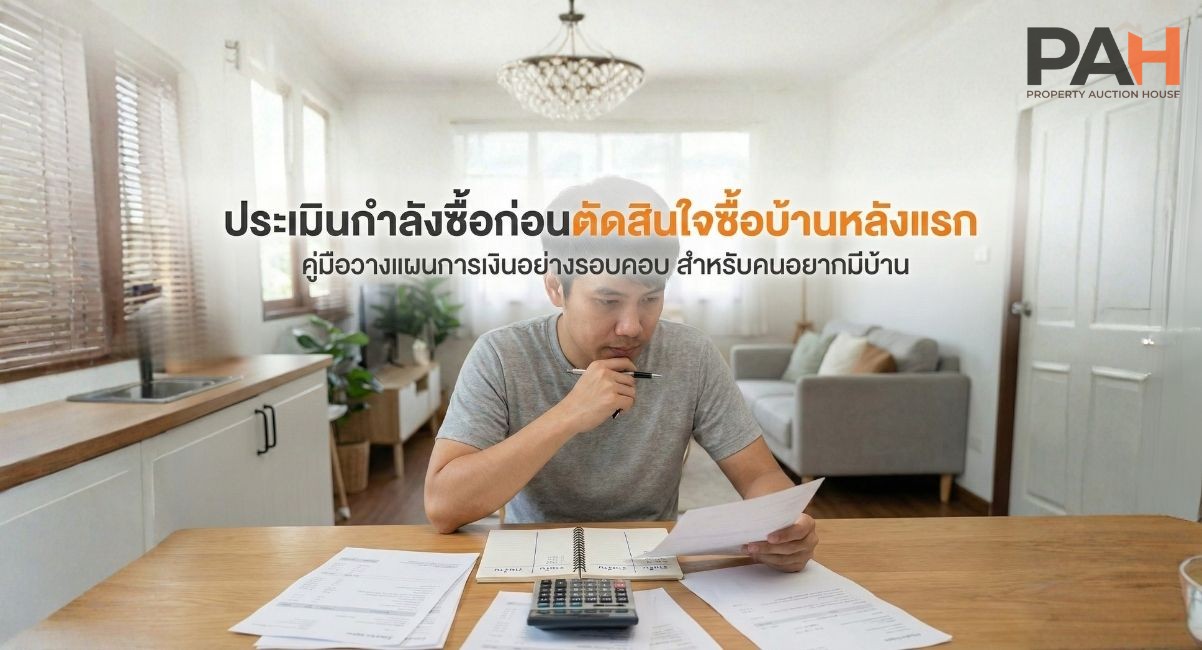
Assess Your Buying Power Before Purchasing Your First Home
A Financial Planning Guide for Foreign Investors in Thailand
Buying your first residential property in Thailand—whether for own stay or long-term investment—requires careful financial assessment. Unlike speculative purchases, first-home investments should prioritize affordability, loan eligibility, and sustainable cash flow.
This guide explains how banks assess mortgage applications, how to calculate safe repayment capacity, and why second-hand homes in prime locations remain attractive for foreign investors.
1. How Banks Assess Mortgage Eligibility
Thai financial institutions typically approve housing loans based on the borrower’s financial stability and repayment capacity.
Key considerations include:
Stable and regular income
Manageable existing debt
Good credit and financial history
Standard loan conditions
Loan amount: up to 90–95% of the appraised value
Monthly repayment: not exceeding 30% of monthly income
Loan tenure: borrower’s age + loan period must not exceed 65 years
These criteria are crucial for investors planning to structure cash flow efficiently and reduce long-term risk.
2. Calculate True Affordability, Not Just Income
A common mistake among first-time buyers is focusing only on gross income. Banks and prudent investors calculate affordability based on net disposable income.
Basic calculation
Net monthly income
– Existing debt repayments
= Safe monthly mortgage capacity
Overleveraging can limit future investment opportunities and increase default risk.
3. Why Second-Hand Homes Are Ideal for First-Time Investors
Second-hand properties often outperform new developments in terms of location and long-term demand.
Key advantages:
Located in established residential or economic zones
Close to transportation, business districts, and amenities
Limited supply of new developments in prime urban areas
As a result, resale and rental demand for well-located second-hand homes remains consistently strong.
4. Additional Costs Investors Must Budget For
Beyond monthly mortgage payments, investors should account for:
Property transfer fees
Mortgage registration fees
Valuation and bank processing fees
Renovation or refurbishment costs (especially for older homes)
Proper budgeting protects investment returns and prevents liquidity issues.
Conclusion: A Smart First Property Starts with Financial Discipline
By accurately assessing affordability, understanding bank lending rules, and choosing the right property type, foreign investors can confidently acquire their first home in Thailand while maintaining financial stability and future growth potential.
FAQ – First Home Investment in Thailand
Q: Can foreigners get a home loan in Thailand?
A: In most cases, loans are limited. Many foreign investors use cash or structured financing through local entities or partners.
Q: Is a second-hand home suitable for first-time investors?
A: Yes. Second-hand homes often provide better locations and lower entry prices.
Q: Should I borrow the maximum amount approved by the bank?
A: Not necessarily. Borrowing within a comfortable repayment range ensures long-term financial health.