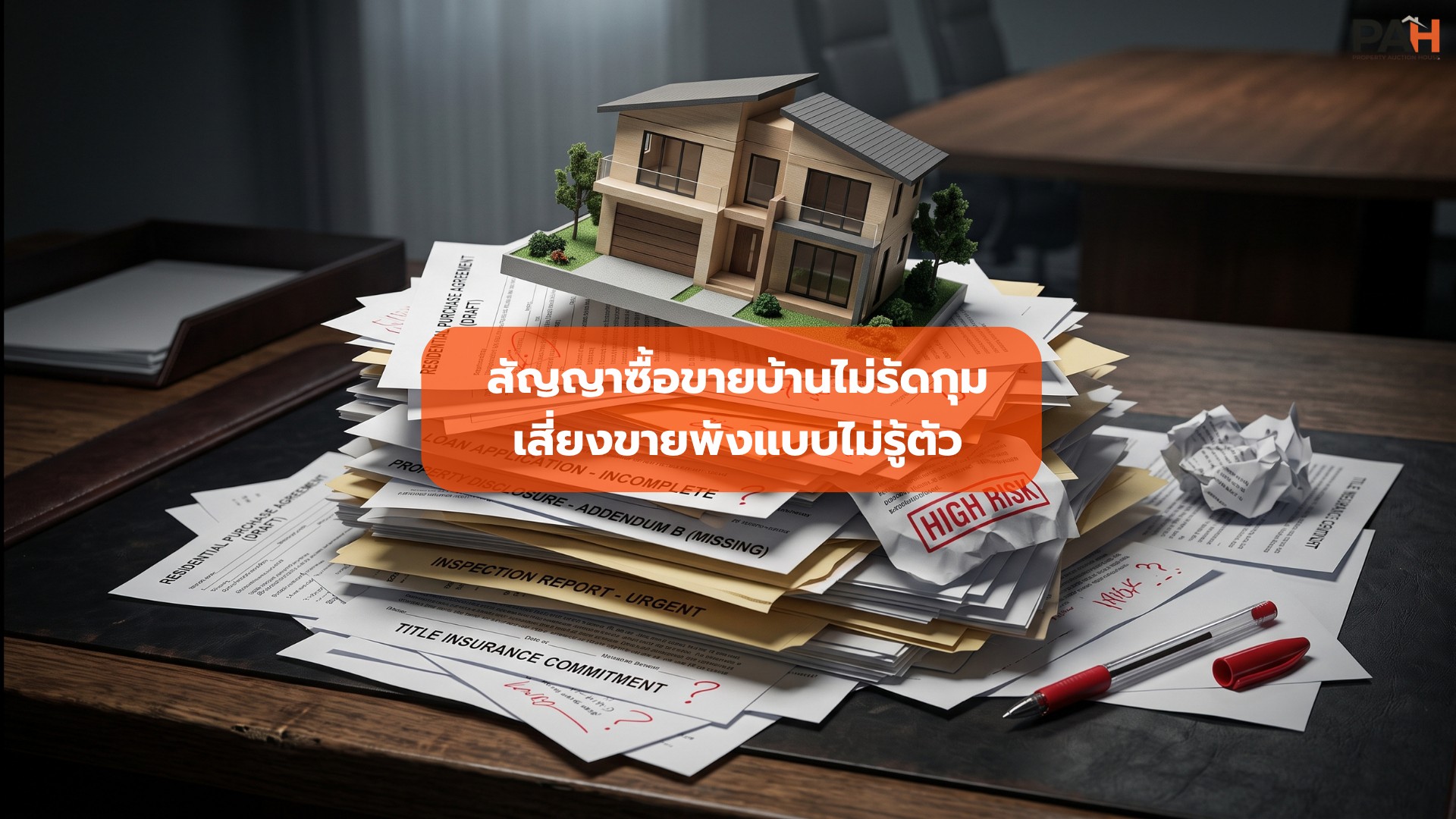
Error #6: Loose Transactions and Contracts
Even with an attractive price, move-in-ready condition, and complete documentation, if the transaction and sales contract are not airtight, a seemingly smooth sale can fail in an instant. It can also lead to disputes or leave one party legally disadvantaged without them even realizing it.
In practice, many sellers still use vaguely written contracts or fail to define key terms from the beginning, even though contracts and transactional procedures are the primary tools used to protect the rights of both sellers and buyers throughout the sales process.
Common Transaction and Contract Problems
1. Vague Purchase Agreements
Many contracts used in the market often share common weaknesses, such as:
Payment terms are not clearly specified, including the number of installments, amount per installment, and due dates.
The transfer date is uncertain, making it impossible for both parties to plan effectively.
Failure to specify breach of contract scenarios and the associated liabilities for each party.
2. Unclear Rights and Duties of Each Party
Often overlooked details that significantly impact the transfer day include:
Who is responsible for specific expenses (transfer fees, taxes, commission fees).
Who is responsible for handling documentation and the transfer process at the Land Office.
Who bears the responsibility if the property is damaged before the transfer date.
3. Unsystematic Receipt of Deposits and Down Payments
Deposits are one of the most frequent sources of disputes because, in many cases:
There is no clear proof of payment.
Refund conditions are not specified in advance.
When either party changes their mind, it easily leads to subsequent disputes.
Impact of Loose Contracts and Transactions
If a contract is left sloppy from the start, the consequences can be more serious than expected, including:
Legal disputes between the buyer and seller.
Buyer or seller withdrawing from the transaction without established criteria.
Delays in the transfer of ownership, or in the worst-case scenario, the transfer becomes impossible.
Loss of deposit or lost opportunity to sell to other potential buyers.
Wasted time and expenses on litigation or further legal consultation.
How to Manage Transactions and Contracts Properly
1. Use a Well-Structured Contract
A good contract must clearly state the selling price, payment methods, timeline, and other essential terms from the very first page, rather than relying on verbal understandings.
2. Clearly Define Breach of Contract Conditions
Specify in advance the consequences if either party breaches the contract, such as forfeiture of the deposit or claiming damages, to prevent unfair withdrawal.
3. Manage Deposits Systematically
Every time money is received, there should be clear proof of payment, and refund conditions should be stated straightforwardly in the contract to avoid future issues.
4. Have an Expert Review Before Signing
Before signing any contract, you should have a real estate agent, real estate expert, or legal consultant review it to ensure its accuracy and rigor.
Why Contracts and Transactions are Crucial to Selling a House
An airtight contract is more than just a formal document; it serves several vital functions:
It acts as legally binding evidence between the contracting parties.
It helps prevent misunderstandings between the buyer and the seller.
It reduces the risk of future disputes.
It ensures the ownership transfer process goes according to plan.
Conclusion
Selling a house safely and smoothly until the transfer day does not depend on price or house condition alone; it requires airtight contracts and transactional procedures. A clear contract from the beginning will help reduce risks, prevent disputes, and allow both buyers and sellers to close the sale with confidence at every step.
Frequently Asked Questions (FAQ)
Q1: Can I use a generic contract from the internet? A: It can be used as a basic guideline, but it should be tailored to the specific property and conditions of each case. It is recommended to have an expert review it before actual use.
Q2: Should the deposit be mentioned in the contract? A: Yes, it should be clearly stated, including the amount, refund conditions, and breach of contract scenarios to prevent future disputes.
Q3: What should I do if the other party breaches the contract? A: You must refer primarily to the terms specified in the contract to take action. If the contract is not clear from the start, the damaged party may be at a disadvantage.
Q4: How does a contract affect the transfer day? A: A good contract sets out clear procedures and timeframes for the transfer, helping to minimize delays and confusion on the actual transfer date.
Q5: Who should review the sales contract before signing? A: A real estate agent, real estate expert, or legal consultant should review it before every signature.
This article provides general information for basic understanding only and does not constitute legal advice for any specific case. If you have questions regarding your sales contract, you should consult a lawyer or a real estate expert directly.