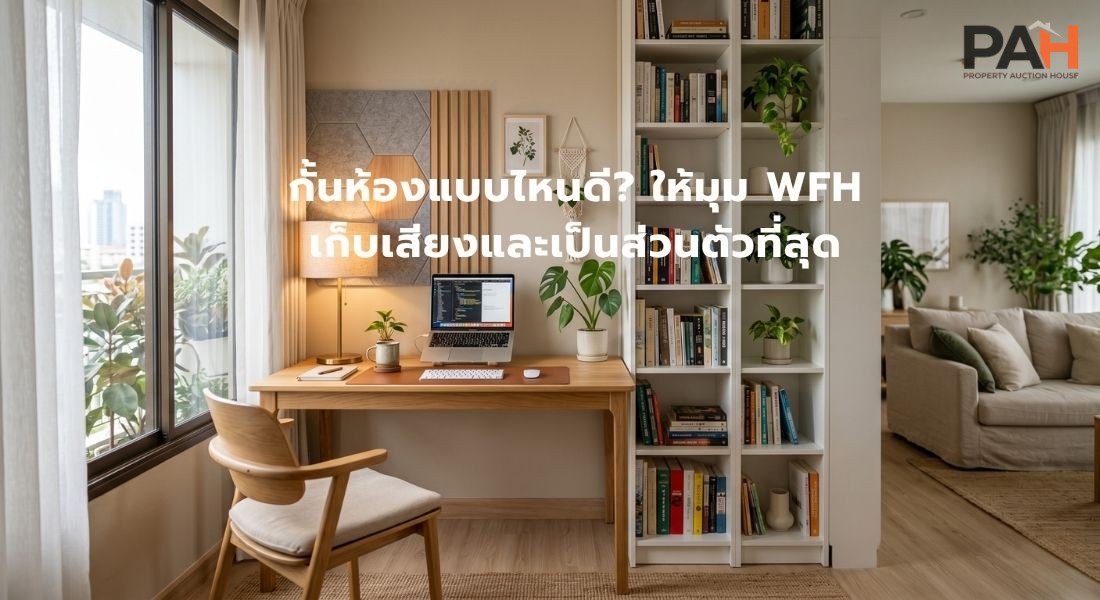
Which Room Partition is Best? For a Private and Soundproof WFH Corner
Transform any corner of your home into a true Home Office with smart space partitioning.
Short answer for those in a hurry
The best way to partition a WFH corner depends on 3 factors: budget, desired permanence, and space size. If you need maximum soundproofing on a mid-range budget, choose "Acoustic Gypsum Board modular walls." If your budget is limited or you live in a condo, opt for a combination of "tall shelving units + Acoustic Foam + thick curtains."
Why does a WFH corner need to be partitioned?
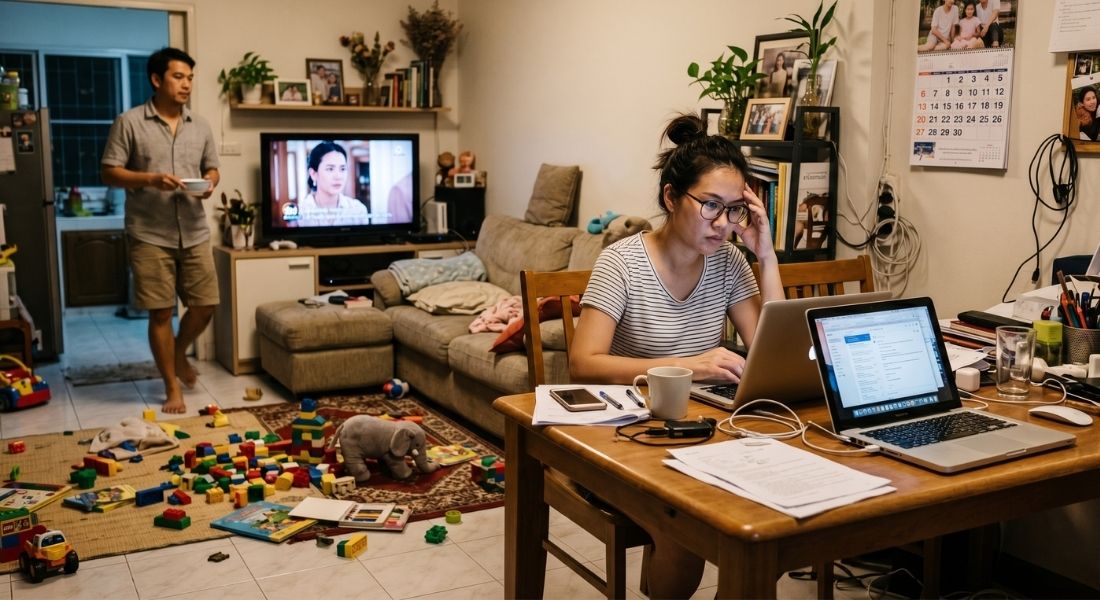
Working from home without a clear boundary directly impacts productivity. Research from the University of California found that it takes an average of 23 minutes and 15 seconds to regain focus after being interrupted once.
There are two main problems faced by remote workers:
1. Acoustic Problems
Conversations of household members
TV, kitchen, or children's noise
Outside noise such as traffic or construction
2. Visual Privacy Problem - messy backgrounds in Video Calls
People walking behind you during meetings
Peripheral movement distracting your focus
5 ways to partition a WFH corner, ranked from easy to difficult
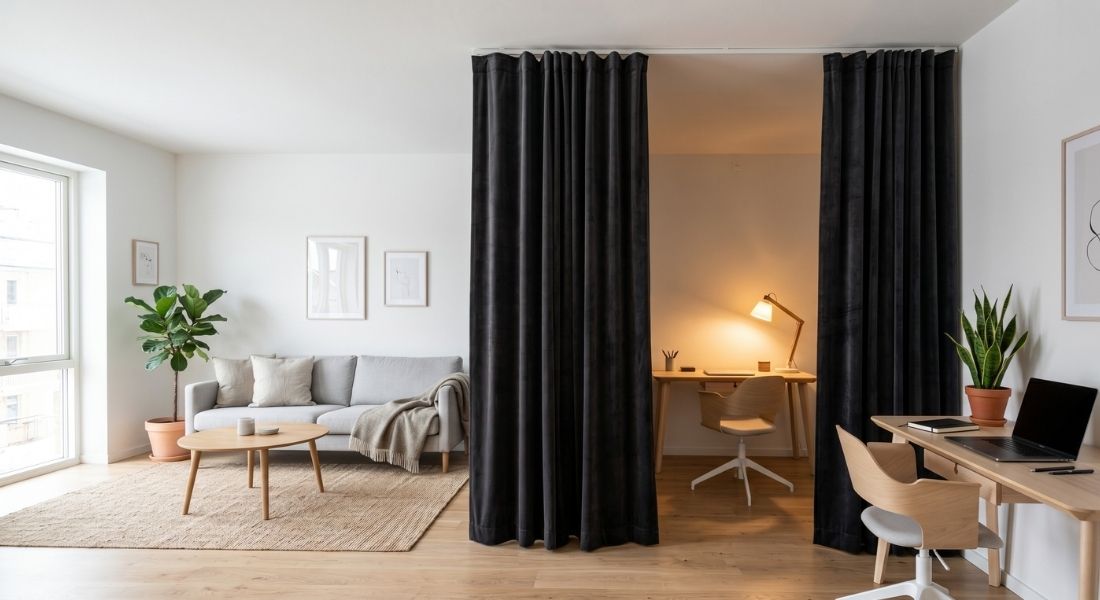
Method 1 — Curtain Divider
Suitable for: Low budget, renters, small condos. Estimated budget: 500–3,000 THB
Curtains are the easiest and cheapest way to create visual privacy. This method requires no drilling, can be installed with ceiling tracks or stands, and is easy to move.
Fabric materials that help with sound:
Velvet — thick, absorbs echo to a certain extent
Double-layered Blackout fabric — 100% visual blocking and partial sound absorption
Thick Linen — aesthetically pleasing and helps reduce echo in the room
Limitations to know: Curtains block very little sound from adjacent rooms. They are suitable for reducing visibility and Echo within the workspace, not for serious soundproofing.
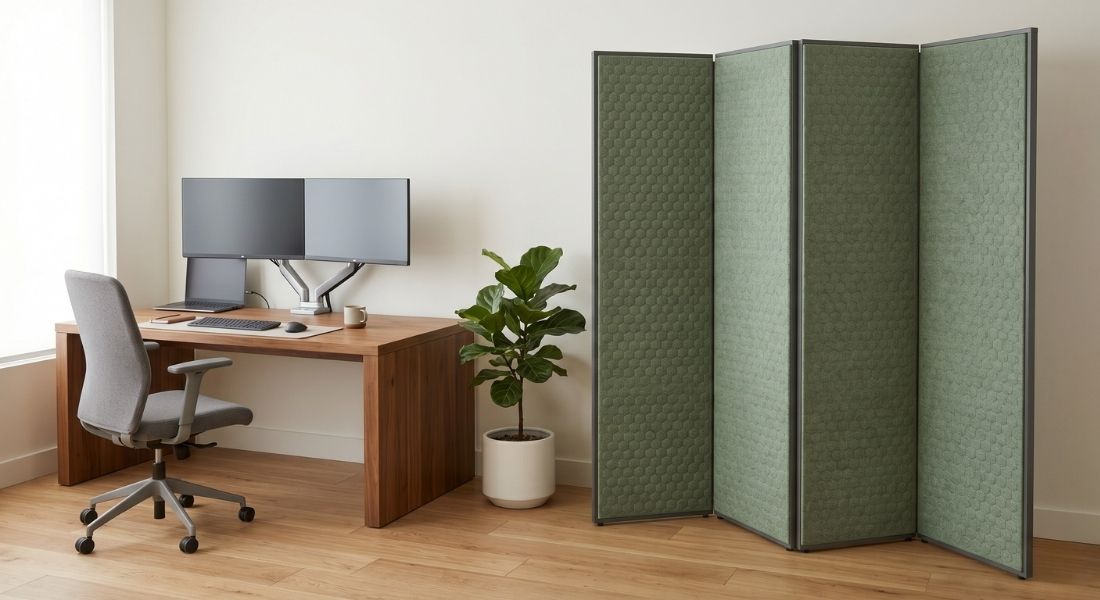
Method 2 — Room Dividers
Suitable for: Those who need flexibility and mobility. Estimated budget: 2,000–15,000 THB
There are many types of room dividers, each offering different acoustic and privacy results.
Divider Type | Soundproofing | Privacy | Price |
|---|---|---|---|
Folding Panel | Low | Good | 2,000–5,000 THB |
Frosted Glass Panel | Very Low | Medium | 5,000–15,000 THB |
Fabric Panel | Medium | Very Good | 3,000–8,000 THB |
Acoustic Foam Panel | Good | Very Good | 4,000–10,000 THB |
Recommendation: Choose panels with thick fabric or foam interiors because they actually absorb echo, unlike wood or glass screens that reflect sound back.
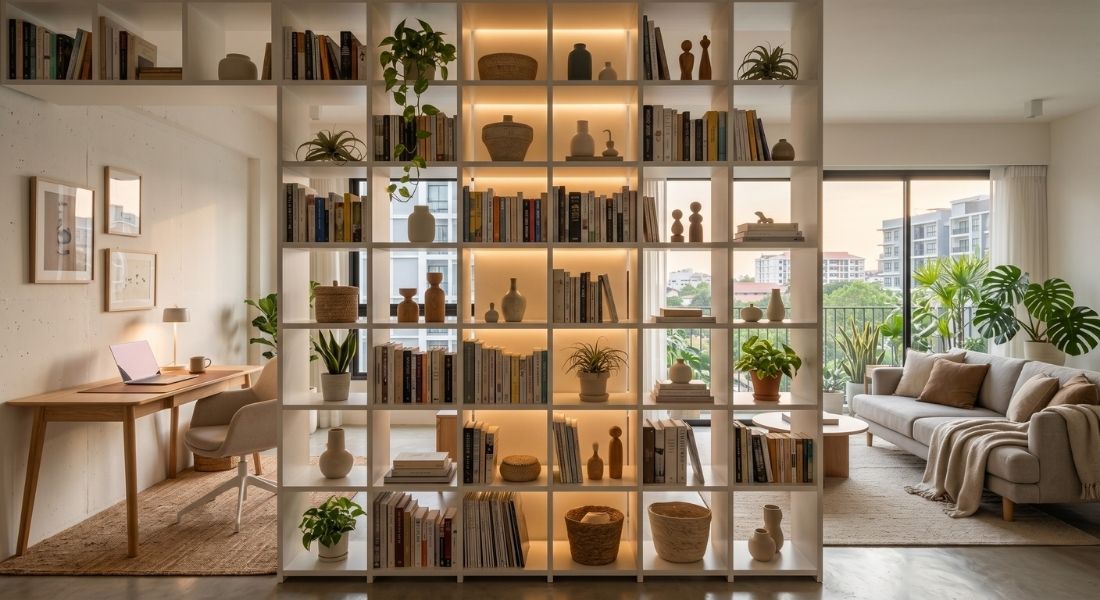
Method 3 — Bookshelf Divider
Suitable for: Those who love aesthetics + need storage space. Estimated budget: 3,000–20,000 THB
A full-height bookshelf is one of the smartest methods because it provides 3 benefits at once: visual partitioning, added mass to help absorb sound, and functional storage.
Physics principle to know: Objects with high mass and density help reduce sound transmission. A bookshelf filled with books soundproofs much better than an empty one.
Techniques to improve efficiency:
Place the shelf flush against the ceiling, leaving no gap at the top.
Add Acoustic Foam to the back of the shelf facing the workspace.
Use double-sided shelves without a back panel to minimize sound transmission.
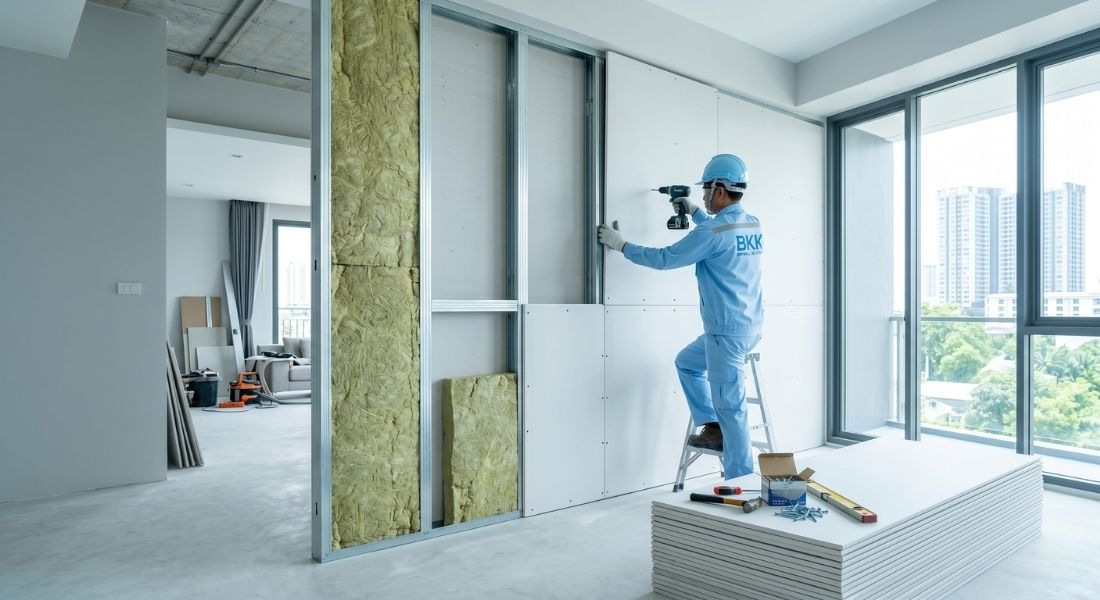
Method 4 — Modular Partition Wall
Suitable for: Those who want serious soundproofing without permanent construction. Estimated budget: 15,000–60,000 THB
Modular walls provide soundproofing results close to real masonry walls, but they don't require contractors and can be disassembled when needed.
Main materials used:
Acoustic Gypsum Board is a popular choice for modular walls. It has an STC (Sound Transmission Class) rating of 35–50, meaning it can reduce noise by 35–50 decibels. A double-layer gypsum board wall with insulation in the middle can reach an STC of 45–55, quiet enough for a Home Office.
Recommended structure for a WFH corner:
Steel or aluminum C-Channel frame
1 layer of Acoustic Gypsum Board
Glasswool or Rockwool compressed in the middle
Another layer of Acoustic Gypsum Board
Method 5 — Permanent Brick or Light-weight Wall
Suitable for: Homeowners, long-term WFH, those needing a dedicated room. Estimated budget: 50,000 THB and up (depending on size and materials)
Permanent construction provides the best soundproofing. A 10 cm thick lightweight brick wall + plaster has an STC of 45–55, and a 15 cm concrete wall has an STC as high as 55–60.
Things to do before deciding:
Check lease agreements or condo association rules.
Apply for building modification permits if necessary.
Check the locations of water pipes and electrical lines before building.
Side-by-side comparison
Method | Soundproofing | Privacy | Price | Permanent | No-drill |
|---|---|---|---|---|---|
Curtain | ⭐ | ⭐⭐⭐⭐ | 500–3K | ❌ | ✅ |
Room Divider | ⭐⭐ | ⭐⭐⭐ | 2K–15K | ❌ | ✅ |
Bookshelf | ⭐⭐⭐ | ⭐⭐⭐ | 3K–20K | Semi-perm | ✅ |
Modular Wall | ⭐⭐⭐⭐ | ⭐⭐⭐⭐⭐ | 15K–60K | Semi-perm | ❌ |
Permanent Wall | ⭐⭐⭐⭐⭐ | ⭐⭐⭐⭐⭐ | 50K+ | ✅ | ❌ |
Acoustic materials to know before choosing
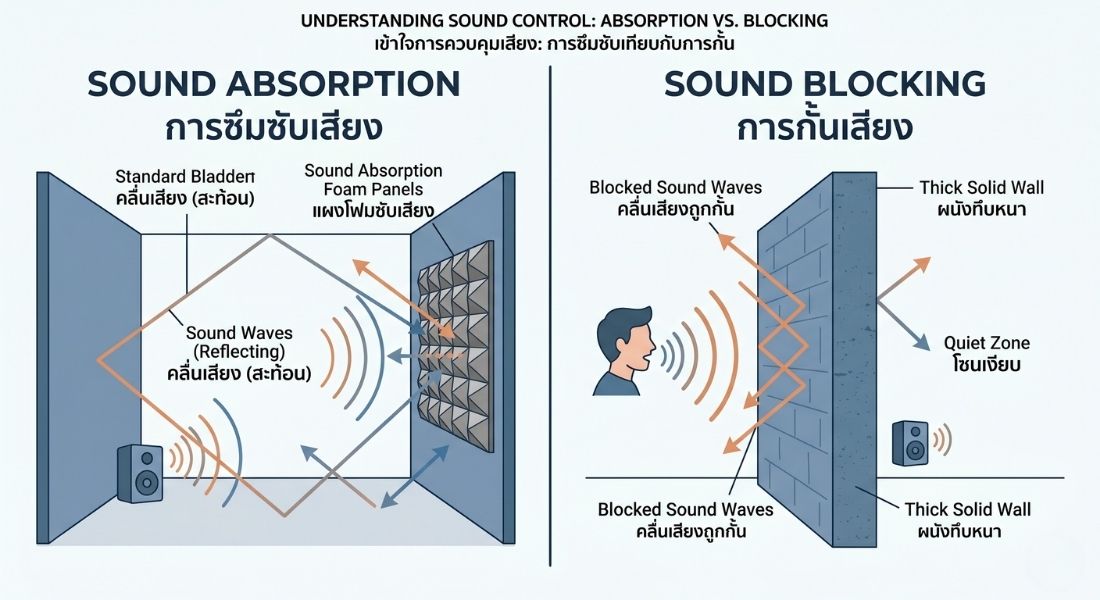
Sound Absorption vs Sound Blocking — What's the difference?
This is the most common misunderstanding when setting up a Home Office.
Sound Absorption is the reduction of Echo/Reverb within a room, making the audio clearer and less boomy. Materials used include Acoustic Foam, rugs, fabric, sponge. Use this when you want your voice to sound clearer during online meetings.
Sound Blocking is preventing noise from outside entering, or noise from inside leaving. Materials used include thick walls, Mass Loaded Vinyl, multi-layer gypsum board. Use this when there is external noise or you need real privacy.
In short: Need clear voice for meetings → use Sound Absorption / Want to be quiet from surroundings → use Sound Blocking / Need both → use them together.
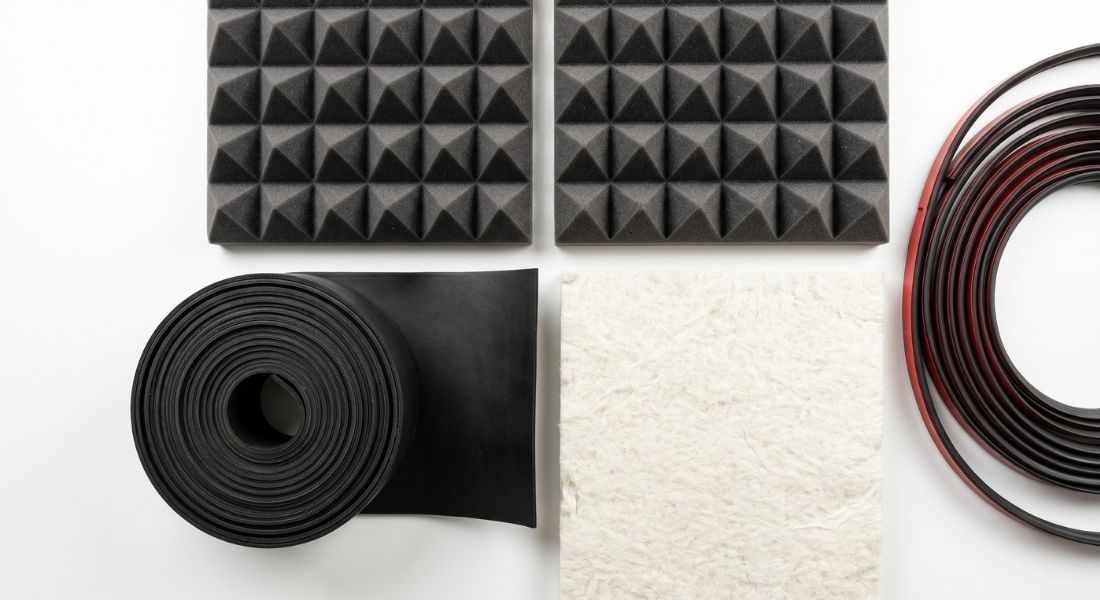
Recommended materials for each type
Acoustic Foam Panel: Excellent at absorbing echoes. Price 200–500 THB/piece. Can be attached to walls with 3M tape, no drilling required. NRC (Noise Reduction Coefficient) is around 0.7–0.95. Recommended to install on the wall behind the monitor and on both side walls.
Mass Loaded Vinyl (MLV): A heavy, dense rubber material for blocking sound. Can be hung as a curtain, attached to walls, or placed under carpets. Price 800–2,000 THB/sq.m. It is the most cost-effective way to increase sound blocking without construction.
Glasswool / Rockwool: Used as filling within modular wall structures. Price 150–400 THB/piece. Rockwool is better than Glasswool as it is moisture-resistant, mold-resistant, and has a higher sound absorption rating.
Thick Carpet + Underlay: Often overlooked but very effective. Tile floors reflect a lot of sound; a thick carpet can reduce room Reverb by 30–50%. Choose a pile height of 10 mm or more.
Recommended formulas for real-life situations
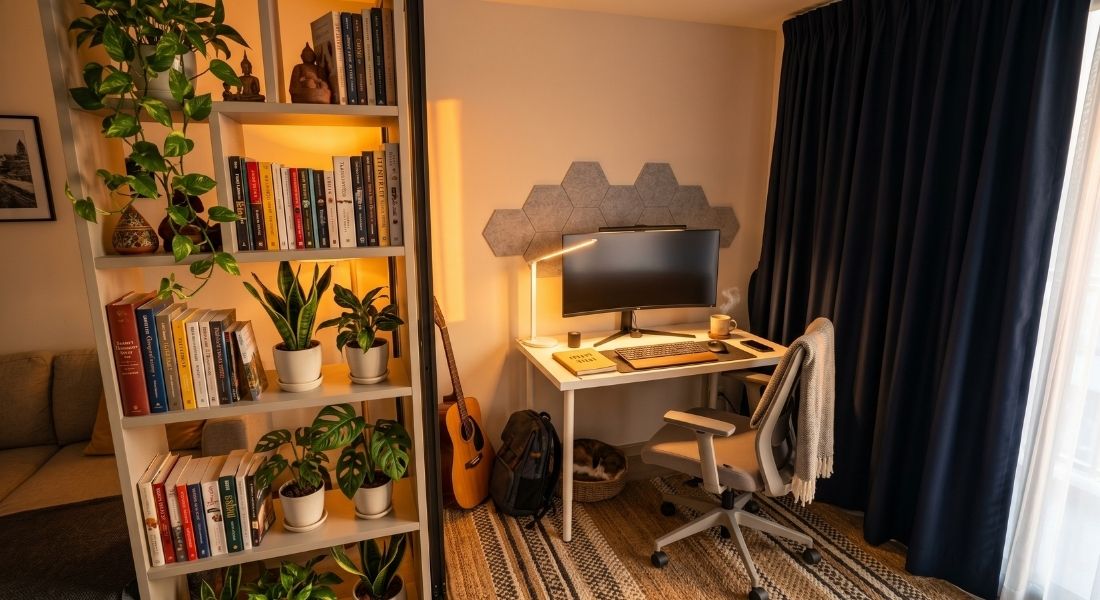
🏠 Formula for condo/rental, budget not exceeding 10,000 THB
Main problems: Cannot drill walls, small space, need flexibility.
Recommended:
Full-height bookshelf (IKEA KALLAX or Billy) → partitions space and absorbs sound.
Thick Blackout curtain on one side → blocks sight and reduces Echo.
6–9 Acoustic Foam panels attached with 3M tape behind the monitor and sides → reduces echo.
Thick carpet under the desk → reduces floor Reverb.
Seal door gaps with Door Seal Strip → reduces sound leaks.
Result: Room echo is significantly reduced, voices in Video Calls sound clearer, and outside noise is reduced to a certain degree.
🏡 Formula for detached house, budget 20,000–50,000 THB
Main problems: Need real quiet, don't want permanent construction.
Recommended:
Double-layer gypsum modular wall + Rockwool in the middle → provides main sound blocking.
Solid door with seals around the edges → closes sound gaps.
4–6 Acoustic Panels inside the room → reduces Echo.
Thick carpet + Rug Pad → manages floor sound.
Seal air vents with Acoustic Duct Wrap → prevents sound leakage through ducts.
Result: A home office that is quiet enough for a basic recording studio; you can conduct meetings without outside interference.
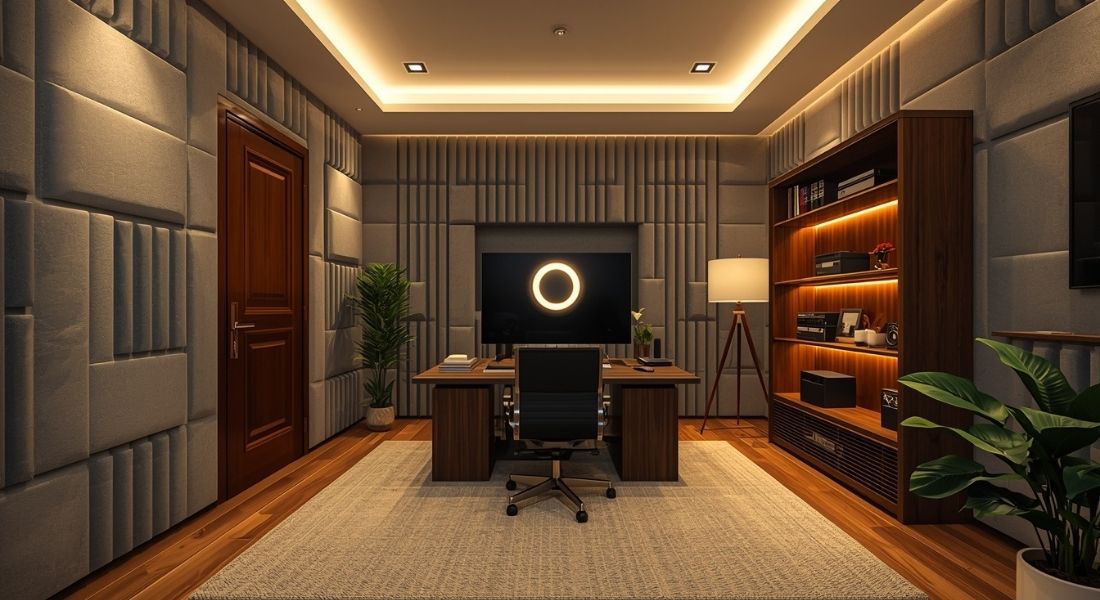
🏢 Formula for those needing a Home Studio / Permanent meeting room, budget 80,000 THB+
Recommended:
Lightweight brick wall + plaster.
Double Wall system (2 layers of walls with an air gap) → Maximum STC.
Acoustic suspended ceiling → blocks sound from the floor above.
Special soundproof door (Acoustic Door) → the weakest point of a room.
Floating Floor → prevents impact sound.
Tips often overlooked
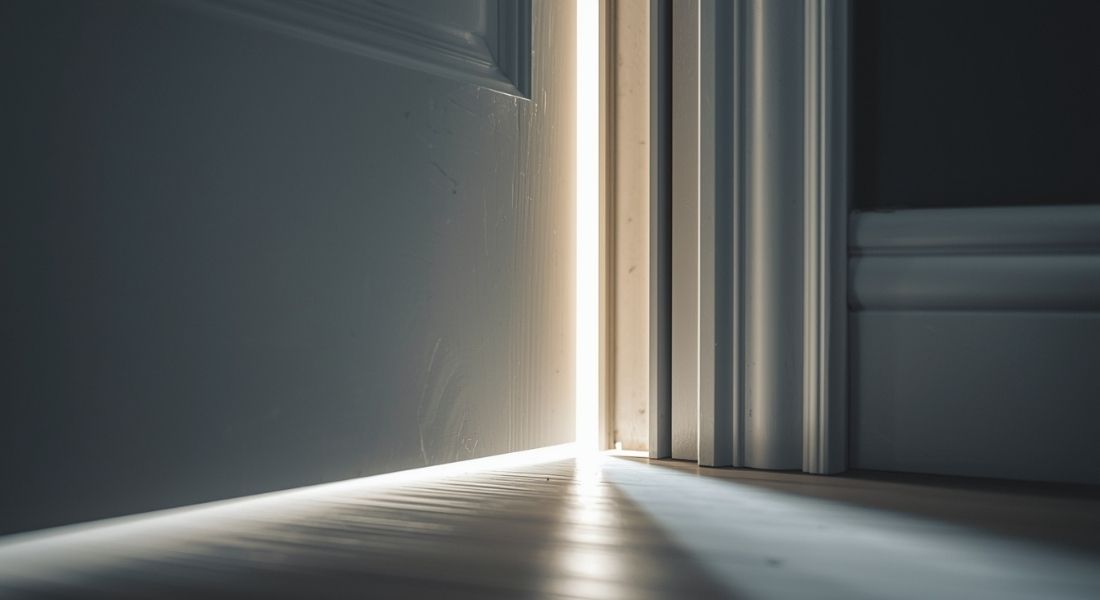
1. The door is always the weakest link. No matter how good the wall is, if the door has gaps, sound will leak through. Install Door Seal Strip around the edges and a Door Bottom Seal under the door first. Prices start at 300–500 THB but yield clear results.
2. Windows are the second weakest link. Single-pane glass has a very low STC of only about 25–28. Changing to Double Glazing or adding Secondary Glazing on the inside can increase STC to 35–45.
3. Plants help less than you think. Indoor plants can absorb a small amount of echo from the leaf surface but do not block external sound. They have very little acoustic effect and should not be relied upon as a primary method.
4. Room shape matters. Rectangular rooms create standing waves more easily than rooms with angled walls or irregular shapes. Placing Acoustic Panels at 45-degree angles in the corners helps reduce this problem.
FAQ — Frequently Asked Questions
Q: Can I partition a room without drilling at all? Yes, by using full-height bookshelves, weighted room dividers, or ceiling-track curtains that don't require drilling. However, soundproofing results will be lower than with real walls. This can be offset by adding Acoustic Foam and MLV.
Q: How much budget is needed to make Video Calls sound clearer? With just 2,000–5,000 THB for 6–9 Acoustic Foam panels + Door Seal + thick carpet, room echo can be significantly reduced, and the other party will immediately notice the difference.
Q: Do I need to ask the condo juristic office for permission before partitioning? It depends on the method used. Using room dividers, bookshelves, or curtains doesn't require permission. However, if building a permanent wall or modular walls fixed to the floor and ceiling, you should always check the juristic rules first.
Q: Is there a difference between black and gray Acoustic Foam? The color has no effect on sound absorption. What matters is the thickness (recommended 5 cm or more), density, and the pattern (Wedge or Pyramid provide similar results).
Q: Will the room get hotter after installing Rockwool? Rockwool and Glasswool are also thermal insulators. Therefore, when used in modular walls, they will help reduce heat from outside. The room will not get hotter; it might even feel slightly cooler.
Conclusion — Choose the right method for you
Partitioning a WFH corner doesn't have to mean tearing down your home or spending a fortune. It depends on understanding "what your real problem is."
If the main problem is unclear voice in Video Calls → Start with Acoustic Foam + Door Seal, budget under 3,000 THB.
If the main problem is visual distraction → Blackout curtains or tall bookshelves solve this immediately.
If the main problem is loud external noise → Invest in real walls or modular walls + MLV.
If you need everything in the long term → Modular wall with Rockwool + solid door + Acoustic Panels inside is the most cost-effective answer.
Key principle: Always fix the weakest point first. No matter how much you invest in walls, if the door is leaky, sound will still enter.
Content updated: 2026 | Suitable for homes and condos in Thailand