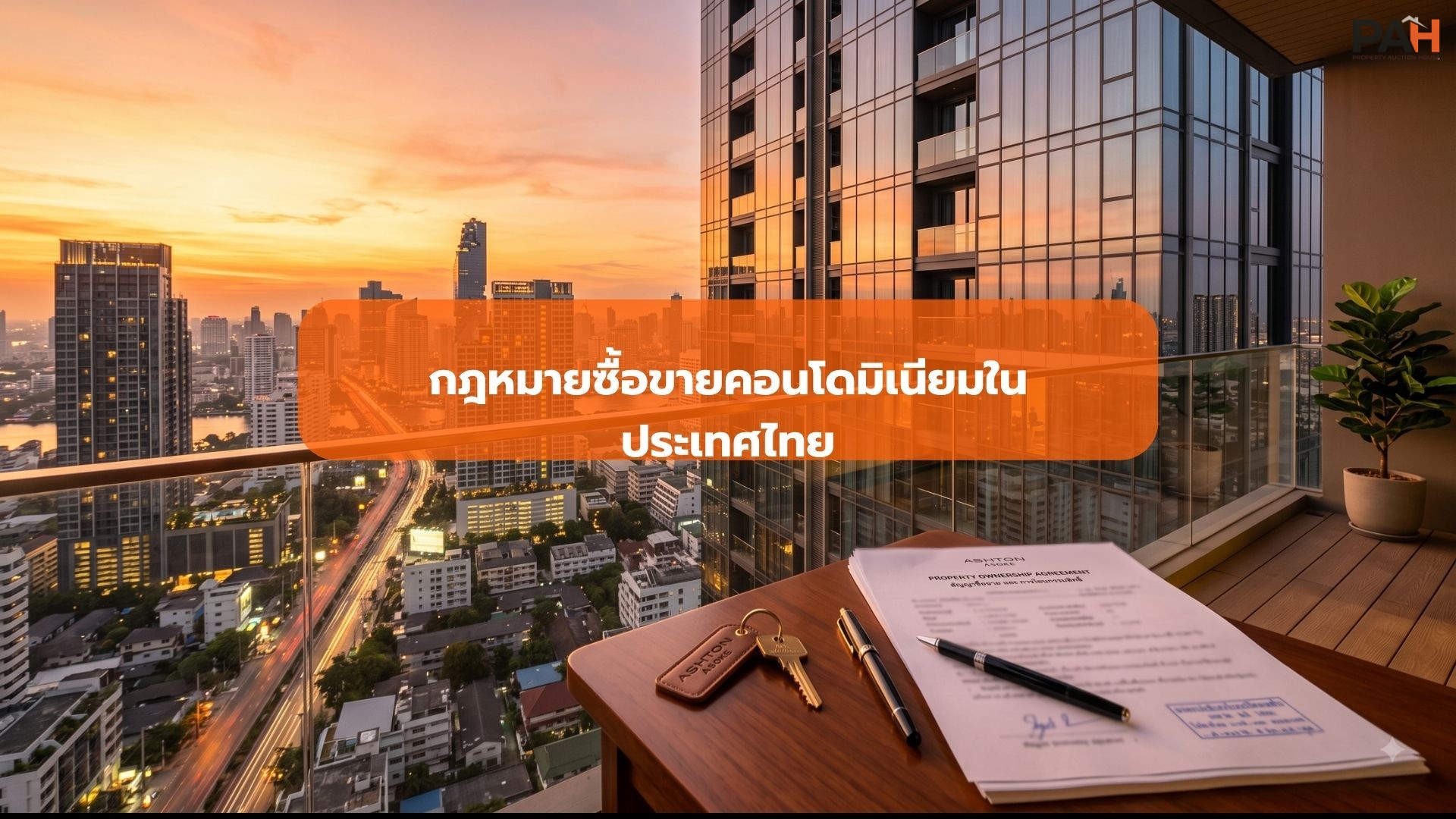
Condominium Trading Laws in Thailand: A Complete Guide for Buyers and Sellers
A condominium is a highly popular type of real estate among both Thai and foreign buyers, as it is the only form of property that Thai law allows foreigners to own directly. However, condominium transactions involve specific legal details that both buyers and sellers must thoroughly understand, including ownership rights, the transfer of title process, taxes and fees, as well as potential legal risks. This article provides a comprehensive overview of condominium trading laws in Thailand.
1. Primary Laws Governing Condominium Transactions
Condominium trading in Thailand is governed by three main laws working in conjunction:
The Condominium Act, B.E. 2522 (1979) and its amendments: This is the specific law that defines condominium status, unit ownership structures, common property, juristic persons, and the conditions for foreign ownership.
The Land Code: This regulates land ownership, which is why foreigners cannot directly own land. However, they can own condominium units because a unit is classified as a different type of property from land.
The Civil and Commercial Code: This sets out the general principles for real estate sales contracts, particularly Section 456, which mandates that a real estate sale must be made in writing and registered with the competent official; otherwise, it is void.
These three laws make condominium transactions unique compared to houses or land, especially regarding the rights of foreign nationals.
2. Condominium Ownership Rights for Thais and Foreigners
Rights of Thai Nationals
Thai buyers can own condominium units without any restrictions on the number of units or the proportion of floor area, whether purchasing for personal residence or for investment purposes.
Rights of Foreigners: The 49% Quota
Under Section 19 bis of the Condominium Act, foreigners or foreign juristic persons as specified by law may own condominium units. However, the total area of units owned by foreigners in any single condominium project must not exceed 49% of the total floor area of all units in that building. In other words, at least 51% of the floor area must always be owned by Thai nationals or Thai juristic persons.
Currently, there are proposals from the private sector and relevant agencies to increase the foreign ownership quota to stimulate the real estate market. However, as of now, the law still maintains the 49% ceiling. Foreign buyers should always verify the remaining quota of a project with the Condominium Juristic Person before deciding to purchase. If the quota is full, the title cannot be transferred to a foreigner as a Freehold unit.
Foreigners wishing to buy a condo must meet one of the qualifications prescribed by law, such as being a person permitted to reside in the Kingdom, a person permitted to enter the country under the Investment Promotion Law, or a juristic person registered under Thai law that is considered a foreigner under the Land Code. Most importantly, the buyer must bring foreign currency into the Kingdom to pay for the full purchase price of the unit. Evidence of the fund transfer, such as a Foreign Exchange Transaction (FET) form or a bank certificate (for transfers under 50,000 USD), must be submitted to the Land Department during the registration process.
3. The Condominium Trading Process
Generally, the process of buying and selling a condominium in Thailand involves the following steps:
Due Diligence: Verify the land title deed and the condominium title deed (A.Ch.2), check for encumbrances such as mortgages, verify the foreign quota status, obtain a "debt-free certificate" from the Condominium Juristic Person, and confirm that the seller is the true legal owner.
Sales and Purchase Agreement: This is a preliminary contract specifying the price, payment terms, the date of title transfer, and the allocation of taxes/fees between the parties. A deposit is typically paid at this stage.
Document Preparation: Both the buyer and seller must prepare identification documents (ID cards/passports), house registration, power of attorney (if applicable), and in the case of foreign buyers, additional evidence of fund transfers from abroad.
Registration of Title Transfer at the Land Office: Both parties must appear before the competent official at the local Land Office where the condominium is located, pay the required taxes and fees, and sign the transfer registration documents.
Receipt of Title Deed: Once registration is complete, the ownership is fully transferred to the buyer. The buyer should then notify the Condominium Juristic Person of the change in ownership to ensure proper management of common area fee payments.
4. Taxes and Fees for Condominium Transactions (2026 Update)
The costs payable on the day of title transfer at the Land Office consist of the following main items:
Item | Rate | Standard Payer |
|---|---|---|
Transfer Fee | 2% of the appraised value | Usually split equally between buyer and seller, or per agreement |
Specific Business Tax (SBT) | 3.3% of the sale price or appraised value (whichever is higher) | Seller, if holding for less than 5 years or if name has been on house registration for less than 1 year |
Stamp Duty | 0.5% of the sale price or appraised value | Seller, if holding for more than 5 years (replaces SBT) |
Withholding Tax | Progressive rate for individuals, or 1% flat rate for juristic persons | Seller |
Mortgage Registration Fee (if mortgaged with a bank) | 1% of the mortgage amount | Buyer |
Important Note for 2025–2026: The government has implemented measures to stimulate the real estate sector by reducing transfer and mortgage registration fees to 0.01% for residential properties, including condominium units with a sale price and appraised value not exceeding 7 million baht. This is effective until mid-2026. Those planning to trade condos during this period should verify the latest conditions and duration with the Land Department before proceeding, as these measures are often extended or adjusted periodically.
5. Essential Documents
Buyer (Thai national): National ID card, house registration, and marriage/divorce certificate (if any).
Buyer (Foreigner): Passport, evidence of foreign currency transfer (FET Form or bank certificate), and a Power of Attorney using the official Land Department form if a representative is acting on their behalf.
Seller: Original title deed or condominium ownership certificate, debt-free certificate from the Condominium Juristic Person, and a document confirming the foreign ownership quota status of the building (if the buyer is a foreigner).
6. Legal Precautions
Nominee Structure: Using a Thai person to hold shares on behalf of a foreigner in a company to circumvent the 49% quota, where the Thai person does not actually invest, is illegal. Both parties face severe criminal risks, and relevant authorities are continuously increasing their oversight.
Leasehold: This is an alternative if the foreign quota is full, but it comes with legal limitations on lease terms and renewal conditions which may not be fully legally binding. Consult a legal expert before deciding.
Checking for Encumbrances: Always check if the unit is mortgaged or subject to litigation by requesting a copy of the title deed from the Land Office.
Outstanding Common Area Fees: Debts of the previous owner may follow the unit. Always request a debt-free certificate from the Condominium Juristic Person before the transfer.
Conclusion
Condominium trading in Thailand has a clear legal framework but involves specific details that both buyers and sellers must carefully study. Whether it concerns foreign ownership quotas, the transfer process, taxes, fees, or the risks of "nominee" arrangements, which are strictly penalized by law, verifying documents and consulting a real estate legal expert before every transaction will help minimize risks and ensure that the sale is smooth and legally compliant.
References
For accuracy and further in-depth study, you may refer to the following official sources:
Department of Lands, Ministry of Interior — Information on title transfer procedures and related documents.
The Revenue Department — Latest withholding tax and specific business tax rates.
The Treasury Department (Property Appraised Value System) — Check land and condominium appraised values.
Bank of Thailand — Regulations regarding foreign currency transfers and the FET form.