The Affordability Crisis: When Income Fails to Keep Up with Housing Prices, Why are "Renovated Second-hand Townhomes" the Answer?
An analysis of the housing affordability crisis, along with practical guidelines for the new generation who want to own a home in an era where real estate prices never stop rising.
Introduction: Dreams Closed Off by Price
If you have started your career within the last 5–10 years and have tried browsing real estate websites for home prices in Bangkok or its outskirts, feeling like "these numbers aren't quite right?" Let us tell you, you are not wrong.
New townhome prices in the suburbs of Bangkok, which were 1.5–2 million THB a decade ago, have now surged to 3–5 million THB. Meanwhile, the average salary for working people in Thailand has grown by less than 3% per year. This widening gap is what economists call the Affordability Crisis.
However, every crisis often hides a solution. In this article, we will show you why a "renovated second-hand townhome" has become the smartest solution in the current market.
Numbers You Must Know: How Severe is the Housing Price Crisis in Thailand?
Before talking about solutions, we must understand the scale of the problem.
Home prices are growing almost 3 times faster than income. During 2015–2024, residential prices in Bangkok and its metropolitan areas increased by an average of 5–8% per year, according to the REIC (Real Estate Information Center), while average household income grew by only 2–3% per year, according to the National Statistical Office.
The Price-to-Income Ratio is alarmingly high. A key indicator in the real estate industry is the price-to-annual-income ratio. The standard "affordable" value is 3–4 times. For Bangkok, this figure is already at 10–14 times. This means that middle-income Bangkok residents would need to save (without spending anything at all) for 10–14 years to buy a home.
Thai household debt remains high. The Bank of Thailand reports that Thai household debt remains above 90% of GDP, which has also led financial institutions to tighten home mortgage lending.
Understanding the Affordability Crisis Beyond Just "Expensive Homes"
This crisis is not caused by a single factor, but is the sum of several factors occurring simultaneously.
Surging construction costs: The prices of construction materials, steel, cement, and labor have all increased significantly after COVID-19, leaving developers with no choice but to adjust selling prices.
Prime land is becoming scarce: Land within a 30-kilometer radius of central Bangkok is almost non-existent at prices that allow for lower-middle-market developments, forcing new projects further and further out.
High interest rate policy: Higher mortgage interest rates in recent years have significantly increased the monthly burden for homes of the same price.
Gen Y and Gen Z are hit hardest: Those aged 25–40 are currently the group that entered the workforce during economic volatility, carrying student debt and having to compete with soaring home prices at a time when their savings are at their lowest.
What Exactly is a Renovated Second-hand Townhome?
Before discussing the benefits, let's define it clearly.
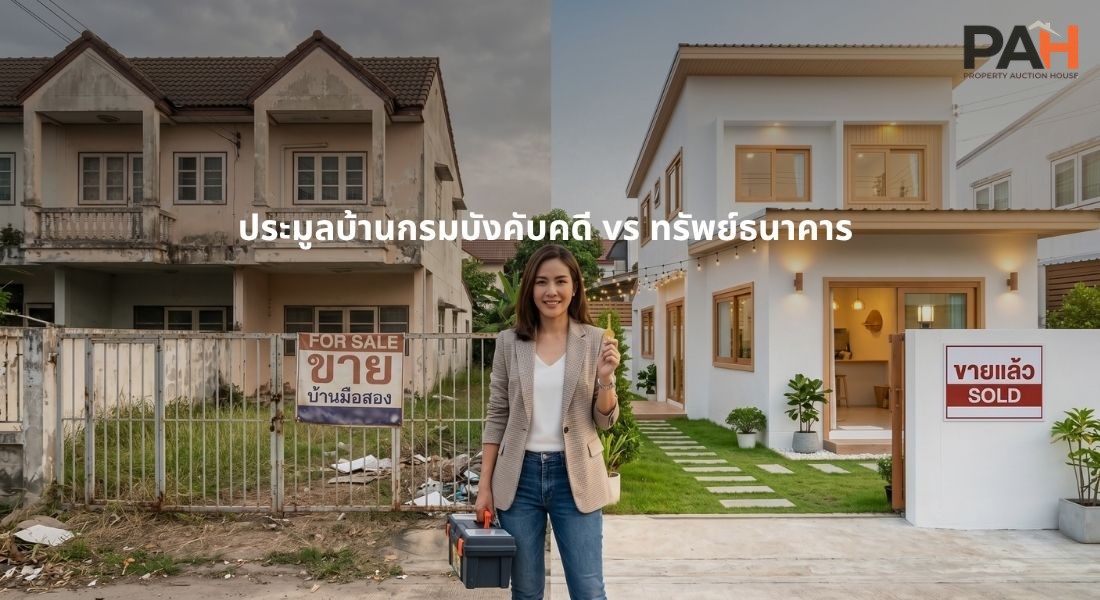
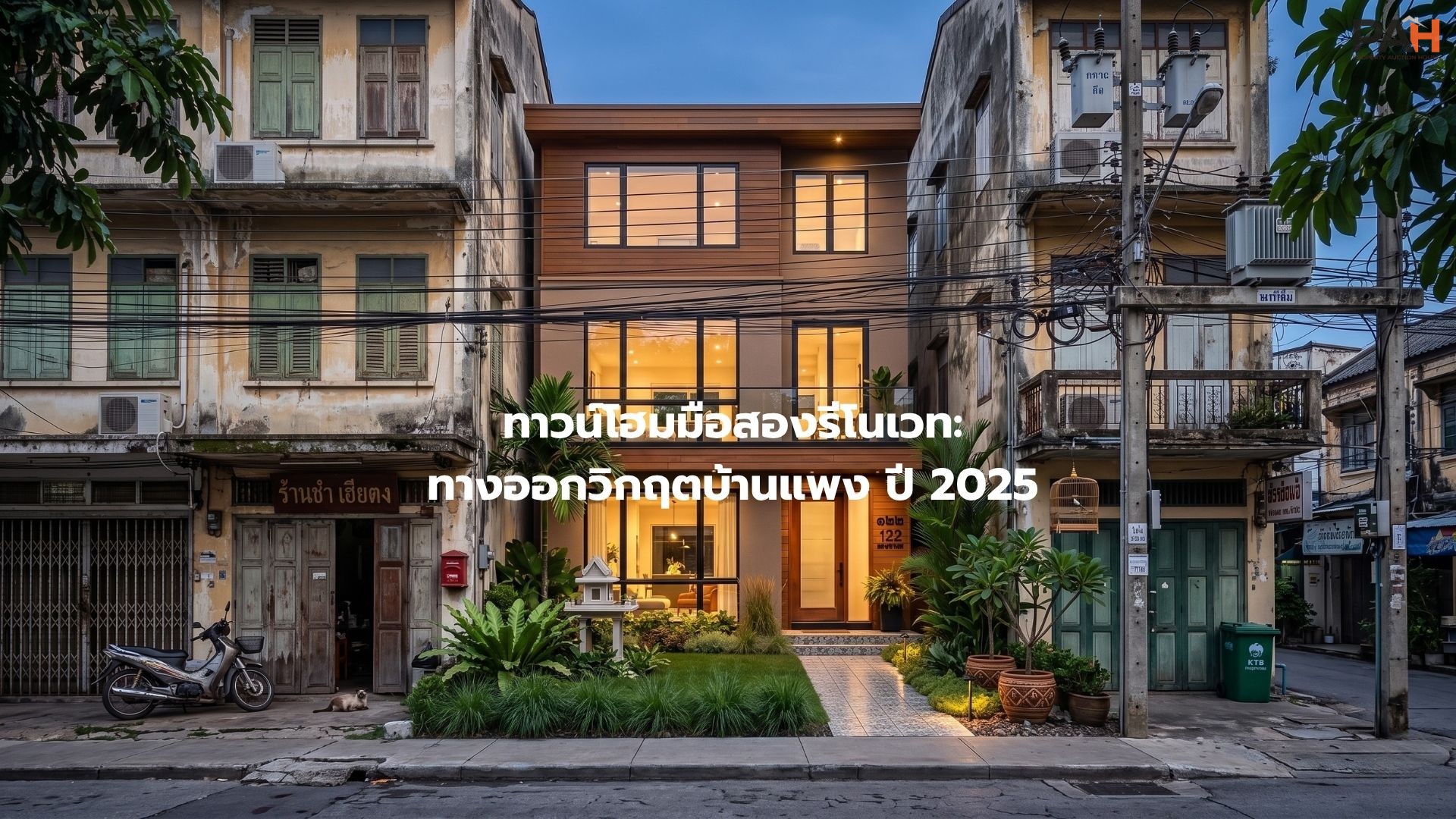
A renovated second-hand townhome refers to a townhome that has been lived in (usually 10–25 years old) and has been entirely or partially renovated—including its structure, electrical and plumbing systems, interior decor, and sometimes even the floor plan design.
What distinguishes it from a "typical second-hand home" is the quality of the renovation work that can be inspected before purchase, and a price that is significantly lower than new homes in the same area.
6 Reasons Why Renovated Second-hand Townhomes are the Answer
1. Huge price gap, potentially 30–50%
This is the most obvious advantage. Second-hand townhomes in the same location as new projects are often 30–50% cheaper. For example, a new townhome in the Lat Krabang–Min Buri area costs 3.5–4 million THB, while a second-hand one in the same alley might be found for 1.8–2.5 million THB. Even with a renovation investment of 300,000–500,000 THB, it is still 500,000–1,000,000 THB cheaper than a new home.
2. Structure that has stood the test of time
New homes come with hidden risks, whether it's foundation settling in the first year, wall cracks, or problems from poor-quality materials that may not have surfaced yet. Conversely, a 15–20-year-old second-hand home has already gone through the "settling" phase; most structural issues have already appeared and been addressed.
3. Better location at an affordable price
Most old townhome projects were built when land was not yet expensive, meaning their locations are often much better than new projects at the same price point. Older homes in Sukhumvit alleys or near various BTS/MRT lines might still be found for 2–3 million THB, while new homes in comparable locations start at 6–8 million THB and up.
4. More design flexibility
New project homes come with pre-determined floor plans. However, second-hand townhomes allow you to "design your own life" from the start. You can choose materials, colors, and designs that match your lifestyle and taste within your set budget.
5. Interesting investment potential
For those looking at renovated second-hand townhomes as an investment, the Rental Yield of second-hand homes in good locations is often higher than new project homes because the starting cost is much lower, allowing for a 5–7% yield per year, compared to new homes which often don't exceed 3–4%.
6. More financing options for purchase + renovation
Many banks today offer loan products that cover both the purchase price and renovation costs in a single contract, such as "second-hand home + refinance for renovation" loans, making access to capital much more convenient than in the past.
Things to Watch Out For: Not Every Renovated Second-hand Townhome is Perfect
Honesty is most important. Second-hand townhomes have risks you should know before deciding.
Inspect the structure thoroughly: Before buying, hire an engineer or structural expert to inspect it, especially for foundation settling, structural wall cracks, or chronic moisture in walls.
Old plumbing and electrical systems: Homes older than 20 years usually have degraded pipes and wiring. You should budget for a complete system overhaul because leaving them as-is could become a major problem later.
Verify title deeds and encumbrances: Check the title deed, mortgage obligations, outstanding land taxes, and access rights thoroughly before signing the contract.
Unexpected repair costs: Set aside a buffer of at least 10–15% of the purchase price for repairs that might arise after moving in. Even with this added cost, it is still much cheaper than a new home.
How to Choose the Right Renovated Second-hand Townhome: A 5-Step Checklist
Step 1 — Define the total budget: Consider three components: Purchase price + Renovation cost + 10–15% emergency buffer. This total figure must still be lower than a new home in the same area.
Step 2 — Choose the location before the house: A good location at a low price is the heart of this strategy. Look at the distance from mass transit, expressways, schools, hospitals, and the growth potential of that area.
Step 3 — Hire an expert to inspect the house before buying: The cost of a professional inspection by an engineer is about 3,000–8,000 THB, which is well worth it compared to potential risks.
Step 4 — Negotiate with data: Use the home inspection report as a tool for price negotiation. The issues found can be used as reasonable justification for a price reduction.
Step 5 — Plan renovations in phases: It is not necessary to renovate everything at once. Divide it into phases according to necessity and budget. Start with parts related to safety and systems first, then follow with aesthetic parts.
Comparing the Numbers: New Home vs. Renovated Second-hand Townhome
Item | New Townhome | Renovated Second-hand Townhome |
|---|---|---|
Starting Price (Bangkok outskirts) | 3.0–5.0 Million THB | 1.5–2.5 Million THB |
Renovation/Decor Cost | 300k–500k THB | 300k–700k THB |
Total Cost | 3.3–5.5 Million THB | 1.8–3.2 Million THB |
Monthly Installment (30 years, 6%) | 17,900–32,900 THB | 10,800–19,200 THB |
Rental Yield (if renting out) | 3–4% | 5–7% |
Design Flexibility | Low | High |
Conclusion: Crisis Opens Opportunities if You Know How to Look
The Affordability Crisis is not something easily solved at a policy level, and it will likely take several years for the market to rebalance. But as a consumer who wants a home of their own, you don't have to wait.
A renovated second-hand townhome is "playing the real estate game smartly" in an era where new home prices have skyrocketed out of reach. It is not a perfect solution and requires good preparation, but for those ready to study and plan carefully, it is an opportunity that provides the home you want, a manageable budget, and a better financial future.
Start today by exploring the location you are interested in, then try opening a second-hand website to look at the real figures. You might be surprised that your "dream home" is much closer than you think.