Introduction — Thailand Facing the Aging Society Crisis (and Opportunity)
Imagine that for every 5 people you pass on the street, 1 is over 60 years old. That is the reality Thailand is facing today, and this figure will only continue to rise.
According to data from the National Statistical Office, the elderly population aged 60 and above accounts for over 20% of the total population. This means Thailand has officially entered an "Aged Society." It is projected that by 2040, this figure will soar to 28%, or nearly 1 in 3 of the entire population.
Compared to neighboring countries in Asia, Thailand has transitioned into an aged society much faster than many others, taking only 22 years to move from an Aging Society to an Aged Society, whereas France took 115 years and the United States took 69 years.
This rapid change is not only a challenge for public health and social welfare but also represents a huge opportunity for the real estate sector, particularly in the segment known as "Senior Living," where supply remains insufficient to meet rapidly growing demand.
Aging Society is a country or region where the population aged 60 and over exceeds 10% of the total population. Aged Society is when that proportion increases to over 20%, a threshold Thailand has already crossed.
What is Senior Living? How is it different from a nursing home?
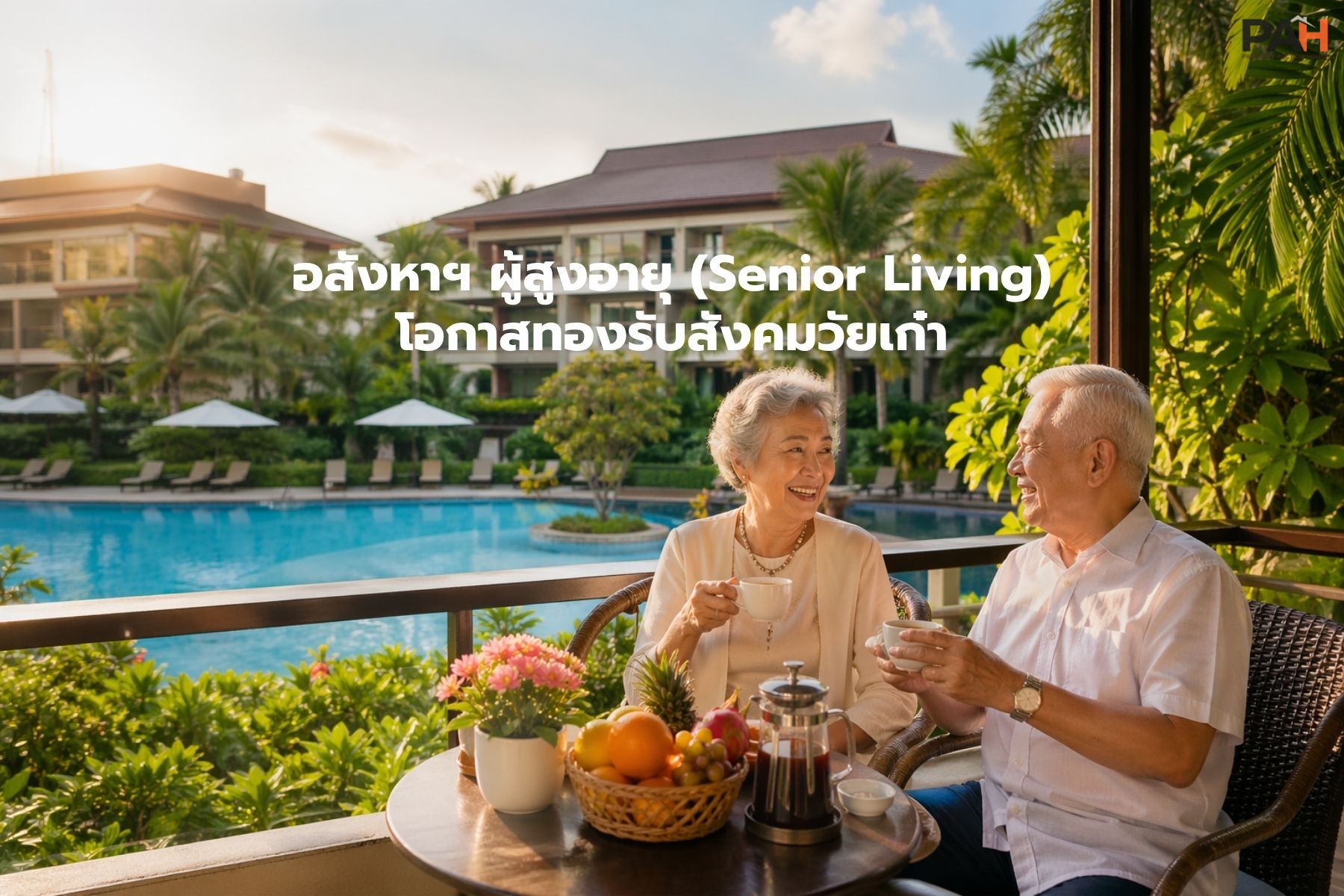
When mentioning "elderly housing," many people often picture old, dreary nursing homes that smell of medicine and are filled with sadness. However, the modern Senior Living concept is entirely different.
Senior Living is a residential ecosystem designed to support every dimension of a senior's life—from physical and mental health to socialization and quality of life—categorized into various levels based on specific needs as follows:
Types of Senior Living Projects Found in the Thai Market
1. Active Aging Community: Suitable for seniors who are still healthy, self-reliant, and want to live an active lifestyle. These projects often come with full amenities such as fitness centers, swimming pools, activity centers, libraries, and gardening areas, focusing on building a high-quality community that promotes long-term health.
2. Assisted Living: For seniors who need some help with daily activities, such as bathing, taking medication, or mobility, but do not yet require full-time medical care. These projects have 24-hour caregivers and emergency response systems.
3. Memory Care: Specifically designed for patients with dementia or Alzheimer's. It provides a secure environment, specially trained staff, and activity programs that help stimulate memory and slow down cognitive decline.
4. Continuing Care Retirement Community (CCRC): A model that covers all levels of care in one place. Residents can start in Active Aging and transition to higher levels of care as their physical condition changes without having to move. It is the most popular model in the premium market.
What makes Senior Living different from general nursing homes?
Aspect | General Nursing Home | Modern Senior Living |
|---|---|---|
Core Concept | Care and Treatment | Living, Thriving, and Happiness |
Environment | Basic rooms and common areas | Resort-style with full amenities |
Activities | Limited | Diverse (health, arts, travel) |
Community | Passive (coexisting) | Active (building relationships and shared goals) |
Technology | Very little | Smart Home, Health Monitoring, Telehealth |
Price | Accessible | Mid to Premium Segment |
The Thai Senior Living Market — Overview and Interesting Figures
Market Size and Growth Trends
The Senior Living market in Thailand is still in its early stages but shows clear signs of growth. Currently, supply of beds and units for the elderly is around 30,000, while actual demand is more than 10 times higher. This gap between demand and supply is a significant opportunity for developers and investors.
The market has an attractive Compound Annual Growth Rate (CAGR), especially in the premium segment with high purchasing power, consistent with the Silver Economy, which has a total value of over 1.3 trillion baht per year in Thailand and continues to expand.
Target Groups — Thai vs. International
Thai Seniors (Domestic): This group is divided into two main levels: the first generation of Baby Boomers (aged 65-75) who have accumulated assets from the economic boom era, and those whose children cover the expenses. Both groups seek housing that is safe and provides care while maintaining privacy and independence.
Foreigners and Expat Retirees: Thailand is ranked among the world's top 5 for Medical Tourism and is a popular destination for retired expats, especially from Europe, Australia, Japan, and China. Thailand's strengths for this group are a cost of living 3-5 times lower than their home countries, high-standard medical personnel, good weather, and cultural and culinary diversity.
Popular Locations in Thailand
Chiang Mai: Voted as a top retirement destination for expats in Asia due to its good weather, low cost of living, leading hospitals, and pleasant city atmosphere.
Phuket: Supports the high-net-worth expat group with a complete ecosystem of international hospitals, restaurants, and world-class lifestyles.
Bangkok: A large market for urbanites who need travel convenience and access to top-tier health services.
Chonburi and Pattaya: Growing locations supporting both Thai and foreign groups due to ongoing infrastructure development in the EEC area.
Why is Senior Living a "Gold Mine" for Investors?
1. Significant Demand-Supply Gap
This is the most crucial part of the opportunity. While Thailand has millions of seniors in need of specialized housing, the market supply is lagging behind. High-quality Senior Living projects in Thailand are limited, especially in the Mid-to-Premium segment, leaving plenty of room to fill.
2. Attractive Investment Yield
Well-managed Senior Living projects can generate higher operational returns than general real estate. The main reason is that revenue comes not only from rent but also from recurring revenue from care services, meals, activities, and health services, which residents pay every month. This makes cash flow more stable and predictable.
Furthermore, the turnover rate of residents is usually lower than other types of real estate, as moving entails significant physical and mental costs for seniors, resulting in a much longer average lease duration.
3. Government Policies Starting to Favor Investment
The Thai government has begun to recognize the importance of developing housing for the elderly, with various supportive measures such as:
Special visa programs for retired foreigners in Thailand (Non-Immigrant O-A Visa).
Wellness Tourism development policies linked to health and senior housing systems.
BOI investment promotion for health and senior society projects.
4. The Silver Economy and Wealth Transfer
Thai Baby Boomers retiring during this period have accumulated wealth during the economic boom of 1987-1997. Many possess assets including land, stocks, and savings, and are willing to spend for a better quality of life in their golden years. This is a strong purchasing power that is largely unaffected by general economic cycles.
Challenges to Know Before Entering the Market
While the opportunity is attractive, the Senior Living market is complex, and investors must understand these challenges before making decisions:
Laws and Licensing
Operating a Senior Living project in Thailand requires compliance with many laws, including the Health Facility Act, zoning laws, and Ministry of Public Health requirements for projects with healthcare services. The licensing process can be time-consuming and complex, so developers must plan from the start.
Higher Operational Costs Than General Real Estate
Unlike regular condos or apartments, Senior Living requires trained health personnel, including nurses, physical therapists, nutritionists, and caregivers, which is a major variable cost currently facing labor shortages in the market.
Stigma and Misunderstandings Among Thai Consumers
Thai culture still has a negative view of sending seniors to specialized facilities, often seen as "abandoning" family elders. Changing this mindset requires smart communication and marketing, presenting Senior Living as an upgrade to quality of life rather than a last resort.
Longer Break-Even Period
Due to high development and operational costs, Senior Living projects typically take 5-8 years to break even. Investors must have long-term financial strategies and stable funding sources.
Emerging Trends — The Future of Senior Living in Thailand
1. Tech-Enabled Senior Living
Technology is rapidly transforming Senior Living. Modern projects are integrating:
AI Health Monitoring: Real-time systems to detect falls or abnormal breathing.
Smart Home Integration: Voice-controlled or app-based systems for seniors.
Telehealth Platform: Online medical consultations and health tracking to reduce travel needs.
Wearable Health Devices: Watches or wearables that track vital signs and send data to care teams.
2. Mixed-Use Development
A growing trend is combining Senior Living with Wellness Hubs, Medical Centers, or even Retail and F&B in the same project. This model creates a win-win situation: residents get convenient access to services, while developers can diversify revenue streams and cross-subsidize operational costs.
3. Universal Design and Age-in-Place Concept
Universal Design focuses on designing housing to support all ages and physical conditions, such as ramps instead of stairs, safety-designed bathrooms, grab bars in key areas, and space for wheelchairs. This concept allows seniors to stay in the same place longer (Age-in-Place) without needing to move when health changes.
4. Intergenerational Living
A trend gaining interest abroad and starting to appear in Thailand is designing communities that mix residents of different ages, such as students or working adults living in the same complex as seniors, creating interactions and mutual aid that benefit the mental health and quality of life for everyone.
Summary — Who Should Keep an Eye on This Market?
The elderly real estate or Senior Living market in Thailand is at its most interesting point in decades because the Thai society is changing permanently. Seniors will be more numerous, purchasing power will be stronger, and the demand for high-quality housing will increase further.
For investors, this market offers stable yields from recurring revenue and competition is not yet high in the premium segment.
For developers, this is a Blue Ocean waiting for strong standards and brands. Those who enter early will have a major market position advantage.
For retirement planners, investing in a residential unit within a quality Senior Living community today is a smart future plan, as prices will continue to rise with demand.
The opportunity is right in front of us. An aging society is not a crisis, but a big wave that those who are well-prepared can ride.
Article by Property Auction House| Last updated: April 2025