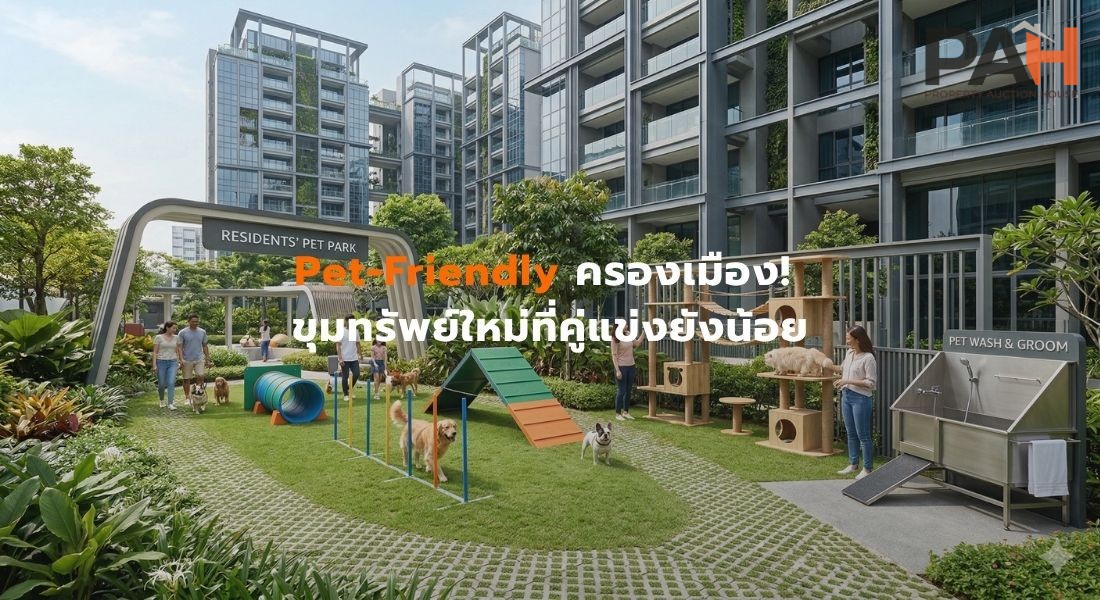
Pet-Friendly Takes Over! Why Pet-Friendly Housing is the New Goldmine with Few Competitors
📌 Key Takeaways: Why is Pet-Friendly Real Estate Worth Investing in for 2026?
High Demand - Low Supply: The number of people treating pets like children (Pet Humanization) is skyrocketing, but the proportion of condos that "legally" allow pets and actually have supporting facilities is still small compared to the overall market.
Premium Pricing: Pet owners are willing to pay 10-20% above normal rental rates in exchange for a genuinely pet-friendly environment.
Low Turnover Rate: Finding a new home with pets is difficult, so these tenants tend to sign long-term leases, greatly reducing vacancy issues for investors.
In an era where modern generations increasingly choose to have "4-legged children" rather than starting a traditional family, the Pet Humanization trend has disrupted multiple businesses. Naturally, the real estate industry is one of the sectors experiencing a massive positive impact.
If you are an investor looking for a lucrative gap in the rental market, or a developer wanting to add value to a project, this article will deep dive into why in 2026, Pet-Friendly housing is no longer just an option—it is a "Blue Ocean" where early adopters hold the absolute advantage.
1. "Pet Parents" Pay a Premium for Quality of Life (Yield Premium)
The most obvious advantage of investing in pet-friendly real estate is "pricing power." Tenants with pets often face severe limitations when apartment hunting, leaving them with few options. When they find a project that meets their needs, openly allows pets, and has a strong management system, they are highly willing to pay higher rent than a regular condo in the same location (Premium Pricing). Furthermore, investors can also charge an additional Pet Deposit to hedge against potential risks.
2. Tenants Stay Longer, Lowering Vacancy (Low Turnover Rate)
A landlord's biggest headache is frequent tenant turnover, which causes a loss of income while waiting for a new renter. However, for tenants with pets, moving is a monumental hassle—from finding a new pet-friendly place, helping their dogs or cats adjust, to covering the moving costs.
Statistics clearly show that pet-friendly tenants tend to renew their leases and stay on average 2-3 times longer than general tenants, giving investors a stable and much more predictable Cash Flow.
3. True Competitors in the Market Are Still Scarce
Although many projects have started heavily promoting "pet-friendly" selling points, in reality, most are merely "tolerant" of pets without providing actual supporting functions. Truly Dedicated Pet-Friendly projects are still scarce in the market. A high-standard project of this caliber must feature:
Pet Zone / Pet Park: Clearly separated common areas for pets to relieve themselves, socialize, and run around safely.
Durable Materials: Use of scratch-resistant, waterproof SPC flooring and easily washable wall paint.
Good Ventilation Systems: To effectively reduce musty odors and pet dander from bothering other residents.
💡 Checklist: How to Rent to Pet Owners Without Your Property Getting Trashed?
For investors who want to enter the pet-friendly arena but are still worried about potential property damage, here are 3 golden rules for risk management:
Strict Screening: Clearly specify the allowed breeds, weight limits, and maximum number of pets in the lease agreement (generally, weight is capped at 15 kg for condos).
Draft a Specific Pet Agreement: Create an addendum outlining the tenant's responsibilities regarding noise (barking), odors, and cleanliness in common areas. If rules are broken, there must be clear, enforceable penalties.
Collect an Additional Pet Deposit: On top of the standard room deposit, you should collect a specific deposit meant exclusively for the pet. This ensures funds are available for Deep Cleaning or minor furniture repairs upon move-out.
Conclusion: The Pet-Friendly market in 2026 is no longer just a Niche Market. It is a massive target demographic with high purchasing power and fierce Brand Loyalty. If you can provide a "safe and comfortable space" for them and their furry companions, your real estate will undoubtedly become a sustainably profitable asset in the long run.