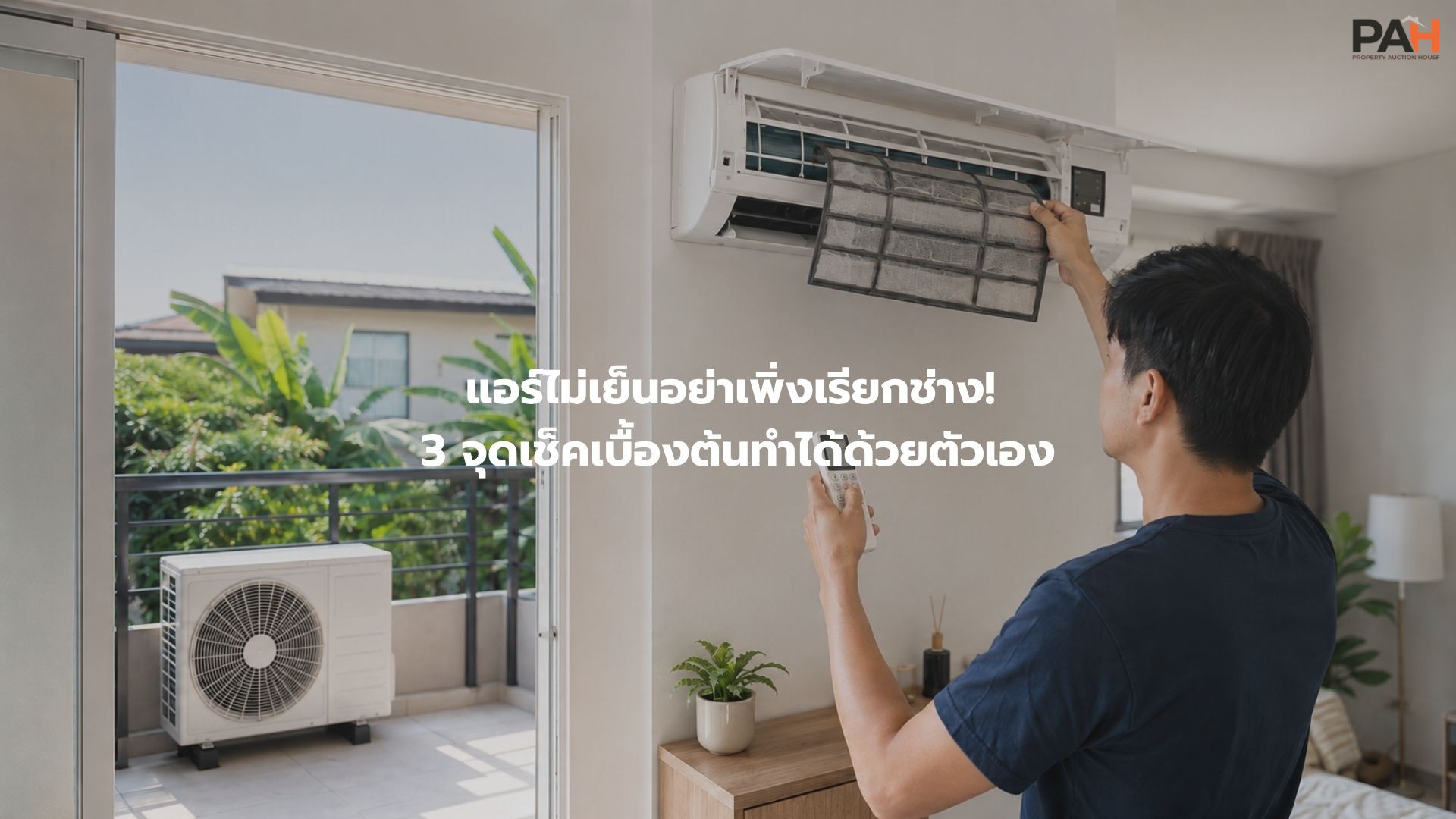
AC not cooling? Don't call a technician yet! 3 basic things you can check yourself
The problem of an "AC not cooling" is something many households face frequently, especially during extreme heat. When you turn on the AC and only air comes out, the room cools slowly, or the temperature doesn't drop even after a long time, many people might immediately think the AC is broken, the refrigerant has run out, or that they need to call a technician right away.
But in reality, an AC not cooling is not always caused by serious damage. Sometimes, it stems from simple issues that a homeowner can check themselves, such as dirty air filters, incorrect remote settings, or poor heat dissipation at the outdoor unit (condenser).
Before spending money to call a technician, try checking these 3 basic points first; it might help your AC get back to cooling without the need for major repairs.
What causes an AC not to cool?
An AC not cooling can be caused by several factors, such as:
Dirty, clogged air filters
Incorrect remote mode settings
Temperature set too high
Outdoor unit covered with dust, leaves, or objects
The room has too much accumulated heat
Refrigerant leak or low refrigerant levels
Compressor or electrical system problems
But before jumping to major problems, you should start with the easiest points to check first, because many times, an AC not cooling can be resolved through basic maintenance.
1. Check the air filter first; a small point that easily stops your AC from cooling
The air filter is the first thing you should check when you feel the AC isn't cooling, because the filter is responsible for trapping dust before air flows through the air conditioner.
Over time, dust accumulates until the filter clogs, causing less airflow, making the AC work harder, and causing the room to cool slower than normal.
Signs that your air filter might be dirty
If your AC has these symptoms, it might be time to remove the filter for cleaning:
Airflow is weaker than usual
The room doesn't get cool even after the AC has been on for a long time
Musty odor coming from the AC
Dust buildup on the front of the unit
Electricity bills are higher despite using the AC the same amount
How to check and clean the air filter
Before cleaning, turn off the AC and turn off the circuit breaker for safety. Then, follow these simple steps:
Gently open the front cover of the AC unit.
Remove the air filter to inspect it.
If there is thick dust, use a vacuum cleaner or wash it gently with water.
Let it air dry completely in the shade.
Put the filter back in its original place.
Turn the AC on to test again.
Do not put a wet filter back into the unit, as this can cause musty odors, mold, or moisture buildup inside the AC.
How often should I clean the air filter?
In general, you should clean the air filter every 2–4 weeks, depending on usage. If your house is next to a road, has a lot of dust, has pets, or you use the AC every day, you should clean it more frequently.
Regularly cleaning the filter helps the AC cool faster, saves electricity, and extends the lifespan of the air conditioner.
2. Check the AC remote; just one wrong setting and the AC won't cool
Many people overlook the AC remote, even though sometimes the cause of the AC not cooling doesn't come from the unit itself, but from incorrect remote settings, such as accidentally changing the mode, setting the temperature too high, or running in fan-only mode without realizing it.
Remote settings you should check when the AC isn't cooling
1. Check if it is in 'Cool' mode
The mode that makes the AC cool is the Cool mode or the snowflake symbol. If the remote is in Fan or Dry mode, the AC may not provide full cooling.
Cool = Cooling
Fan = Air circulation only
Dry = Dehumidification
Auto = Automatic operation
If the AC isn't cooling, try changing it to Cool mode first.
2. Check the set temperature
If the temperature is set too high, such as 28–30°C, the AC may run lightly until you don't feel it cooling. It is recommended to try setting it at approximately 24–26°C and wait a while to see if the room temperature drops.
It is not always necessary to set it very low, such as 16–18°C, because this can cause the AC to work harder and consume more electricity.
3. Check the fan speed
Sometimes the AC is cooling, but the fan is set too low, making it feel like the room cools slowly. Try adjusting the Fan Speed to Medium or High to help distribute the cooling throughout the room.
4. Check the remote batteries
Remote batteries that are almost dead might cause commands to be sent incompletely or the display to function abnormally. If you press the remote and the AC responds slowly, try changing the batteries first.
Simple trick after adjusting the remote
After setting to Cool mode, 24–26°C, and appropriate fan speed, wait about 10–15 minutes for the system to start cooling fully. If it still doesn't cool, then move on to the next point.
3. Check the outdoor unit (condenser); poor heat dissipation and the AC won't cool
The condenser is the unit installed outside the house, responsible for dissipating heat from the AC system. If the condenser doesn't dissipate air well, the AC inside the room will cool slower or not at all.
Many homes install the condenser on a balcony, backyard, or in a cramped area, and have objects blocking it, such as boxes, plant pots, canvases, or piles of leaves, making it difficult for hot air to escape.
How to check the condenser simply
Walk out to see the condenser unit outside and observe the following:
Are there any objects blocking the air vents?
Is there dust, leaves, or trash stuck?
Is the condenser fan spinning?
Are there any abnormal noises?
Is the area around the condenser cramped with poor airflow?
If there are objects blocking it, they should be moved to allow the condenser to dissipate heat better. You should leave space around the unit, not too close to walls or obstructions.
Precautions when checking the condenser
Checking the condenser should only be done for safe points, such as looking for obstructions and cleaning only the surrounding area.
Do not dismantle the unit cover, do not spray high-pressure water into the machine yourself, and do not touch wires or internal components, as this can cause electrical hazards or damage the equipment.
If you find that the condenser fan isn't spinning, there is an abnormal noise, a burning smell, or the breaker trips often, stop using it and call a technician immediately.
Checked all 3 points and the AC still isn't cooling? What should you do?
If you have cleaned the filter, set the remote correctly, and there are no obstructions to the condenser, but the AC still isn't cooling, it is possible that the problem lies in the internal system, such as:
Refrigerant leak
Evaporator coil (inside) is very dirty
Clogged drain pipe
Compressor is malfunctioning
Circuit board has problems
Temperature sensor is broken
Electrical system failure
In this case, you should call a skilled AC technician to inspect it. Do not force the AC to continue running for a long time, as it may cause the machine to work harder, sustain more damage, and cost more to repair.
Signs that you should call an AC technician immediately
Although some symptoms can be checked yourself, if you encounter these signs, don't risk fixing them yourself:
Abnormal water dripping from the AC
AC has a burning smell
Breaker trips often
Condenser does not work
Abnormal noises from the AC
AC lights blinking or the unit shuts off by itself
AC is not cooling at all even after running for more than 30 minutes
No improvement after cleaning the filter
These symptoms may involve the electrical system, refrigerant, or internal parts. You should let a technician examine it thoroughly for safety.
How to keep your AC cooling long-term and save electricity
Besides checking when the AC isn't cooling, regular AC maintenance is also very important because it helps reduce problems with the AC working too hard and extends its lifespan.
1. Clean the filter regularly
You should clean the filter every 2–4 weeks, especially in houses that turn on the AC every day or have a lot of dust.
2. Have the AC cleaned by a technician every 6 months
Even if you can clean the filter yourself, there is still dust accumulated inside the unit. You should have the AC cleaned by a technician every 6 months, or more frequently if used heavily.
3. Close doors and windows tightly
If hot air enters the room constantly, the AC will work hard and cool slowly. You should close doors and windows tightly before turning on the AC.
4. Don't place objects blocking the condenser
The condenser needs space to dissipate heat. If blocked, the AC will not dissipate heat well and will consume more electricity.
5. Set an appropriate temperature
A temperature of about 24–26°C is the range that helps keep the room cool and comfortable without making the AC work too hard.
Summary: AC not cooling? Don't rush to call a technician, try checking these 3 points first
An AC not cooling might not always be a big issue. Before spending money to call a technician, you should start by checking 3 simple points: the air filter, the AC remote, and the outdoor condenser.
If the filter is dirty, remove it to clean and dry. If the remote is set incorrectly, change to Cool mode and set the appropriate temperature. If the condenser has items blocking it, clear the area around the unit to be open.
But if you have checked everything and the AC still isn't cooling, or if there are abnormal symptoms such as loud noises, water dripping, burning smells, or the breaker tripping, you should stop using it and call a technician immediately to prevent damage and safety risks.
FAQ: Frequently Asked Questions about AC not cooling
What is the most common cause of an AC not cooling?
The most common causes are dirty air filters, incorrect remote settings, or poor condenser heat dissipation, which are points you can check yourself.
Is it true that a dirty air filter causes the AC not to cool?
Yes, because a filter clogged with dust reduces airflow, making the AC cool slowly and work harder.
What temperature should I set the AC to for cooling and energy saving?
Generally, about 24–26°C is recommended; this range provides comfortable cooling and helps reduce the workload of the air conditioner.
The AC has only air blowing out but no cooling, what should I check?
Start by checking if the remote is in Cool mode. Then, check the air filter and the condenser. If it still isn't cooling, you may need a technician to check the refrigerant system or the compressor.
Checked it myself and it still isn't cooling, should I call a technician?
Yes, you should call a technician, especially if the AC continues not to cool, or if there are loud noises, water dripping, burning smells, or the breaker trips, as it may be an internal problem that requires specialized tools to inspect.