Thailand Legal Execution Department Property Auction Guide 2026
Property Inspection, Price Evaluation, Auction Notice Reading & Key Risks Before Bidding
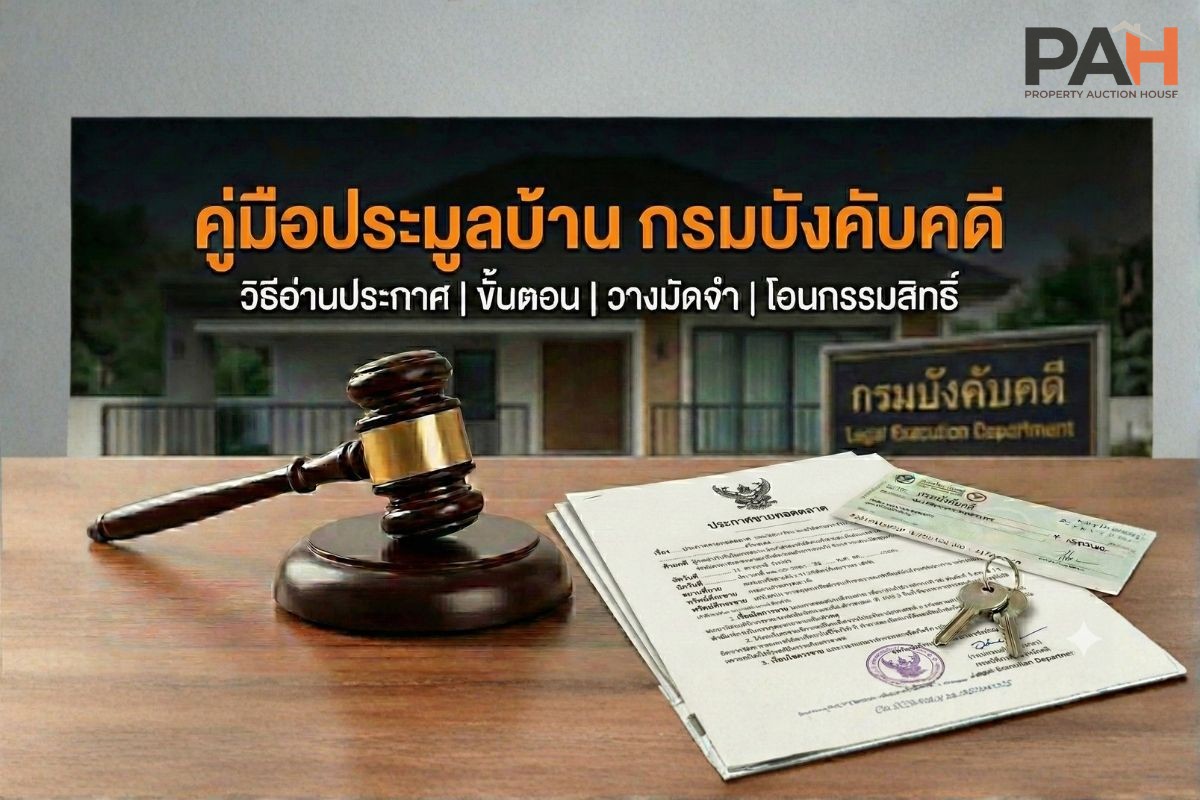
Property auctions in Thailand—commonly known as legal execution auctions, foreclosed houses, or court-ordered property auctions—conducted by the
Legal Execution Department
offer buyers and investors an opportunity to purchase properties at prices below market value through a lawful and transparent process.
However, buying auction properties in Thailand requires more than just bidding the lowest price. Buyers must understand property conditions, legal notices, hidden costs, and post-auction responsibilities.
This guide covers everything you need to know—from reading auction notices and inspecting properties to cost evaluation and post-auction considerations.
What Is a Legal Execution Property Auction in Thailand?
A legal execution auction is the sale of seized properties under a court judgment or order, conducted to repay creditors. The process is legally regulated, publicly announced in advance, and open to competitive bidding.
The auction winner receives ownership strictly based on the actual condition of the property and the terms stated in the auction notice.
How to Read an Auction Notice Correctly (Most Important Step)
The auction notice is the most critical document in any Thailand property auction. It defines ownership rights, legal conditions, and buyer responsibilities.
Key Information to Check
Title deed number / unit number
Property location, size, and type
Appraised value and starting price
Auction date, time, and venue
Common Legal Terms Explained
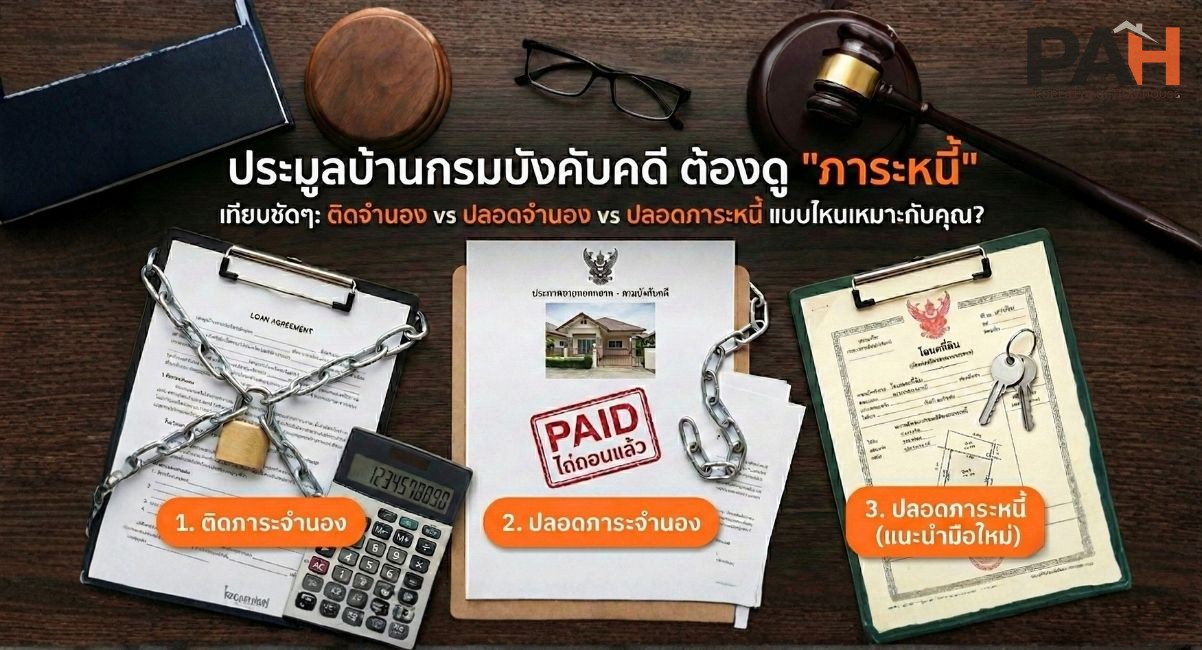
Mortgaged Property – Existing mortgage may still apply depending on sale conditions
Sold with Encumbrances – Buyer accepts existing rights or obligations
Withdrawal of Seizure – Property removed from auction
Sale Postponed – Auction postponed to a later date
No Bidders – No bids received; price may be reduced in future rounds
Buyers who read auction notices carefully significantly reduce investment risks.
Property Inspection Before Bidding
Auction properties are often cheaper—but property condition is a hidden cost.
Exterior Inspection
Structural cracks, settlement, or tilting
Roof leaks, ceiling damage, drainage issues
Doors, windows, fences, surrounding land
Public road access or easement rights
Interior Inspection (If Accessible)
Floors, walls, ceilings (moisture, mold, termites)
Electrical system and main panel
Plumbing, toilets, and water systems
Neighborhood & Location
Community safety and flood history
Accessibility and infrastructure
Future area value potential
If interior access is not possible, allocate an additional 20–30% repair buffer.
Property Price Evaluation Before Auction (True Cost Analysis)
Never evaluate auction properties by bid price alone. Always calculate total ownership cost.
Costs to Include
Expected winning bid price
Transfer fees and taxes
Repair and renovation costs
Legal or administrative expenses (if any)
Holding costs and time value
Investor Guideline
Target purchase price should be no more than 60–70% of market value.
Steps After Winning a Property Auction
After winning the bid, buyers must strictly follow legal timelines.
Payment
Pay the remaining balance within the specified period
Failure to pay may result in deposit forfeiture
Ownership Transfer
Receive official documents from the Legal Execution Department
Register ownership at the Land Office
Buyer is responsible for transfer fees and applicable taxes
Vacant Properties with Remaining Items Inside (Important Consideration)
Some auction properties may be vacant but still contain furniture or belongings.
Legally, items left inside do not automatically belong to the buyer, even after ownership transfer.
Recommended approach:
Record the condition of remaining items
Follow lawful procedures before removal
Avoid self-removal to reduce legal risk
This factor should be considered as part of time and cost planning before bidding.
Summary: Successful Property Auctions Require More Than Low Prices
Legal execution property auctions in Thailand offer strong opportunities—but only for buyers who:
Understand auction notices
Inspect properties carefully
Calculate full costs realistically
Accept legal and practical risks in advance
FAQ – Thailand Property Auction Guide
How much is the auction deposit in Thailand?
Typically 5–10% of the starting or appraised price.
Are auction properties cheaper than market value?
Yes, but renovation and hidden costs must be included.
What happens if I fail to pay after winning the auction?
Your deposit may be forfeited and bidding rights revoked.
Can I move in immediately after buying an auction property?
Only if the property is vacant and free of legal issues after ownership transfer.
Is Thailand property auction suitable for beginners?
Yes—if you study auction notices, inspect properties, and set a maximum budget.