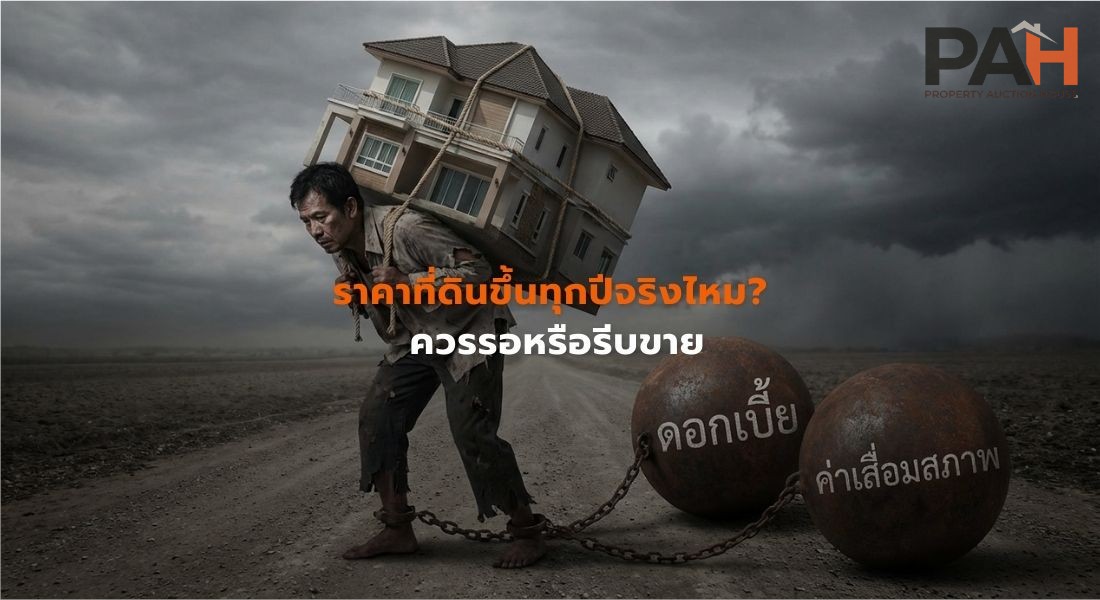
Common Belief: “Land Prices Always Go Up”
Many property owners believe land prices rise every year and that waiting will always result in a higher selling price. This belief is not always true. Property prices depend on location, demand, economic conditions, and the physical and legal status of the asset.
The Reality of Land and Property Prices
In practice, land prices do not increase every year nor in every area. Prices may stagnate or decline when:
Local demand weakens
Properties carry legal or occupancy constraints
Buildings are old or require high renovation costs
Relying solely on future price appreciation carries real risk.
The Hidden Cost of “Waiting”
Waiting is not free, especially when outstanding debt exists:
❌ Interest continues to accrue
❌ Total debt increases
❌ Credit deterioration
❌ Higher risk of litigation or enforcement
Even if market prices rise slightly, accumulated costs may outweigh gains.
Comparison: Waiting vs Selling Early to Settle Debt
Waiting for Price Increase
Risk of stagnant or declining prices
Accumulating interest
Legal risk escalation
Uncertain sale outcome
Selling Early
Control over timing and method
Faster debt settlement
Lower interest and legal costs
Higher retained net value
When Is Selling Early the Better Choice?
If the property has market potential, selling or auctioning before legal action allows pricing to be driven by actual buyer demand, not speculation.
Online auctions enable transparent competition and reflect real-time market acceptance.
FAQ
Q: Do land prices in Thailand rise every year?
A: No. Trends vary by location and market conditions.
Q: What are the risks of waiting?
A: Accrued interest, legal action, and uncertain pricing.
Q: Should I wait if I still have debt?
A: Early sale to settle debt often reduces overall loss.
Q: How do auctions help avoid waiting risk?
A: They determine price through real buyer competition.