Eviction After Winning an Auction Property
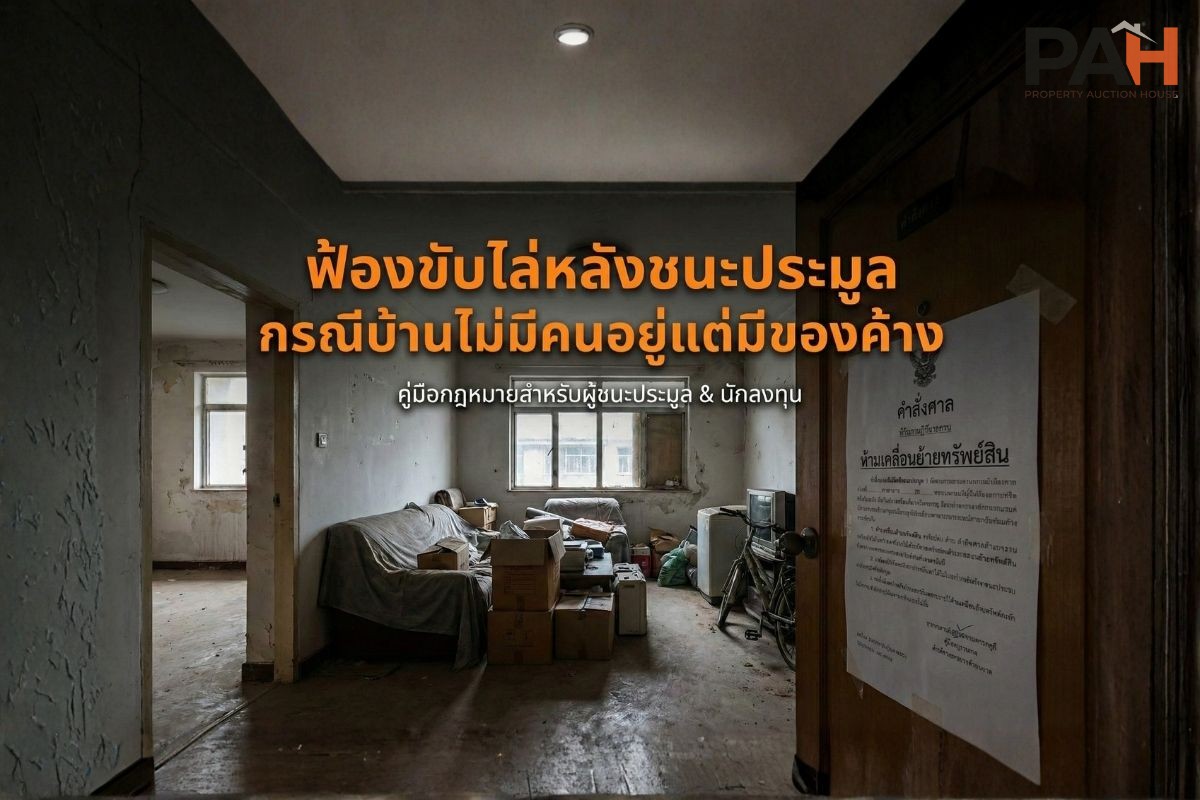
Vacant House but Belongings Remain – Legal Guide for Foreign Investors
Winning an auction property does not automatically grant immediate possession, even when the house appears vacant.
If the property has no occupants but still contains personal belongings or assets, the auction winner does not yet have full legal possession under Thai legal practice.
This is one of the most misunderstood risks for foreign and cross-border investors.
This article explains when eviction is still required, why court involvement is necessary, the correct legal process, timelines, costs, and risks, written specifically for international investors and professional buyers.
Vacant Property with Belongings: Is Possession Complete?
No. Legal possession is NOT complete.
Under Thai legal practice, possession must be:
Peaceful
Undisputed
Free from third-party control
If personal belongings, furniture, vehicles, or assets remain inside the property, the former owner or third party is considered to retain indirect possession.
The auction winner cannot lawfully remove or manage those belongings without court authorization.
Common Examples of Remaining Belongings
Furniture (beds, wardrobes, sofas, tables)
Electrical appliances
Personal items
Construction materials
Motorcycles or cars left on the premises
Even without occupants, these items legally block full possession.
Why Eviction Is Required Even If No One Lives There
If the auction winner:
❌ Removes items independently
❌ Changes locks
❌ Disposes of belongings
❌ Uses or sells remaining assets
They may face legal claims such as:
Trespass
Conversion or misappropriation
Property damage
Civil or criminal liability
⚠️ Ownership of the house does not equal ownership of the belongings.
Legal Solutions (Recommended Approaches)
Option 1: Court-Ordered Eviction and Property Removal (Safest)
This is the most secure option, recommended for:
Foreign investors
Investment resale properties
Rental properties
High-value assets
The court may order:
Formal possession transfer
Lawful removal of belongings by enforcement officers
Official inventory and documentation
Option 2: Enforcement Officer Procedure (Case-by-Case)
In some situations, enforcement officers may:
Inspect remaining assets
Create an official inventory
Remove and store belongings
This option requires professional legal review and is not suitable for all cases.
Step-by-Step Eviction Process
(Vacant Property with Belongings)
Step 1: Complete Ownership Transfer
Register ownership at the Land Office.
Step 2: Property Inspection & Evidence
Document:
No occupants
Remaining belongings
(photos and videos)
Step 3: File Eviction Claim
Request:
Eviction confirmation
Court authorization to remove belongings
Step 4: Court Order
The court grants legal authority.
Step 5: Enforcement
Officers execute removal and hand over possession lawfully.
How Long Does the Process Take?
Estimated timeframe:
Court proceedings: 3–6 months
Enforcement stage: 1–2 months
⏱ Total estimated timeline: 4–8 months
Expected Costs
Court filing fees
Legal representation (recommended)
Enforcement expenses
Storage or disposal of belongings
Critical Legal Warnings (Do NOT Do This)
🚫 Do NOT remove belongings yourself
🚫 Do NOT discard items
🚫 Do NOT sell remaining property
🚫 Do NOT change locks
🚫 Do NOT cut utilities
Even a vacant property can still create serious legal exposure.
FAQ – Vacant Auction Property with Belongings
Q1: The house is empty. Do I still need eviction?
A: Yes, if belongings remain, court involvement is strongly recommended.
Q2: Can I temporarily store the items myself?
A: No. This may constitute misappropriation.
Q3: Will the court accept an eviction case with no occupants?
A: Yes. Indirect possession through belongings is legally recognized.
Q4: Is eviction expensive?
A: Costs depend on case complexity and asset volume.
Q5: Is hiring a lawyer mandatory?
A: Not mandatory, but highly recommended for foreign investors.
Q6: Why are auction properties cheaper than market value?
A: Possession risk, including vacant properties with remaining assets.