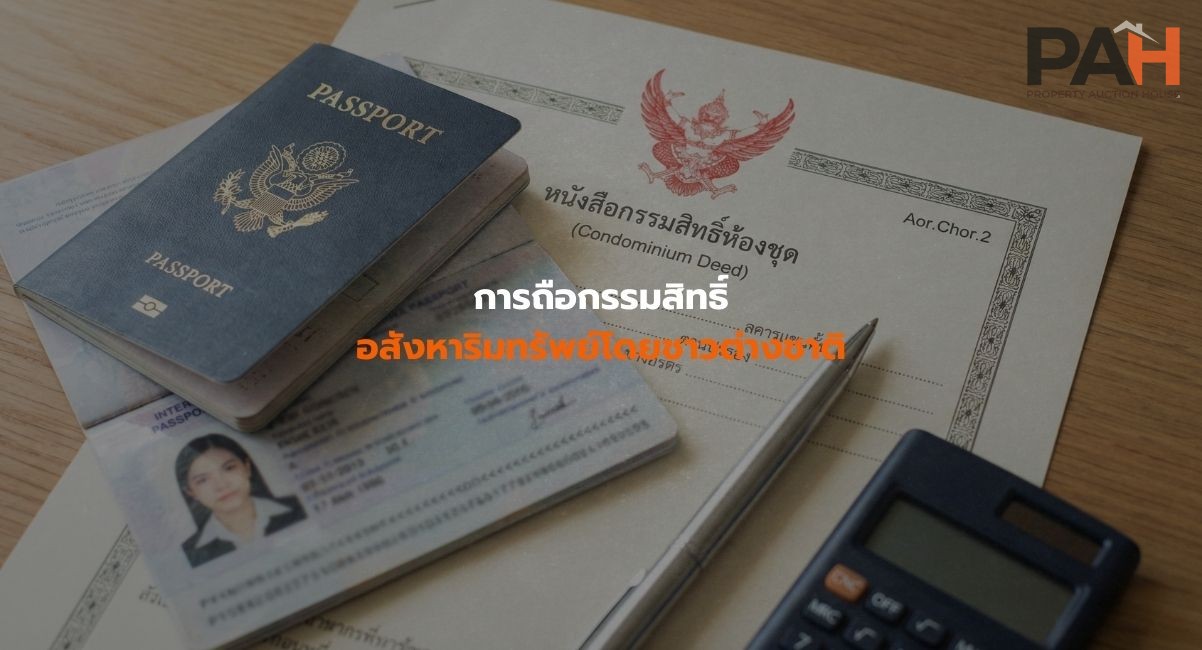
Foreign Ownership of Real Estate in Thailand
Under Thai law, foreigners are generally prohibited from owning land outright in Thailand under the Land Code. However, there are legal pathways allowing foreigners to own certain types of real estate.
Condominium Ownership
Foreigners may own condominium units under Thai law, provided that total foreign ownership does not exceed 49% of the total saleable area in a condominium development. Funds to purchase must be transferred from overseas and documented under Thai foreign exchange regulations.
Buildings or Structures (Excluding Land)
Foreigners may own a building or structure (e.g., house), but not the land underneath it. Land ownership must remain with Thai nationals or entities permitted under Thai law.
Long-Term Leasehold Rights
Foreigners may obtain rights through long-term leases (e.g., 30 years and renewable), giving them legal rights to occupy and use the property without owning the land.
Marriage to a Thai National
Marriage does not grant land ownership rights to the foreign spouse. The land must be registered in the Thai spouse’s name, and purchase funds must be the Thai spouse’s personal funds.
Legal Exceptions for Land Ownership
There are rare legal avenues, such as Section 96 bis of the Land Code, allowing limited land ownership (e.g., up to one rai) if strict investment criteria and approvals are met.
Key Takeaway
Foreigners cannot directly own land in Thailand but may hold condominiums (up to 49% quota) and long-term interests through lease or special structures.
FAQ
Q1: Can a foreigner buy land in Thailand?
A: Generally no, with limited exceptions such as specific investment provisions.
Q2: Are foreigners allowed to own condos?
A: Yes, under a 49% total quota and foreign currency transfer rules.
Q3: Does marriage to a Thai national allow land ownership?
A: No; land must be in the Thai spouse’s name, and funds must be personal to the Thai spouse.
Q4: Is leasehold considered ownership?
A: Leasehold rights allow use but not land ownership.
Q5: Are there exceptions allowing foreigners to own land?
A: Rare exceptions exist via special investment laws or Thai company structures.