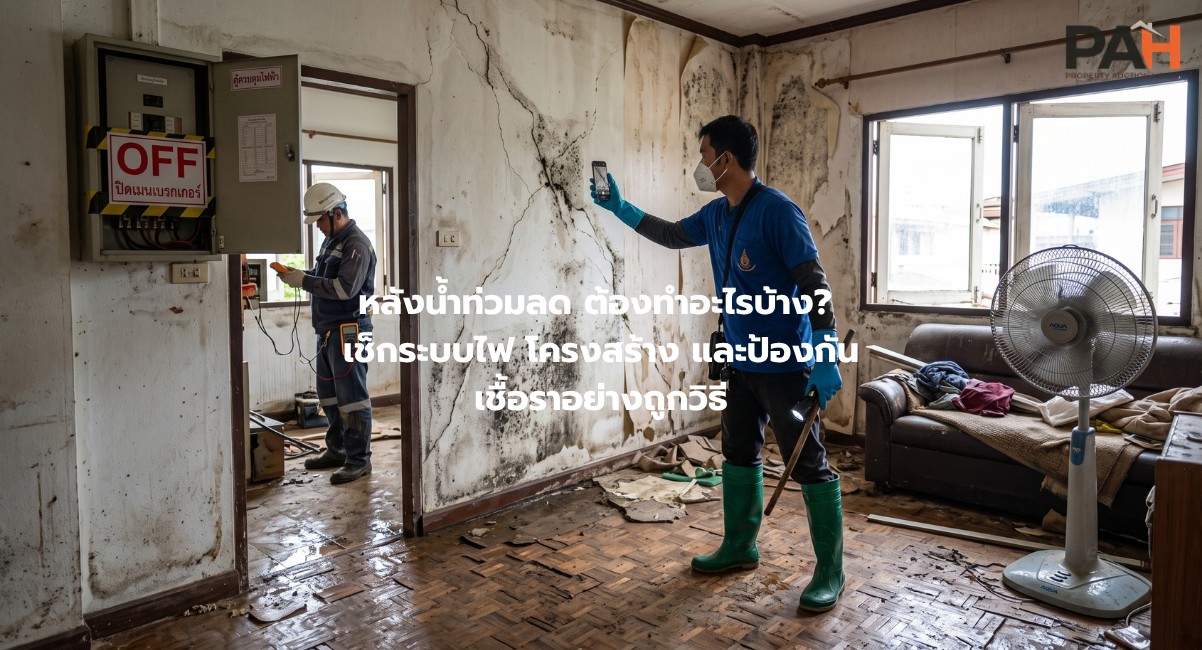
When floodwaters begin to recede, many people want to rush back home immediately to assess the damage and start cleaning. This sentiment is understandable, but the period after a flood is just as dangerous as the flood itself, with risks ranging from electrocution and structural damage to contaminated water and rapidly growing mold.
The key principle is "Safety first, cleaning later," and following a structured approach rather than trying to do everything at once.
Before Entering the House: Preparation and Safety Assessment
Ensure the water has truly receded and it's not just a temporary drop. Check local agency announcements to ensure there is no backflow or new rainfall.
Dress appropriately: Wear rubber boots, rubber gloves, and a face mask (N95 recommended), as the water and mud may be contaminated with sewage and chemicals.
Watch out for venomous animals such as snakes or centipedes that may be hiding in corners, piles of debris, or under the house. Use a stick to probe areas before reaching in with your hands or feet.
Photograph all damage before moving or discarding items. Take both wide shots and close-ups, including dates, to serve as evidence for insurance claims or government assistance.
1. Check the Electrical System: The Top Priority
Water and electricity are a lethal combination. Even after the water recedes, moisture in the electrical system can cause current leaks or short circuits.
Things to do:
Always turn off the main breaker before entering the house, if it is safe to do so. Ensure you are not standing in water or on a wet floor while touching switches. If the breaker box is submerged or wet, do not touch it at all; contact the local power authority or a qualified electrician.
Do not turn on lights or plug in appliances to test them until a licensed electrician has inspected the system and confirmed it is safe.
Inspect all flood-damaged electrical appliances, such as refrigerators, washing machines, air conditioners, water pumps, and transformers. Do not operate them immediately; let them dry completely and have them checked by a technician first.
Wiring, plugs, and outlets that were submerged should be evaluated by a professional. This is especially important for wiring inside conduit pipes within walls, as water may be trapped inside where it cannot be seen.
Check the Residual Current Device (RCD/ELCB). After a professional has inspected and turned the system on, test the device by pressing the test button to ensure it works properly.
When to call the power authority: If you find broken wires, wires lying in water, a submerged meter, or smell burning, notify the Metropolitan Electricity Authority (call 1130) or the Provincial Electricity Authority (call 1129) depending on your area.
Gas system: If you have gas tanks or a gas system, turn off the valves and check for leaks before using. If you smell gas, open doors and windows and leave the house immediately.
2. Inspect Structural Integrity: Look for Cracks and Hidden Damage
Long-term flooding can affect the structure of a house due to water pressure, soil saturation, and moisture seeping into materials.
Points to inspect:
Walls and columns: Look for diagonal cracks, widening cracks, or bulging walls, especially around door and window frames.
Floors: Check for sinking, warping, lifting, or loose tiles. Parquet and laminate flooring are usually swollen and damaged after being submerged for a long time.
Foundation: Observe the soil around the house for sinking or voids. Cracks in the ground floor or boundary walls can be signs of foundation distress.
Doors, windows, and frames: If they are difficult to open or close, it may be due to moisture-swollen materials or structural shifting.
Ceilings: If there are water stains or sagging, be wary of collapse and do not stand directly underneath.
Roof and gutters: Check for leaks and clogs, as more rain may follow.
When to call a structural engineer:
If you find large cracks wider than 3-5 mm, leaning walls or columns, visible floor sinking, or hear unusual structural noises, evacuate the area and have an engineer assess it before moving back in.3. Prevent Mold: Start Immediately, as Mold Grows Fast
Mold can begin to grow within 24-48 hours after materials become damp and can affect health, especially for those with allergies, asthma, children, and the elderly.
Prevention and management steps:
Ventilate as much as possible: Open all doors and windows. Use fans and dehumidifiers to speed up the drying process (once the electrical system is safe).
Remove water and mud as quickly as possible: Scoop out mud, wash surfaces with clean water, and wipe them dry.
Clean with detergent or disinfectant: Scrub walls, floors, and salvageable furniture, then wipe dry completely.
Sort materials to discard: Porous materials that absorb water, such as mattresses, fabric sofas, carpets, stuffed toys, curtains, and long-wet drywall, are nearly impossible to sanitize. Discard them for safety.
Check damp corners: Such as behind cabinets, under wardrobes, in ceilings, under floors, and behind wallpaper, where mold can grow unnoticed.
Apply mold-resistant paint or coating: Only after the walls are completely dry. If applied to damp walls, the paint will blister and the mold will return.
Caution when using bleach:
Do not mix bleach with other cleaning agents, especially those containing ammonia or acid, as this creates toxic gas. Always wear a mask and ensure proper ventilation while using.4. Other Important Considerations
Drinking and tap water: The plumbing system and water tanks may be contaminated. Clean the water tank, flush the taps for a while, and drink bottled or boiled water until you are confident in the quality.
Food: Discard all food that has come into contact with floodwater, including items in cans or bottles that were submerged but not yet sterilized on the exterior.
Wastewater and sewage system: Flooding can damage or overflow septic tanks. Check them and have a professional inspect them if you notice any irregularities.
Your health: If you have wounds on your feet or hands after wading through water, or if you experience fever, severe muscle pain, or red eyes, see a doctor, as these could be signs of leptospirosis or other waterborne diseases.
Important documents: Check wet documents such as land titles, contracts, or insurance policies. Dry them carefully and make copies.
Summary: Post-Flood Checklist
Assess safety before entering: Wear protective gear, watch for dangerous animals, and photograph damage.
Turn off power and have an electrician check the system before using electricity.
Inspect the structure: Look for cracks, sinking floors, and bulging walls; call an engineer if in doubt.
Accelerate ventilation and drying within 24-48 hours to prevent mold.
Discard absorbent and contaminated materials: Don't risk your health by trying to save them.
Check drinking water, food, and sanitation systems before returning to normal life.
Keep evidence of damage for insurance claims or assistance requests.
Restoring a home after a flood takes time and patience. However, following the priority sequence—from electrical and structural safety to mold prevention—will help minimize long-term damage and allow you to return with confidence.