Buying and selling second-hand homes involves significant financial transactions and often complex legal documents, making it a target for scammers to deceive both buyers and sellers. Without sufficient knowledge and understanding, one could lose hundreds of thousands or even millions of Baht in an instant. This article compiles the most common scams so everyone can stay informed before making any decisions.
1. Forged Title Deeds or Ownership Documents
Some scammers use fake title deeds or ownership documents they have created themselves, mimicking seals and document formats so convincingly that they are difficult to distinguish with the naked eye.
Prevention: Always verify the original title deed at the local Land Office. Never rely solely on copies provided by the seller, and request an official copy (land registration transcript) directly from the Department of Lands before signing any contract.
2. The Seller is Not the True Owner
In some cases, the person offering the house for sale is not the actual owner. They might be a relative, a tenant, or a scammer posing as the owner using fake documents or stolen personal information.
Prevention: Check that the owner's name on the title deed matches the seller's identification card, and conduct the transaction only in the presence of an official at the Land Office.
3. Concealing Encumbrances, Such as Mortgages or Seizures
Some sellers hide the fact that the property is mortgaged to a bank or is under legal seizure, leading buyers to transfer money without being able to actually transfer ownership.
Prevention: Request a "Certificate of No Encumbrances" from the bank or check the property's history at the Land Office to see if there are any existing mortgages, seizures, or liens on the title deed.
4. Deposit Scams and Disappearing
This scam is common in the era of social media-based sales. Scammers post houses for sale at prices far below market value, pressuring victims to transfer a deposit to "reserve the right" before vanishing immediately.
Prevention: Do not transfer money before seeing the property in person and verifying the seller's identity. Be wary of unusually low prices, and always have a written deposit agreement handled through an agent or lawyer.
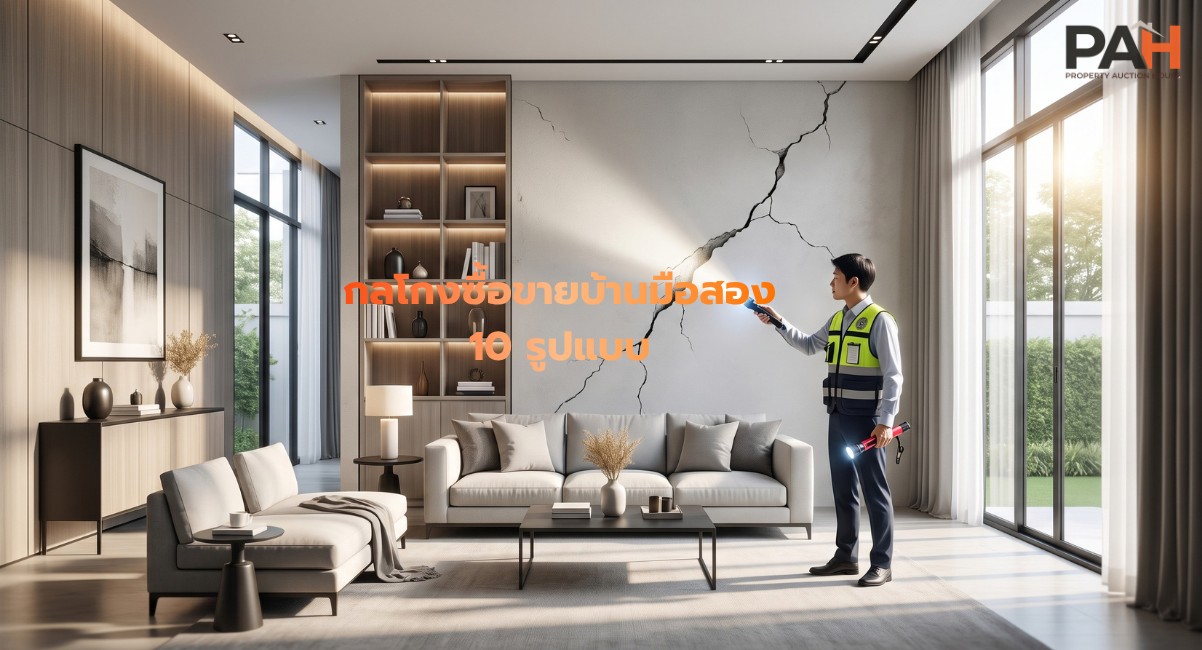
5. Concealing Structural Defects or Property Issues
Some sellers decorate the house to look attractive to cover up issues such as structural cracks, termite damage, water leaks, or foundation subsidence, without informing the buyer.
Prevention: Hire a professional engineer or home inspector to evaluate the property before purchasing (Home Inspection). Inspecting the house during rainy weather can also make leaks easier to spot.
6. Property Disputes or Ongoing Legal Cases
Some houses or plots of land are involved in boundary disputes, inheritance conflicts, or ongoing lawsuits, which the seller intentionally conceals.
Prevention: Ask neighbors or the local community about the property's history and check at the Land Office to see if the property is involved in any legal proceedings.
7. Illegal Extensions or Missing Building Permits
Many homes have illegal extensions built without permits, violating building control laws, which could lead to future demolition orders or issues when applying for a mortgage.
Prevention: Ask to see the building permit and architectural plans. Compare them to the current physical structure. If there are extensions that do not match the plans, consult the local municipality or district office.
8. Unlicensed Agents and Double Commission Fees
Some agents are not properly registered and may attempt to collect commissions from both the buyer and the seller simultaneously, or inflate the house price without the seller's knowledge.
Prevention: Use a licensed and reputable real estate agent. Clarify commission rates from the beginning and sign a written agreement appointing the agent.
9. Exploitative Sales Contracts
Some contracts are drafted to favor one party, such as including unfair deposit forfeiture conditions or failing to specify a clear ownership transfer date.
Prevention: Have a lawyer or expert review the contract before signing. Never sign a contract with ambiguous wording or blank spaces.
10. Fake Account Transfer Scams
In online transactions, scammers may hack emails or chat accounts and send a fake bank account number for the final transfer right before the ownership transfer date.
Prevention: Verify the destination account number through a trusted channel, such as speaking directly to the counterparty by phone. Do not rely solely on information from emails or chats.
Conclusion
Buying second-hand homes carries risks that scammers can exploit in many ways. The safest approach is to always verify ownership documents at the Land Office, conduct transactions through reputable agents or lawyers, and never rush into transferring money before fully verifying the information. A home is a major asset that deserves the utmost caution.