Does Buying a Condo in Thailand Really Get You a Visa? Facts Every Foreign Investor Must Know
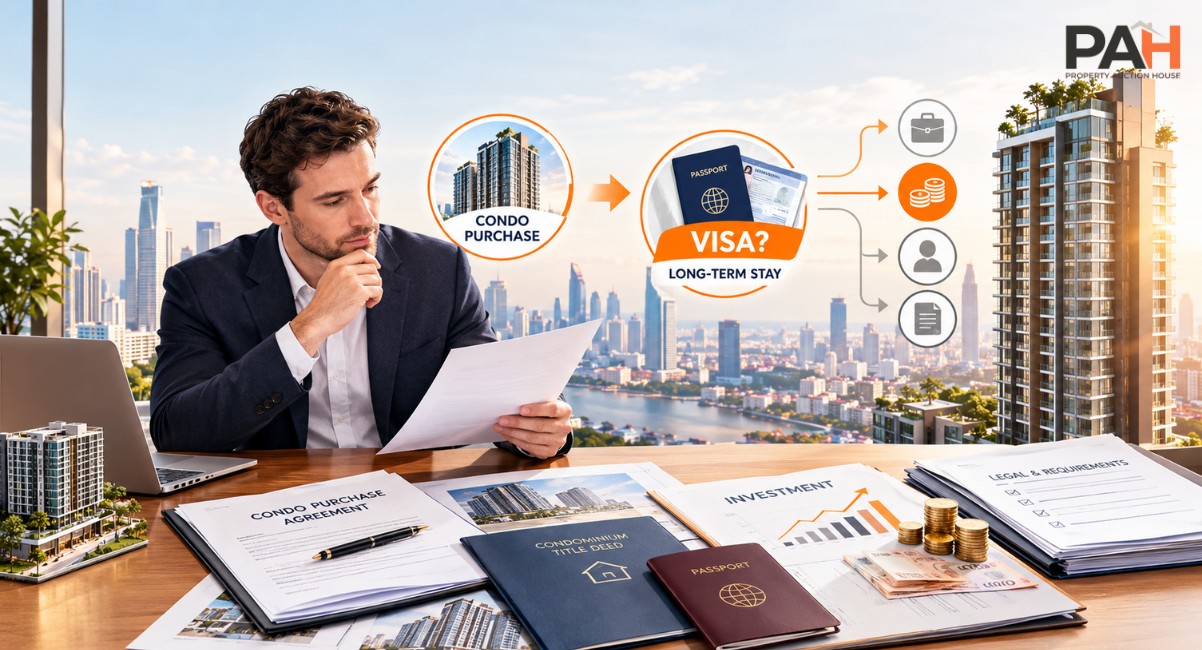
If you've heard real estate agents use slogans like "Buy a condo here, get a free visa" or "Invest in a condo, gain permanent residency in Thailand," you may only be getting half the story. In reality, Thailand does not offer a visa simply by purchasing a condominium as some other countries do (commonly known as a Golden Visa). Instead, real estate acquisition is merely "one of the conditions" for certain types of visas.
This article provides all the facts so that foreign investors can make informed decisions and avoid falling victim to misleading marketing.
The Most Common Misconception
The main misunderstanding is believing that "buying a condo = permanent visa." In truth, what you mostly receive is a "one-year extendable stay permit," not an unconditional permanent visa. Furthermore, purchasing a condo must strictly follow legal requirements; it is not as simple as just having a sales contract in hand.
Visas/Stay Permits Related to Condo Purchases in Thailand
1. Extension of Stay Based on "Investment" (10 Million Baht Threshold)
This is the system most people refer to when they say "buying a condo gets you a visa." It is a long-standing regulation of the Thai Immigration Bureau. The rough criteria are:
You must invest at least 10,000,000 Baht in one or a combination of forms, such as purchasing a condominium, fixed deposits in Thai banks, or buying government bonds.
Once approved, it is a one-year extension of stay that can be renewed annually as long as you maintain the investment/assets.
This is not a permanent visa, nor is it citizenship. If you sell the condo or withdraw the investment, this right expires.
2. Long-Term Resident Visa (LTR) - "Wealthy Global Citizen" Category
This is a program by the Board of Investment (BOI) launched a few years ago. It grants a long-term visa of up to 10 years (renewed every 5 years), but the criteria are significantly higher:
Must have total assets of at least 1 million USD.
Must have an annual income of at least 80,000 USD for the past two consecutive years.
Must invest at least 500,000 USD in Thailand, where purchasing real estate can be part of this investment, alongside government bonds or business investments.
As you can see, a condo is just one "component," not the sole condition that grants this visa.
3. Thailand Privilege Visa (Elite Visa)
This visa type involves purchasing a membership directly from a government-owned agency. It is not linked to purchasing a condo in any way. However, some real estate companies often promote them together to attract foreign clients, leading to confusion that buying a condo includes this visa, which is incorrect.
4. Other Proposals/Measures Discussed
In the past, there has been news regarding potential plans to extend visa rights to foreigners who purchase real estate for amounts lower than 10 million Baht. However, the details, status, and actual applicable conditions can change at any time. This is a point that investors must verify with the Immigration Bureau or a legal advisor before making a decision, as such policies are frequently updated.
Key Limitations to Know Before Buying a Condo
Foreigners can own a condo on a Freehold basis, but it must not exceed 49% of the total floor area of the entire building.
The funds used for the purchase must be transferred from abroad in foreign currency into a Thai bank account, and a Foreign Exchange Transaction Form (FET) is required to register the transfer of ownership at the Land Department.
Foreigners cannot buy land, making condos one of the few options for full real estate ownership.
What Foreign Investors Should Beware Of
Do not trust advertisements claiming "buy a condo and get an immediate permanent visa" without verifying the actual conditions.
Distinguish between an "extension of stay" and a "permanent visa," as most permits require ongoing renewal and maintenance of specific conditions.
Verify the latest thresholds and conditions with official sources, such as the Immigration Bureau (immigration.go.th) or the BOI (boi.go.th), as numbers and rules are subject to change.
Consult a licensed lawyer or visa consultant before transferring large sums of money to avoid being scammed by unreliable agents.
Summary
Buying a condo in Thailand can indeed be a part of the path toward long-term residency, but it is not a "magic bullet" that guarantees a permanent visa as many believe. Interested foreign investors should study the differences between each visa type, verify conditions directly with the relevant authorities, and carefully plan their investment in accordance with their long-term residency goals.