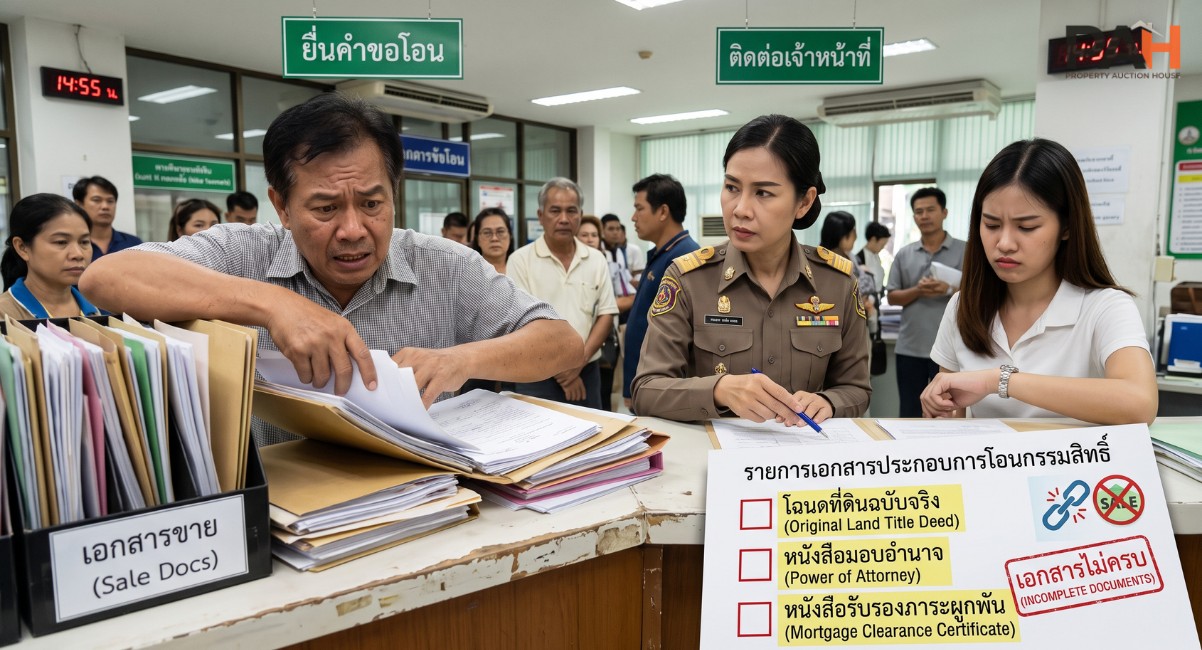
Mistake #5: Incomplete Documentation When Ready to Sell
Real estate transactions cannot proceed smoothly if documents are incomplete or not ready on the actual date of sale. A common problem is that many sellers only check their documents when the transfer date is near, which in many cases is too late to fix. This leads to delays, the need to renegotiate terms, or even the cancellation of the sale.
In practice, buyers, banks, and government agencies consider "document readiness" as a fundamental condition for the transaction, not something that can be handled later.
Essential Documents to Prepare Before Listing for Sale
1. Property Ownership Documents
Title deed or valid legal proof of ownership.
Ensure there are no pending liens or disputes.
2. Seller's Personal Documents
National ID card and house registration.
Power of attorney (in case the seller cannot attend the transfer in person).
3. Liabilities and Debt Documents
Mortgage balance statement (if any).
Mortgage redemption documents.
4. Transfer Supporting Documents
Sale and purchase agreement.
Receipts or relevant payment evidence.
Consequences of Incomplete Documentation
If you leave documents incomplete until the transfer date, the consequences often follow a chain reaction, including:
Transfer of ownership delayed beyond schedule.
Buyer loses confidence in the seller and the property.
Bank refuses to approve the loan for the buyer.
Scheduled transfer date must be postponed or cancelled.
Lost sales opportunities and unexpected additional expenses.
How to Prepare Documents Correctly
1. Verify documents before listing
Start checking before you post the listing to ensure enough time to resolve issues that may take long, such as requesting new documents or fixing mismatched information.
2. Check the status of liens on the title deed
Verify if the title deed has any pending encumbrances, such as mortgages, attachments, or other legal restrictions that may affect the transfer.
3. Ensure documents match the actual seller
Full names and personal details must match on all documents. If there has been a name or surname change, prepare documentation confirming the change.
4. Prepare backup documents in advance
Prepare copies and backup documentation to reduce the risk of unexpected incidents on the actual transfer day.
Why Documents are the Heart of Real Estate Sales
They are a basic legal requirement for property ownership transfer.
Banks use them to evaluate loan approval for the buyer.
Buyers use them to assess risk before making a decision.
Ready documents mean every step of the transaction can proceed faster.
Conclusion
Even if you find a serious buyer and get a satisfactory price, if the documents are not ready, the sale cannot happen. Preparing complete documents from the start is a worthwhile time investment because it reduces risk, helps close sales faster, and builds confidence for all parties involved.
Frequently Asked Questions (FAQ)
Q1: Can I list the property for sale if documents are incomplete? A: Yes, you can list it, but there is a high risk of delays and potential cancellation of the sale later. You should expedite the document management process simultaneously.
Q2: What documents do banks mainly check? A: Primarily property ownership documents, encumbrances attached to the property, and the accuracy of the seller's information.
Q3: Can a mortgaged property be sold? A: Yes, but there must be a clear mortgage redemption plan and all supporting documents ready before the transfer date.
Q4: Is it difficult to fix documents with mismatched names? A: It can be fixed, but it usually takes some time, so it should be settled before listing for sale.
Q5: Who can help check documents before selling? A: Real estate agents, property experts, or legal advisors.
This article provides general information for basic understanding only and does not constitute legal advice for any specific case. If you have questions about the documents for the property you own, you should consult land office officials or experts directly.